Even the seven colors of the rainbow are the true beauty of the monsoon.
This beautiful bird like the monsoon canopy prefers broad-leaved trees – forest for mating.
The color variation that nature has given to its dimensions like birds, flowers, mountains, rivers, clouds is benmoon. All the artificial color splendor fills the water in front of it.
Blessings of Nature This little bird is known as “Navrang” because of its various colors. Its English name is ‘indian pitta’. It is about 15 centimeters in size. The adult bird has a thick black band over the eye on the side of the head, white throat and eyebrows, sandy stripes on the sides of the talc, and sand on the chest and wings. The type of tone is like a sharp double city. It prefers to breed in the forests of broadleaf trees.
Social Media
It is a breeding ground in many forests in Gujarat, such as the forests of Saputara, the forests of Ratanmahal, the Jambughoda Sanctuary, the forests of the Orsang River, the forests of Polo, and the Hingolgadh Sanctuary. It is found breeding up to an altitude of 1500 meters.
Very few birds compete in color variations. Green, blue, black, white, brown, vermilion, blue are some of the colors found on his body, he is also very bright and dark. All these make his colorful name meaningful. It is a privilege to see him closely and for the eye. The bird of Navrang Bharat is true, but for us, it is considered as a migratory guest i.e. coming from outside. Navrang bids farewell at the arrival of the other large migratory birds.
Social Media
The body is chubby, the tail is short, but the legs are long. When it is disturbed, it flies and sits on a branch of a tree. There is no other bird in Gujarat that meets it, so once it catches sight, the experts recognize it immediately. Bhumichar and a few quarrelsome. Appears in pairs during reproduction. During the breeding season from August to August. This bird can be well observed at the beginning of the monsoon.
Dr, Rahul Bhagwat
Overwhelmed by the beauty of this bird, Dr. Rahul Bhagwat, a bird photographer from Vadodara, says that as the monsoon prepares to come, a special task is heard in the forests of our Gujarat, which every bird lover understands that Navrang has arrived. Missed. Mother Nature has given the same magnificent color to the colorful bird-like the monsoon cane which is usually seen from the end of May to the end of June. Color is also the true beauty of the monsoon.
Social Media
It is a unique privilege to welcome, observe and photograph these winged angels of the forest of Gujarat. Innocent birds are a gift of nature to mankind with its color, form and melodious tone. The chirping of birds fills the atmosphere with unique consciousness. The forest might fly .. !! It is Sahu’s duty to preserve this heritage of nature.
Exploring wildlife has always been fun especially in places where wild animals have become a part of culture and mythology. India has many sanctuaries and national parks that have been established as endangered species.
Here are some of the best wildlife sanctuaries in India
Gir National Park and Wildlife Sanctuary – Gujarat
WSON Team
Also known as Sasan Gir, this national park and wildlife sanctuary is located in the state of Gujarat with a total area of 1,412 km2 (545 sq mi). It is one of the most important protected areas in Asia and the only region in the continent where the Asiatic lions are found. Due to the uncontrolled hunting expeditions led by the rulers of Indian princely states, the number of Asiatic lions saw a drastic decline in the 19th century. After the British viceroys highlighted the serious concern, the Nawab of Junagadh established the sanctuary here. Today, it is one of the biggest attractions for tourists visiting the state of Gujarat.
WSON Team
Gir is part of the Kathiawar-Gir dry deciduous forests ecoregion and is known for its diverse ecosystem with a large variety of flora and fauna. With more than 500 species of plants, it becomes the largest dry deciduous forest in western India. It is home to broadleaf trees, Prosopis, casuarinas, banyan, charal, kalam, sirus, amli, umlo, karanj, zizyphus, tendu babul, Jamun, ber among various species of acacia as well. Other than the lion, you also get to see 37 species of reptiles, 300 species of birds, 38 species of mammals, and 2000 species of insects. The most seen animals along with lions are rusty-spotted cats, desert cats, honey badger, ruddy mongoose, Indian gray mongoose, golden jackal, striped hyena, jungle cat, and Indian leopard.
Sundarbans National Park – West Bengal
WSON Team
Sundarbans has managed to grab many titles, it is a UNESCO World Heritage Site, Ramsar site, Biosphere Reserve, and a national park. It is mainly a mangrove forest located on Ganges Delta and becomes one of the largest reserves for the Bengal tiger. It is also a favorable habitat for salt-water crocodiles and a large variety of invertebrate species, birds, and reptiles. It became a Tiger Reserve in 1973, wildlife in 1977 and a national park in 1984, UNESCO World Heritage Site in 1987, and a Ramsar site in 2019. The total area covered by this mangrove is approximately 16,900 square kilometers (6,526 sq mi) with an altitude of 7.5 m above sea level.
WSON Team
It comprises 54 small islands and multiple distributaries of the Ganges River. Sundarbans get their name from the Sundari tree which is found in abundance in this area, the tree has many specific attributes and the notable one is its roots growing above the ground for respiration. Besides the Royal Bengal Tiger, you also get to see chital, flying fox, jungle cat, fox, mongoose, Indian grey, wild boar, macaques, leopard cats, fishing cats, along with various species of reptiles, marine mammals, and a huge birddom. Among the most-seen birds are black-tailed godwits, cormorants, rose-ringed parakeets, whistling teals, etc.
Kaziranga National Park – Assam
WSON Team
This national park comes under the boundaries of three different districts in Assam which are Nagaon, Karbi Anglong, and Golaghat. It boasts of being a World Heritage Site with two-thirds of the world’s great one-horned rhinoceroses. The total number of rhinos in this Kaziranga is 2,413 as per the census held in March 2018. Other than the rhinos, it also hosts the highest density of tigers among the protected areas in the world and become a Tiger Reserve in 2006. It becomes a large breeding ground for swamp deer, wild water buffalo, and elephants and is considered an Important Bird Area by the BirdLife International agency for protecting avifaunal species.
WSON Team
This park has performed better than the other protected areas in India when it comes to wildlife conservation. Being positioned on the edge of the Eastern Himalaya biodiversity hotspot, it comprises tropical moist broadleaf forests, marshland, elephant grass, four major rivers, and various small water bodies. It was established in 1905 as a reserve forest and became a central theme of several documentaries, songs, and books. The park spans a total area of 378 km2 (146 sq mi) with an addition of 429 km2 done recently. In terms of elevation, it ranges from 40 m (131ft) to 80 m (262 ft) and is circumscribed by the Brahmaputra River.
Jim Corbett National Park – Uttarakhand
WSON Team
The oldest national park in India which was established in 1936 for the protection of the endangered Bengal tiger, it has been named after the renowned hunter and naturalist Jim Corbett. It comes under the boundaries of Pauri Garhwal district and the Nainital district of Uttarakhand and was originally called Hailey National Park. It was the first park to come under the Project Tiger initiative of the government of India and has now become an eminent destination for ecotourism. The park spans a total area of 520.8 km2 (201.1 sq mi) with an elevation range of 1,300 to 4,000 ft (40 to 1,220 m). It also becomes a part of the sub-Himalayan belt and comprises a large lake, grasslands, marshy depressions, riverine belts, and hills.
WSON Team
The park hosts 25 reptile species, 580 bird species, 50 mammal species, and 110 tree species among them, mango, Rohini, peepal, haldu, and sal are found in great number. Apart from tigers the other animals you can see here are rhesus macaques, langur, Indian pangolins, Himalayan goral, yellow-throated martens, otters, Indian grey mongoose, Himalayan black bears, chital, hog deer, sambar, gharials, crocodiles, Indian python, Indian elephants, barking deer, leopard cat, fishing cat, jungle cat, and leopards as well. IN You can also find 36 species of dragonflies along with seven species of amphibians, with this highly disparate wildlife, Ranthambore manages to attract more than 70,000 visitors per year.
Ranthambore National Park – Sawai Madhopur Rajasthan
WSON Team
It is the biggest and the most famous wildlife conservation area of Rajasthan with a total area of 1334 sq. km. It became a national park on 1 November 1980 and today it attracts thousands of tourists from all over the world because of the exquisite sightings of Bengal tigers. Originally established as Sawai Madhopur Game Sanctuary in 1955, it came under the Project Tiger in 1973 and later subsumed two more adjoining sanctuaries which are Swai Mansingh sanctuary and Keladevi Sanctuary. Besides the tiger, visitors also get to see chital, mugger crocodile, rhesus macaque, southern plains gray langur, sloth bear, striped hyena, sambar, wild boar, nilgai, Indian leopard along with a broad array of reptiles, birds, plans, and trees.
WSON Team
Notably, the park hosts one of the largest banyan trees in India and is bordered by two rivers which are Chambal and Banas from south and north respectively. The park has contributed significantly to the increasing number of tigers in India and in the last few years, their numbers have shown positive trends. The forest officials have also managed to clamp down on poaching and other illegal trades involving animal pelt and bones. In this park, safari can be done in the morning as well as in the evening. Besides the wildlife safari, visitors can also a fortress and a temple which are located inside the jungle.
Genetic changes in threespine stickleback fish driven by seasonal shifts could help scientist predict how certain species will adapt to new environments
Climate change is exacerbating problems like habitat loss and temperature swings that have already pushed many animal species to the brink. But can scientists predict which animals will be able to adapt and survive? Using genome sequencing, researchers from McGill University show that some fish, like the threespine stickleback, can adapt very rapidly to extreme seasonal changes. Their findings could help scientists forecast the evolutionary future of these populations.
A popular subject of study among evolutionary ecologists, stickleback are known for their different shapes, sizes, and behaviors — they can even live in both seawater and freshwater and under a wide range of temperatures. But what makes this species so resilient?
Identifying the genetic basis of adaptations, for example, to freshwater or in response to climate change, can be challenging. “The modern version of Darwin’s idea of evolution by natural selection posits that organisms with genes that favor survival and reproduction will tend to leave more offspring than their peers, causing the genes to increase in frequency over generations. As a result, populations become adapted or better-suited to their environments over time,” says lead author Alan Garcia-Elfring, a Doctoral Candidate under the supervision of Rowan Barrett, the Canada Research Chair of Biodiversity Science at McGill University.
“However, this process has typically been studied retrospectively, in populations that adapted to their current environments long in the past. This can make it difficult to understand the sequence of events — for example, which traits were most important and when — that led to their adaptation,” he adds.
Natural selection in real-time
To study natural selection in action, the researchers tracked six populations of threespine stickleback fish before and after seasonal changes to their environment, using genome sequencing. Stickleback found in different estuaries along coastal California provides a rare opportunity to study natural selection in real-time. Seasonal changes driven by wet winters and dry summers result in drastic shifts in habitat structure and balance of salt versus fresh water, and only those fish able to tolerate these rapid changes survive into the next season.
Estuaries are periodically isolated from the ocean due to sandbar formation during dry summer months. “These changes probably resemble the habitat shifts experienced by stickleback populations when they colonized many newly created freshwater lakes from the ocean after the glaciers receded 10,000 years ago,” says Professor Barrett. “We hope to gain insight into the genetic changes that may have resulted from natural selection long in the past.”
Remarkably, the researchers discovered evidence of genetic changes driven by the seasonal shifts in habitat that mirrored the differences found between long-established freshwater and saltwater populations. “These genetic changes occurred in independent populations over a single season, highlighting just how quickly the effects of natural selection can be detected,” says Alan Garcia-Elfring.
“The findings are important because they suggest that we may be able to use the genetic differences that evolved in the past as a way to predict how populations may adapt to environmental stressors like climate change in the future,” he says.
The research underscores the importance of studying species in dynamic environments, like bar-built estuaries, to gain a better understanding of how natural selection operates. In further research, they plan to investigate how repeatable the observed genetic shifts are, by testing whether they show up year after year. Doing so would demonstrate their ability to reliably forecast the evolutionary future of these populations.
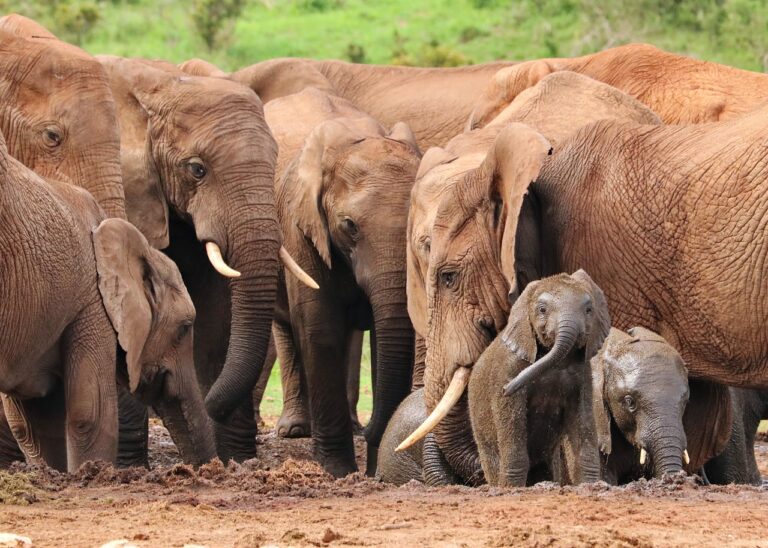
Kenya’s elephant population has gradually increased at an annual rate of approximately 2.8 percent over the last three decades amid declining poaching, a wildlife research institute said. The state-owned Wildlife Research and Training Institute (WRTI) said on Sunday that the country has experienced about a 96 percent decline in poaching, with more than 386 elephants being lost to poaching in 2013 compared to the 11 tuskers poached last year, reports Xinhua news agency.
“This success is attributed to enhanced government initiatives to combat poaching and trophy trafficking, and the continued collaboration with national and international partners to stop the trade in ivory,” the WRTI said in a statement.
It added that whilst Kenya acknowledges that poaching was the major cause of the decline in the past, increasing human population and the subsequent change in land tenure and land-use systems have led to the constriction of elephant range, loss of dispersal areas and corridors, resulting in heightened interaction between elephants and people, mostly resulting to conflict. “Today, human-elephant conflict (HEC) and loss of elephant corridors and dispersal areas are the main challenges facing elephant conservation and management in Kenya,” it said.
Kenya has also taken a much tougher approach to poach in recent years. Anyone caught poaching wildlife or smuggling wildlife trophies in Kenya will either receive a heavy fine or could be sent to jail.
A study published in Global Change Biology found that about 58% of mammals across North America may be benefitted from human activity as they were more likely to be found in areas with increasing human disturbance. However, 33% of mammal species were less likely to be in areas surrounding human presence, the research said.
Scientists used data from 3,212 camera traps set across North America to track 24 mammal species across 61 camera trap projects set in diverse regions.
“We’ve been very interested, for a long time, in how human disturbance influences wildlife,” said Chris Wilmers, one of the study’s authors and an environmental studies professor at UC Santa Cruz, in a news release by UC Santa Cruz. According to Wilmers, his team wanted to see “how wildlife, in general, are responding to similar anthropogenic pressures across North America.”
Scientists combined the data of thousands of camera traps across the US, Canada, and Mexico and divided the observations into two categories of human disturbance. The first type was the “footprint of human development,” areas where things built by humans exist such as roads, agricultural fields, and houses. The second type was the mere human presence, such as picnics and recreational activities in jungles and natural landscapes.
Upon analyzing the data, the researchers found that wolves, wolverines, grizzly bears, and lynx were less likely to be near developed areas, and when they were found, they were less likely to be active. The species of Elk, mule deer, striped skunks, red foxes, bobcats, coyotes, and pumas were also less likely to be found in such areas. However, when they did visit, they were more active in developed areas.
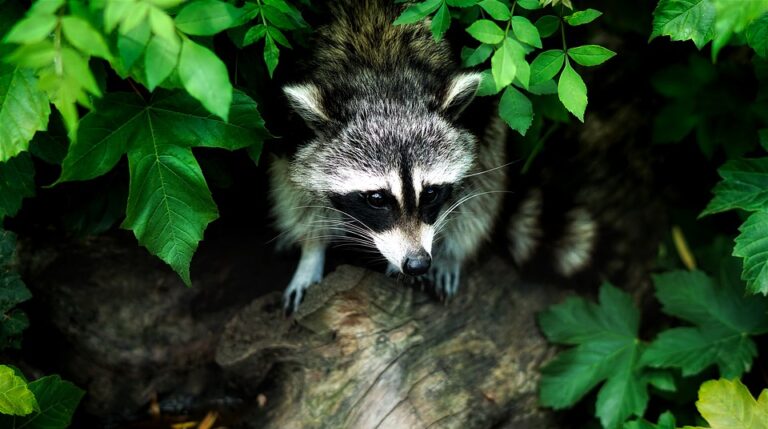
On the other hand, raccoons and white-tailed deers were among the species that were more likely to be found and tended to be more active in developed areas.
However, the researchers acknowledge that because, near developed areas, there is such little available natural habitat for animals like pumas, it is likely that their higher recorded activity is because they did not have places to go beyond where camera traps were set.