Here’s why whales don’t drown when they gulp down food underwater

0

Ever wondered whether whales can burp, and why they don’t drown when they gulp down gallons of water and krill? New UBC research may just hold the answer.

Researchers found that lunge-feeding whales have an ‘oral plug’, a fleshy bulb in their mouths that moves backward to seal off the upper airways during feeding, while their larynx closes to block the lower airways.

This plug prevents water from entering their lungs when they feed, according to a paper published today in Current Biology. “It’s kind of like when a human’s uvula moves backward to block our nasal passages, and our windpipe closes up while swallowing food,” says lead author Dr. Kelsey Gil, a postdoctoral researcher in the department of zoology.

Lunge-feeding whales eat by, you guessed it, lunging at their prey, accelerating at high speed, and opening their mouths to engulf water and krill. Sometimes this amount can be larger than their own bodies, says Dr. Gil, an impressive feat given this group includes the humpback and the blue whale, the largest animal on Earth. Water is then drained via their baleen, leaving the tiny, tasty krill behind to be swallowed.

The researchers investigated fin whales specifically, a type of lunge-feeding whale, and found the ‘oral plug’ needed to move in order to allow food to pass to the esophagus. The only way it could be towards the back of the head, and up, blocking off the nasal passages when the whale swallows. Simultaneously, cartilage closes at the entrance to the larynx, and the laryngeal sac moves upwards to block off the lower airways, says Dr. Gil. “We haven’t seen this protective mechanism in any other animals, or in the literature. A lot of our knowledge about whales and dolphins comes from toothed whales, which have completely separated respiratory tracts, so similar assumptions have been made about lunge-feeding whales.”

It turns out humans have a similar system to swallow food without getting anything in their lungs: we have the epiglottis and soft palate, a ‘lid’ of cartilage, and a flap of muscle in our throat and mouth, respectively. Humans could probably eat underwater as well, says Dr. Gil, but it would be rather like swimming at high speed towards a hamburger and opening your mouth wide as you approached — difficult not to flood your lungs.

The whales’ oral plug and closing larynx is central to how lunge-feeding evolved, a key component in the enormous size of these creatures, the researchers say. “Bulk filter-feeding on krill swarms is highly efficient and the only way to provide the massive amount of energy needed to support such a large body size. This would not be possible without the special anatomical features we have described,” says senior author Dr. Robert Shadwick, a professor in the UBC department of zoology.

Investigating whale anatomy often involves trying to dissect whales that have died from stranding which comes with such challenges as trying to complete work before the tide rises. However, for this research, Dr. Gil and her colleagues dissected whales in Iceland in 2018, recovering tissue that wasn’t being used for food from a commercial whaling station. Working with whales in real-time would be wonderful, she says, but might require some advancements in technology. “It would be interesting to throw a tiny camera down a whale’s mouth while it was feeding to see what’s happening, but we’d need to make sure it was safe to eat and biodegradable.”

The team will continue to explore the mechanisms related to the pharynx, and of the small esophagus that is responsible for rapidly transporting hundreds of kilograms of krill to the stomach in less than a minute. With the many human impacts that disrupt food chains, and knowing how whales feed and how much they eat, it’s good to know as much as possible about these animals in order to protect them and their ecosystems, says Dr. Gil.

And there’s plenty more to find out, including whether whales cough, hiccup and yes, burp. “Humpback whales blow bubbles out of their mouth, but we aren’t exactly sure where the air is from — it might make more sense, and be safer, for whales to burp out of their blowholes.”

Department of Fish and Wildlife has aerial captures and new collars for bighorn sheep herds

The Washington Department of Fish and Wildlife (WDFW) is planning aerial bighorn sheep captures for late January to implement and fit radio collars. This is in response to several challenges affecting the bighorn sheep populations and conservation efforts.

The captures are part of the monitoring efforts regarding Umtanum/Selah Butte, Manson, and Sinlahekin herds and their populations.

Washington bighorn sheep herds have been experiencing pneumonia outbreaks caused by a pathogen resulting in die-offs of all ages. This has often resulted in additional lamb mortalities.

The radio collars being fitted will provide GPS data that will be used to analyze these outbreaks. The data will also be used to see how the herds use their land. Then the WDFW can use that information to maintain quality habitats.

The Manson herd and the Sinlahekin herd will receive ten collars. The Umtanum/Selah Butte herd will have five collars replaced.

Two new species of freshwater goby fish discovered in Palawan-Philippines

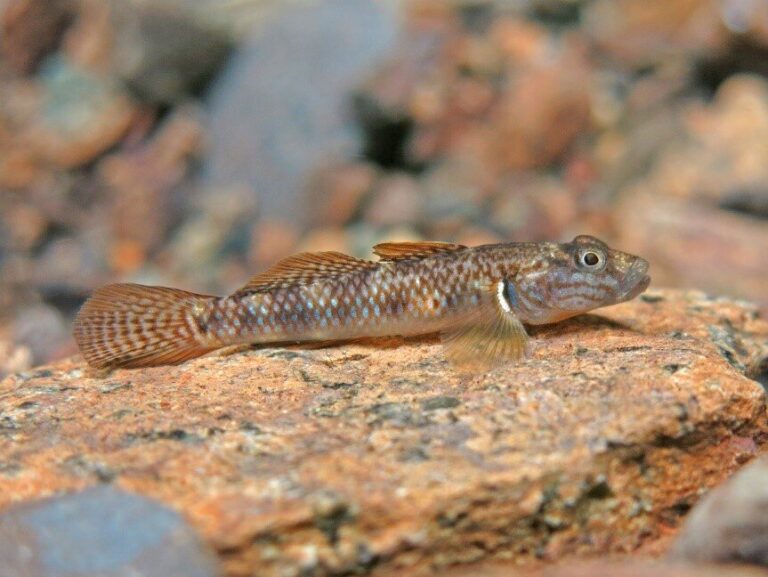
A team of biologists from the Okinawa Institute of Science and Technology Graduate University (OIST) in Japan, and Western Philippines University (WPU) in the Philippines have found two new species of goby fish in Palawan, a Philippine archipelago. The goby fish, both belonging to the genus, Rhinogobius, were described recently in the journal Zootaxa.

One of the species was given the Latin scientific name, Rhinogobius Estrella, and was named for the waterfall, Estrella Falls, in Barangay Estrella Village, where the goby was discovered.

The second species was named Rhinogobius tandikan, with the name inspired by the Palawan peacock-pheasant, known locally as ‘Tandikan’.

“The Tandikan goby has these blue markings on its body, which reminded me of the spots in the Tandikan’s plumage,” said Dr. Ken Maeda, first author of the study and staff scientist in the Marine Eco-Evo-Devo Unit at OIST.

Rhinogobius estrellae and Rhinogobius tandikan are the third and fourth new goby species discovered in Palawan as part of a collaboration project between OIST and WPU, following Stiphodon palawanensis described in 2015, and Lentipes palawanirufus, described in a study last year.

The identification of Rhinogobius species in the tropical islands of Palawan shows that the range of this goby genus extends much further south than previously known.

“We were very surprised the first time we saw Rhinogobius Estrella, and then really excited when we found the second species,” said Dr. Maeda. “The Rhinogobius habitat is typically located in temperate and sub-tropical regions further north than Palawan, in places like Vietnam, China, Japan, and even the Russian Far East. Finding gobies from this genus in Palawan was very unexpected!”

The research team also analyzed DNA taken from the mitochondria for the two species, which placed both species in an ancient lineage within the Rhinogobius group. Previously, only one other goby, Rhinogobius similis, belonged to this evolutionary line. The three species also share similar physical characteristics unique to this lineage, including the arrangement of sensors on their head.

Unlike the Rhinogobius similis, which has a wide distribution range, from Japan to Vietnam, the two new species appear to be endemic, meaning they are only found in one location, even within the island of Palawan itself.

In order to protect these two new species, the scientists urge that special attention must be given to preserving their habitats. “Their endemic nature really raises the risk and threat level for both species,” explained Dr. Maeda. “Any disruption to their habitats, such as dams, roads, leisure facilities or development of the land for agriculture could quickly lead to their extinction.”

Two Children Killed In Leopard Attack In Uttar Pradesh

Two children were killed in a leopard attack in the Motipur range of the Katarniaghat Wildlife sanctuary, officials said on Tuesday.

Ramtez (9), a resident of Rikha Pakdia Deewan village in Motipur, was taken away by a leopard on Monday when he was playing outside his house, they said.

Villagers and forest officials on Tuesday recovered the lower part of his body, they said.

In a separate incident in Mangalpurva village in the same Motipur range, Aditya (4) was also taken away by the leopard on Monday

His head was recovered from the forest.

Divisional Forest officer Akashdeep Badhawan said four teams of forest officials have been deployed to catch the leopard and the help of drone cameras will be taken to trace it if needed. Villagers have been advised not to head toward the forest area, he said.

The victims’ families have been given ₹ 10,000 each and attempts are on to give them a compensation of ₹ 5 lakh each, he added.

Simple Guidance For You In 5 Unique National Parks Of India To Drive In

0

National parks are protected areas in India, declared by the government to save wildlife and restore the natural ecological balance.

Many national parks in India are fascinating for wildlife enthusiasts and nature lovers. Some of these protected regions have beautiful vistas to offer, while others contain several unique features that make them stand out from the rest.

A wildlife sanctuary is a protected area in India to protect animals and plants. It is usually a small reserve forest where larger animals roam freely instead of caged. People visit these areas to watch animal species not seen otherwise but in national parks.

Here are some of the most visited national parks in India:

WSON Team

Hemis National Park

  • Hemis National Park is situated in the eastern Ladakh district in Jammu and Kashmir, India.
  • It is the largest National Park in South Asia and is located in the high-altitude region of eastern Ladakh.
  • The banks of the Indus River enclose the northern boundary of the Park.
  • The area receives light precipitation; therefore, it has arid woodlands.
  • Except for snow leopards, the flora of Ladakh comprises bharal, argali, Asiatic ibex, Eurasian brown bear, Tibetan wolf, red fox.

Sundarbans National Park

WSON Team
  • The Sundarbans National Park is situated in West Bengal, India.
  • The National Park is a part of the Sundarbans woodlands, which extend along the Ganges Delta.
  • The mangrove forest makes the delta look verdant.
  • Tigers are the main attraction of this Park; other animals that can be seen here include fishing cats, macaque, and leopards.
  • Sundarbans National Park in India is the only national Park to protect all three of India’s major cat species: Bengal tigers, snow leopards, and clouded leopards.
  • It is also home to hoolock gibbons, a rare ape species.
  • Botanists say it will take about 50 years to research its diverse flora.
  • The Sundarban National Park is one of the largest protected areas for tigers.
  • In 2012, camera traps in the Park caught footage of an unknown animal. This animal was smaller than a leopard and bigger than a wild cat.

Keibul Lamjao National Park

  • The Keibul Lamjao National Park is situated in Manipur, India, and spans over 40 sq km.
  • The floating vegetation surrounding the Park is a major attraction for nature lovers.
  • The largest freshwater lake in the country is Loktak Lake.
  • The Park provides shelter to a wide variety of exotic fauna species.
  • The brow-antlered deer is the most common animal in the Park.
  • The area is considered unique as it is the only floating sanctuary globally.
  • The vegetation that is 1.5-metre deep, keeps floating consistently.

Marine National Park

  • The Marine National Park is positioned from the southern coastline of the Gulf of Kutch towards the sea.
  • This Park stretches over an area of 458 km square and includes a group of 42 islands.
  • A few prevalent islands are Pirotan, Poshitra, Karubhar, and Narara.
  • The exotic wildlife that can be witnessed in the Park includes coral reefs.
  • The Andamans are a group of islands, and this is the only national Park there.
  • It’s a marine wildlife sanctuary, which means it’s a place to protect animals that live in the sea.
  • There are many creatures there like octopus and jellyfish, so people who visit can see them up close.

    Namdapha National Park

    • The Namdapha National Park is situated in Arunachal Pradesh, India.
    • Namdapha National Park is the largest secure Eastern Himalayan biodiversity hotspot area.
    • This Park is the third largest National Park in India in terms of area.
    • The region is well-known for its extensive Dipterocarp forests.
    • The Park provides shelter to a variety of animals.
    • It has large predators like wolves, dholes, mongooses, and Asiatic black bears.
    • There are also red pandas, gaur, sambar deer, takins, and more. Lisu people live near the Park.

    Throughout India, these exciting parks are the best places to visit with family, friends, and children mostly feel very happy witnessing diversified wildlife and the beauty of nature that persists in the National Parks.

    Exploring these places is one of the good choices to make. These parks contribute to preserving wildlife, flora, fauna, and other things that have lived in them.