The eagle and the migratory harrier were the first satellite telemetry 

After the vulture among the endangered species under the Gujarat Wildlife Conservation and Breeding Project, now the eagle and harrier have also been satellite telemetered to study their movements and lifestyles.

Decrease in the number of migratory birds

wildlife division sasan gir

Gujarat is rich in various species of birds. According to the Forest Department, there are 19 bird-watching sites in Gujarat out of which 609 species are found in Gujarat in which exotic birds are a special attraction in winter. Is.

Why is tagging done?

wildlife division sasan gir

Over the last few years, the number of these birds, known as migratory and birds of prey, has dropped sharply, so satellite telemetry tags are being used to find out the reasons behind them, to understand the lifestyle of birds as well as to preserve endangered species. Currently, three rare species have been tagged: the Grated Spotted Eagle, the Indian Spotted Eagle, and the Tow Eagle, and a male harrier.

How is the tagging process?

wildlife division sasan gir

This method of catching, tagging, and releasing migratory birds requires great care.
The tagging is processed very carefully.

What information can be found?

wildlife division sasan gir

Satellite tagging will provide information on migratory bird migration, range, habitat, travel time, lifestyle, and behavior, which will be useful for future special projects for the conservation of this species.

With the help of Devesh Gadhvi of The Corbett Foundation, Shyamal Tikadar, Principal Deputy Secretary, Gujarat Forest Department, Dr. Dushyat Vasavada, Junagadh Wildlife Circle Officer, Dr. Mohan Ram, Chief Conservation Officer, Gir Division are working for the conservation of bird species through satellite tagging.

Is that all you know about Elephant?

0

Elephant, a long-bodied and long-eared animal with a gigantic body and a very slow pace, is a huge creature that is loved by most people, from small children to the elderly.

Learn something new about the elephant In general, its anatomy is very different from some other animals. The trunk of an elephant does not have bones but the trunk has about 1.5 lakh muscles. Its skin is about an inch thick.

WSON Team

The trunk of an elephant has a finger-like protruding organ. Through which the elephant can scratch the dust on its body and its own body. And the leaves can easily clean the eye. The pelvic floor muscles are extremely sensitive. Elephant lying on the ground with its trunk

Lifting objects can be easily lifted. The elephant is an animal that can swim long distances in water. And the smell of water can be detected from three kilometers away. Elephants have the least amount of sleep than other animals. They sleep while standing at night.

WSON Team

There are two species,in particular, one Asian and the other African. The anatomy of the African elephant is slightly different. The ears of African elephants are three times larger than those of Asian elephants. Elephant ears work to maintain body temperature. Elephants, in particular, wave their ears to convey a message to other elephants.

Although the ears are large, the sound is weak. But with the sole of an elephant’s foot, one can hear the trembling of the ground and the sound of distant movements. Because of its gigantic anatomy, it cannot jump like other animals. However, the elephant drinks about 300 liters of water a day

Maintaining Social Distance from Animals Could Have a Big Impact on Wildlife

Six feet of social distance may be the new norm between people, but a new Wildlife Conservation Society (WCS) report says “if you don’t want to disturb wildlife, you need to keep way back”. The report, which will soon be published in the journal Nature Conservation, looked at 38 years of research on the effect of non-consumptive recreation, such as hiking, on wildlife to attempt to identify the point at which recreation begins to trigger behavioural or physiological changes in animals.

They found that for wading birds and songbirds, threshold distances were generally less than 100 metres (109 yards), whereas for hawks and eagles they were greater than 400 metres (437 yards). Mammal threshold distances varied widely from 50 metres (54 yards) for small rodents to 1,000 metres (1,093 yards) for large ungulates such as moose.

Outdoor recreation is increasingly recognized for its potential negative effects on wildlife individuals and populations, yet planners and natural resource managers often feel they lack robust scientific recommendations to inform the design of recreation infrastructure and management of recreation activities.

Cristina Mormorunni, Regional Director of WCS’s Rocky Mountain Program, said: “Recreation’s footprint is growing, especially during Covid, both in scale and duration. Now it is year-round and penetrating further and further into wildlands.

“We are working hard to elevate these realities and engage the outdoor industry and the public and work collaboratively to lessen our impacts on wildlife and wild places.”The authors did not find a significant difference between threshold distances of different recreation activity groups.

In addition, there were large gaps in the scientific literature regarding several recreation variables and taxonomic groups, including amphibians, invertebrates, and reptiles. The findings highlight the need for additional studies to measure effects on when, where, and what types of recreation lessen their impacts on wildlife. A deeper understanding of recreation ecology will be important both for outdoor enthusiasts, and to provide better recommendations to natural resource managers tasked with conserving biodiversity while providing human access to public lands.

5-foot-long Rat Snake Rescued, Released Back in the Wild

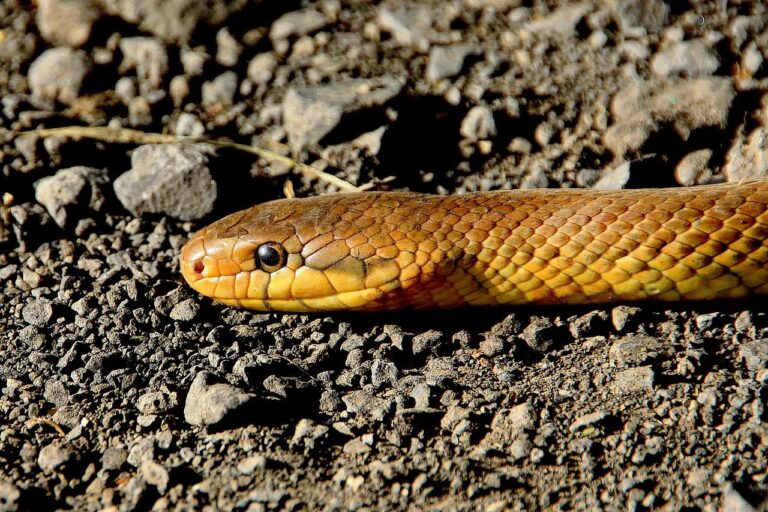
An approximately 5-foot-long Rat snake was rescued from Janta Junior High School, an upper primary school located in Namner, Idgah Colony, Agra. The snake was kept under observation for a few hours and later released back in its natural habitat.

The presence of a 5-foot-long Rat snake created quite the stir among construction workers who were working at Janta Junior High School in Namner, Agra. Due to the second wave of the COVID 19 pandemic, schools are temporarily shut-in Uttar Pradesh, so ongoing construction work was being carried out. The snake was found resting behind a pile of marble tiles and the workers immediately contacted the police, who in turn alerted the Wildlife SOS team.

A two-member team from the NGO’s Rapid Response Unit soon arrived at the location with necessary rescue equipment in hand. Implementing all safety measures, the team carefully extricated the snake and transferred it into a snake bag for safer transportation.

The rat snake was found to be healthy and was released back into its natural habitat. Kartick Satyanarayan, Co-Founder and CEO of Wildlife SOS, said, “It is heartening to see a rise in the number of people making an informed decision of calling Wildlife SOS helpline instead of taking matters into their own hands which generally ends in casualty on either side. Our team has highly trained professionals who can deal with situations efficiently.”

Baiju Raj M.V, Director Conservation Projects for Wildlife SOS said, “Very few snake species in Agra are actually venomous and even these snakes will not attack until provoked or threatened. However, due to their resemblance to cobras, rat snakes are often misidentified as the highly venomous snake and are met with hostility and fear.”

Around the same time, the NGO rescue unit also responded to another distress call from Maat, Mathura about a female Hog deer being chased by a group of feral dogs in the village. The Hog deer was safely brought to the Wildlife SOS transit facility and after receiving all the required medication it was successfully released back into the wild.

The magical spell of Gujarat: Saputara!

“Do not listen to what they say, go see!”

Very sure the answers to my next questions would be a yes for most of the people! Beginning with it, Has your life gone monotonous? Are you stuck between the hands of the clock that dances between 9 am and 5 pm? Do you really need a break? Do you want to visit the mountains? Are you really on a shoestring budget? If the answer is yes, please swipe through this article and pick your bags up to see the only hill-station of Gujarat- Saputara!

WSON Team

Saputara, meaning the abode of serpents is a true visual treat to the eyes as well as the soul, and one working so hard throughout the year deserves no less than this place as his/her break. Lush green meadows, echoing chirps of the birds, forests spread wide across, and an endless trail of positive vibes are certain to envelop you around when you are in Saputara. Gujarat Tourism sums up the experience at Saputara hill station this way- Take a deep breath. Disappear. You have entered nature’s womb. Truly an exemplary embodiment of God, Saputara is located in the Sahyadris or the Western Ghats with an altitude of over 1000m above sea level.

WSON team

Call your immaculate trek up the Gandhi Shikhar a dreamy awakening or a view of the paradise, you will experience the beam of sun hitting you right in the heart and fresh drops of dew falling right over your head. The morning trek will freshen you and you will be completely engrossed in the hues of the nature around you. With the magical swift movement of the Ambika river (shaped like a serpent), you’ll see your negativity bathing off in its waters.

WSON Team

By late noon, take a must ride in the cable car trolley and reach the Saputara viewpoint to witness an experience worth remembering for life. You can then head away to adventure sports to feed your adrenaline rush and swift your way through the river with activities like river-crossing, rafting, valley-crossing and much more.

WSON Team

In case you’re a bike freak, rent a dirt-bike and drive your partner vroom vroom! If you are traveling with your little nut, let your kid enjoy the domestic fun-filled games and camel rides in the widespread ground. Not only this, jog ahead in the greens and browns to further experience a meticulous triumvirate of colors in the sky and rest your body at the Sunset Point. Fetch a Bhutta or maybe your favorite Barf ka Gola and enjoy your little private time in the easy breezy atmosphere. Truly a moment of love in the air, and sweat in the hair.

WSON Team

After this moment of peace, you can move down through the trolley and make your way in the Step Garden during the late evening beside the lake. Gujarat Tourism has extended the tourism facilities to an exponential rate and now house decent hotels and guest houses for night stay. A sound sleep in the floral valley of Dang will enhance your metabolism and the next day will bring a fresh you. While leaving for your destination back,

WSON Team

you can still arouse your spiritual side and drop by at the Nageshwar Mahadev temple. People with a creative bend can also find their moment at the tribal arts and crafts house known as Artisan’s Village. Saputara truly is a splendid hill station a few kilometers away from major stations in Gujarat and gets even better during the monsoons and winters. Summing this up with- “Do not listen to what they say, go see!”

Unleashing the princely beauty- Devgadh Baria