Awesome Things You Can Learn From Ratanmahal Sloth Bear Sanctuary

Ratanmahal Sloth Bear Sanctuary Situated in the Dahod district of Central Gujarat, this wildlife reserve is a shelter for Sloth Bears. Ratanmahal Sloth Bear Sanctuary This forest is covered with dry teak trees at the foothills as well as dry bamboo brakes in the periphery. The actual habitat of the Sloth bear, therefore, extends into Madhya Pradesh. The pristine beauty of forests in this small tract with rugged topography gives the feel of a hill station to wildlife enthusiasts.

Ratanmahal Sloth Bear SanctuaryThe forests of Ratanmahals form the catchment of the river Panam- a major river of Central Gujarat. https://wildstreakofnature.com/gu/ratanmahal-sloth-bear-sanctuary/It drains through the districts of Dahod and Panchmahals. These are major towns on the banks of this river. An irrigation dam and reservoir are also built on this river near Godhra. Ratanmahal Sloth Bear Sanctuary These forests, therefore, have a great ecological significance for water conservation.

Ratanmahal Sloth Bear SanctuaryThe forest types that constitute different types of habitats are dry teak forest at foothills and in the periphery of the P A, mixed deciduous forest, dry bamboo brakes, ‘Timru’ forest (pure patch), and ‘Sadad’ forest (pure patch). The high population of ‘Mahudo’ trees intermixed with pure patches of ‘Sadad’ and ‘Timru’ forest on plateaus of the hills, at foothills, in plains on the periphery of PA provide food to sloth bear. The tree cover is very good. There are also quite a good number of ‘Jamun’ trees, which provide food to sloth bears during monsoon.

Ratanmahal Sloth Bear Sanctuary is also inhabited by jackals, leopards, striped hyena, four-horned antelope, mongoose, porcupine, civet cat, jungle cat, hanuman langur, cobra, krait, saw-scaled viper. You can also spot non-venomous snakes like Russel’s viper and Bamboo pit viper. Python, Rat snake, Red sand boa here. For learning the habits and behavior of the sloth bear, this sanctuary offers a unique opportunity as they are densely populated here. The sanctuary also has a large population of leopards.

The best time to visit Ratanmahal Sloth Bear Sanctuary is between October and May.
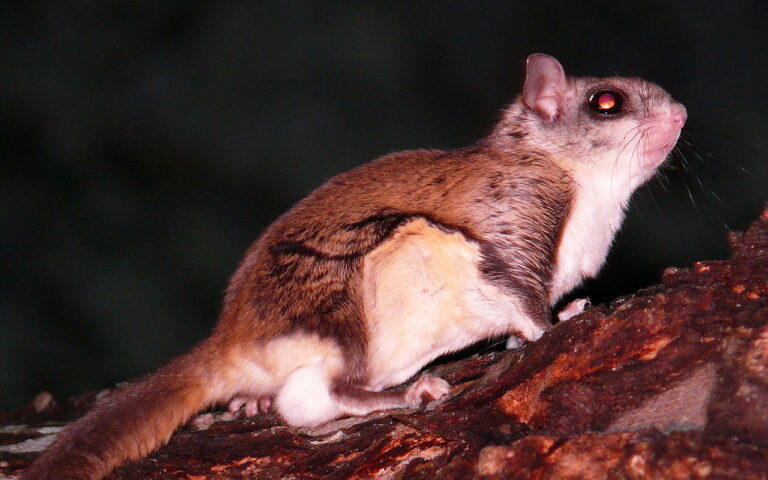
The large brown flying squirrel

0

The squirrel known by the name of ‘pankha’ is gliding in the air therefore it is called a flying squirrel.

The length of a flying squirrel is 37 cm. Its tail is 41 cm long, its weight is 1.5 to 2 kg. The age of a flying squirrel is of 15 to 17 years. The squirrel is of brown and greyish colour. It is bigger than a common squirrel. The diet (food) of this squirrel is fruits, flowers, leaves, seeds, insects and cocoon of silkworm.

The flying squirrel is found in ‘Kalavat’, ‘Vav’, ‘Duthar’ area, that is in the sanctuary of shoolpaneshwar. This is a night animal. The flying squirrel is found in search of food at late evening too. Moreover it is found in search of food for the whole night.

en.wikipedia.org

During the day time we find the squirrel sleeping in the hollow part of the tree or in the dense branches of the tree. In the night time the squirrel mix a constant typical type of sound.

This squirrel is found in the area of Indian peninsula. This type of squirrel is noticed in the area of ‘Ratan Mahal’, ‘Kevadi’ and the forest of ‘Shoolpaneshwar’.

This squirrel is known by the name of ‘pankha’ in the are of Dang while in Chota Udaipur it is known by the name of ‘Pankharu’ by the local public of this area.

journeytothejungle.com

Really such squirrels do not fly as the birds do but it jumps from high branches of a tree to the lower branches of the tree. It can glide to a little distance in the air by the help of extra thick skin joined between the front legs and hind legs.

The peculiarity of the big flying squirrel is that, That its big thick extra skin is joined from the front legs to the tail. The colour of the squirrel from head to body is chocolaty or grey. In some places the squirrels are found of grey colour.

The neck, chest and the belly part is of a light grey shade. The ears are big. The edge of the ears is somewhat reddish and greyish. The tail is of grey colour. In some squirrels we find the top part of the tail somewhat dark.

commons.wikimedia.org

As soon as the sun sets it comes out of the hollow and begins to move here and there. Sometimes it returns at midnight. If it does not get any food it moves on and on on the tree till the dawn. We find it jumping on the tree. The squirrel holds the food with its front legs.

While eating fruits, seeds, skin of the trunk or insects and gums. It cuts the food with its front teeth. If the food is hard, we can hear the sound of cutting the food. Because of this peculiarity this squirrel is included in the active natured animals. They keep contact with one another by the help of particular sound. The squirrel reveals its fear or danger by screaming most probably.

For the survival of the squirrels the forest are must. Very big and dense trees are very convenient to the squirrels. The forest are disappearing therefore , the number of squirrels has become quite little and that is a big subject to be worried.

Indroda Nature Park, best place to visit for kids near Ahmadabad

0

Indroda Nature park is situated in the famous indroda village in sector number 9 in Gandhinagar – Gujarat.

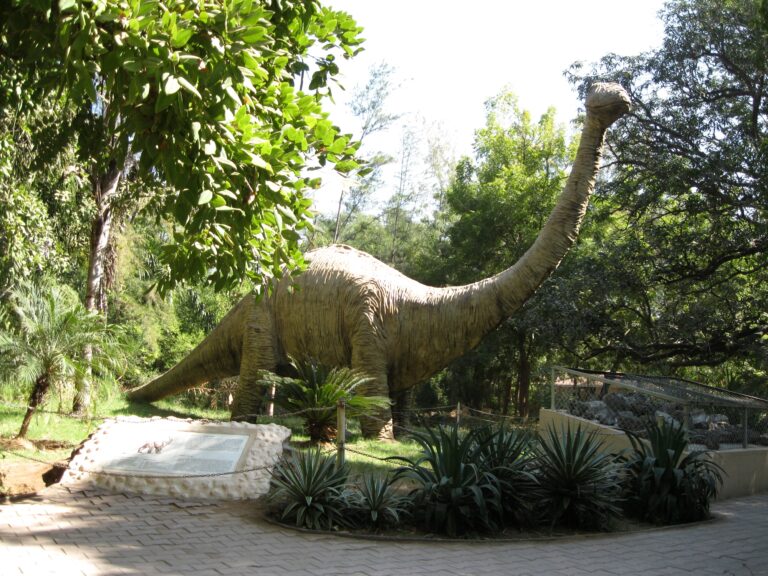
Indroda Nature Park is best place to visit for kids near Ahmadabad and also known as the famous dinosaur fossil park. This park is a part of sarita udyan. We can find animals like deer, hare, porcupine, wild boar and many kinds of animals and reptiles hear in this park.

For the tourist it is a place of attraction because of these animals and reptiles. Many tourists visit this place indroda nature park during the whole year. Indroda Nature Park is really a very famous place for the deer park and dinosaur park. Jurasik park of india is the second name of this dinosaur park.

gujarattourism.com

It is the world’s second largest hatchery place for disanaur’s eggs. The different and typical kinds of dinosaur models are kept here for the tourist to see. The models are of titanosaurus, stegosaurus, and many other species.

This park was founded by the geological survey of india. It is known by the G.S.I. Now a days it is managed and governed by the Gujarat ecological education and research foundation (GEER).

Indroda Nature Park is spread overend area of about 400 hectares in Gandhinagar. The park is divided into two parts. This parks is situated on the banks of the river “Sabarmati”.

commons.wikimedia.org

The western Part is known as indroda nature park while the eastern part of the river sabarmati is known as the wilderness park. The indroda nature park is open for the public from tuesday to sunday from 8:00 am to 6:00 pm.

There is also a zoo at indroda nature park. There we can see the animals like leopard, spotted deer, sambar, blue bull, blackbuck, chinkara, jackale, four-horned antelope, crocodile, porcupine and 180 types of birds.

There are 42 species of birds in this aviary. The park has about 65 types of birds which build their nests in the wilderness of the part. There is one section for the snakes too. It is called the snake kpark. There are number of venomous and non-venomous snakes here.

gujarattourism.com

The skeleton of the sea mammals are also found here. There are two skeletons of the blue whales. One of the two is the dolphin while the other one is dugong.

The detail interpretation as been given for the visitors’ knowledge. The fossils of a large number of the see animals have also been displayed here in this park for the visitors to see.

The botanical garden in indroda nature park

The botanical garden at indroda nature park has an arboretum with 300 tree species from different agro-climatic zones. There is a green house with a number of plants. They are kept under the controlled humid conditions.

There is a cactil house which has two hundred species of cactil and medicinal plant garden. There are two hundred species of cactil and medicinal plants in this garden. Moreover there are 250 medicinal plants species.

commons.wikimedia.org

Yet the botanical garden is under development in future the herb shrub and climber are to be collected and planted. All these plants will be grown in the extended part of the botanical garden.

Lastly casting a glance at the indroda nature park, it would be worthy that it is a good place for the visitor and the nature lover that variety of species of the birds and animals are kept here in this park.

How to get there

By road: Gujarat has one of the better developed road networks in India. Ahmedabad is well connected with all major cities and towns by road. Prominent bus stops are located at Gitamandir near Kalupur Railway Station and Paldi. Regular bus services are available by Gujarat state transport buses and private operators to all the major destinations of the state.

gujarattourism.com

By rail: The main railway station is located in Kalupur area. This station falls under the prominent national railway circuit and is connected to all major cities of India. If you are on the western side of the Sabarmati river, then you can go to the Gandhigram station near Ashram road to buy your railway tickets easily.

gujarattourism.com

By air: Sardar Vallabhbhai Patel airport at Ahmedabad is an international airport with direct flights to usa, uk singapore, dubai and other international hubs. Numerous domestic flights are also operational from here.

Also read about Asiatic Lion and Sasangir

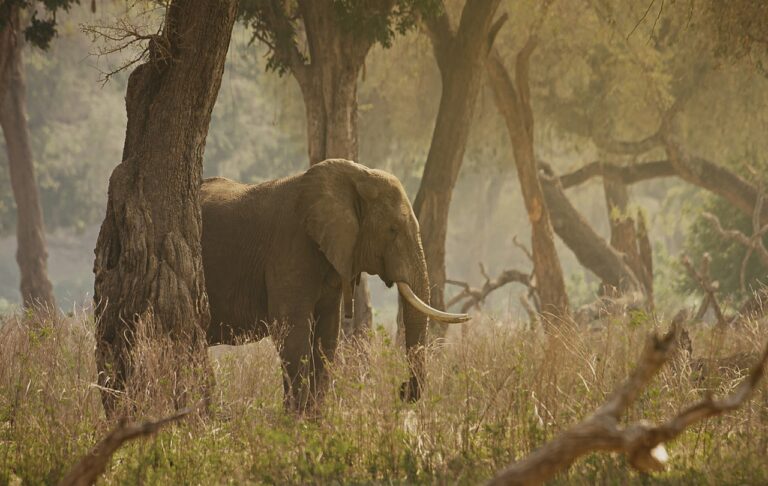
Elephant Found Dead In Odisha Sanctuary, Sixth Death This Month

Another female elephant was found dead near a waterbody at Karlapat Wildlife sanctuary in Odisha’s Kalahandi district, a forest official said.

With the latest jumbo death, six elephants five female and a calf – have died at Karlapat Wildlife sanctuary within 14 days of this month, the official said. According to the 2018 census the sanctuary had 17 elephants.

Divisional Forest Officer (DFO) Kalahandi South Division Ashok Kumar and his team and veterinary doctors are camping in the area undertaking surveillance. “The death of elephants is due to Haemorrhage Septicemia (HS),” the DFO said.

However, the DFO said that there was no such report about the death of other animals in the sanctuary and also the cattle entering the forest from nearby villages.

Coordinator from Centre for Wildlife Health, OUAT (Odisha University of Agriculture and Technology), Bhubaneswar, Niranjan Sahu after visiting Karlapat sanctuary said: “The death of elephants is believed to be by HS. The post-mortem report and laboratory report of one dead elephant is hinting at HS (Haemorrhage Septicemia).

Cattle do get infected by HS if not vaccinated, Mr Sahu said, adding that this is perhaps the first incident where elephants are also infected with HS.

He said vaccination of domesticated cattle in the villages located inside the sanctuary and sanitization is in progress by veterinary staff supported by forest staff.

Chief District Veterinary Officer (CDVO) Dr Chaitanya Sethi said that as of now there is no reported death of domesticated cattle in the area due to HS. During October there was vaccination but in view of the present scenario further vaccination cover is in progress by veterinary staff now.

Local people and wildlife lovers, however, do not take the incident lightly. Pramod Kumar Singhdeo, a local from Karlapat belonging to the erstwhile Zamindar family of Karlapat and having in-depth knowledge on the flora fauna of the locality, said: “The forest department has dug salt ponds in different places to provide salted drinking water to the wild animals.”

The possibility of poachers poisoning some ponds to kill wild animals cannot be ruled out, he said demanding an investigation into the matter.

“The water from the salt ponds should be sent for laboratory analysis to ascertain the fact. It may also happen that the cattle infected with HS might have transmitted infection in the salt pond which affected the elephants also,” he said.

However, forest department officials rejected the second argument saying that no domestic cattle is found to have the HS infection.

Another local person claimed that though the forest department had earlier installed CCTV Cameras in several spots to monitor movement of wild animals, those were removed for unknown reasons.

Karlapat Wildlife Sanctuary is spread over 175 square kilometre area and is famous for lush green dry deciduous forest, varieties of flora and fauna and animals like, elephant, leopard, Gaur, Sambar, barking deer, Indian wolf, wild dog, wild pig, sloth bear, Malbar giant squirrel and Pangolin.

This apart a variety of birds like peafowl, peacock, hornbill, Red jungle fowl, partridges, Spurfawl, Hill Myna, Brahminy kite and reptilian fauna includes Mugger, crocodile, monitor lizard, snakes both poisonous and non-poisonous are found in the sanctuary.

The forest consists of flora like Sal, Bija, Asan, Harida, Amala, Bahada and Bamboo and varieties of medicinal plants.

This sanctuary was first notified in 1969 by the conservator of Forest and was formally notified under the Wildlife Protection Act of 1972 in 1992. The undulated topography of the sanctuary, with hills, valleys and perennial streams including Sagada river and its tributaries with deep water pools in places gives it a unique charm, officials said.

There are several small and big waterfalls inside the sanctuary like Phurlijharan, Ghusrigudi, Dumnijhola, Kamalajharan, Koyirupa, Kuang and Raja Rani.

Explore your wild side: perfect places for nature lovers

0

Many tourists to Kerala miss out on the region’s incredible biodiversity as they flock to the beaches and backwaters. Kerala is home to fourteen wildlife sanctuaries, two tiger reserves, and six national parks that contain a stunning array of wonderful wild creatures and alluring forests to delight nature lovers. Experience wildlife in its pristine natural habitat by visiting 8 of these wildlife hotspots.

Periyar Tiger Reserve
Also known as the Thekkady Wildlife Sanctuary, the Periyar Wildlife Sanctuary and Tiger Reserve is situated in the hills of the Western Ghats and is home to no less than 1,800 flowering plant species, 143 species of orchids, 35 mammal species, and 265 bird species. Other than the Royal Bengal Tigers that reside here, this sanctuary also boasts of a substantial population of the Malabar Giant Squirrel, the endangered Lion-Tailed Macaque, Asian Elephant, etc.

Thattekad Bird Sanctuary
Also known as the Salim Ali Bird Sanctuary, the Thattekad Wildlife Sanctuary is famous for its dense avian population, as it houses as many as 500 exotic bird species. Spread across 25 square kilometres of forests interspersed with some grasslands, the sanctuary lies between tributaries of the Periyar river.

Parambikulam Wildlife Sanctuary
Under consideration by UNESCO, to be announced as a World Heritage Site, this sanctuary boasts of 39 mammal, 16 amphibious, 268 avian, and 61 reptilian species along with 124 species of beautiful butterflies. Visitors can use the many watch towers built to spot the various species of wildlife. The reserve also contains ‘Kannimara’, the world’s oldest and largest teak tree.

Wayanad Wildlife Sanctuary/Muthanga Wildlife Sanctuary

An extension of Bandipur National Park on the Wayanad Plateau, the Wayanad Wildlife Sanctuary extends over 344 square kilometres of rich forests with tigers, leopards, elephants, wild dogs, civets, etc. It contains the famous Lakkidi Valley, which receives the largest average rainfall in Kerala and is home to tribal groups.

Chinnar Wildlife Sanctuary
Situated in a rain-shadow area of the Western Ghats, which receives only 48 days of rainfall a year, Chinnar Wildlife Sanctuary boasts a massive collection of exotic wildlife including Panthers, Spotted Deer, Gaur, Sambar Deer, the Bonnet Macaque, Nilgiri Tahr, and the common Langur.

Aralam Wildlife Sanctuary
Located in the northernmost part of Kerala, this sanctuary is home to an exotic variety of plants and animals, including the Nilgiri and Hanuman Langurs, Barking Deer, Sambar, Spotted Deer, and a vast number of butterfly species. It is also home to the great Katti Betta – at 1145 metres, the tallest peak in the region.

Eravikulam National Park
Considered the home and sanctuary of the Nilgiri Tahr, this National Park is situated in the Devikulam Taluk of Idukki district and is famous for the special Neelakurinji flowers that bloom here once in every 12 years, with the next sighting expected in 2018. Spread out over 97 kilometres, the National Park also has an Echo Point.

Silent Valley National Park

Spread out over 90 square kilometres, Silent Valley is the home of India’s only rain forest and varies in altitude between 658 and 2,383 metres above sea level. Indian Elephants, Royal Bengal Tigers, Leopards, Wild Boar, Sambar, Gaur, and the endangered Lion-Tailed Macaque take shelter here. The park is the centerpiece of the Nilgiri Biosphere Reserve.