Can Any Animal Survive Without Sleep?

0

Some do it hanging upside down. Some do it for a few hours at a time. Some do it buried under a blanket of mud. Regardless of their preferred mode, bats, elephants, frogs, honeybees, humans and more have something in common: They all sleep.

In fact, scientists have yet to find a truly sleepless creature. But is sleep really necessary for survival?

The dangers of sleeplessness
Most humans will acknowledge that sleep is absolutely necessary.

People often struggle to function after even just one sleepless night. Poor sleep over the long term has been linked to a host of negative health effects, from heart disease and stroke to weight gain and diabetes.

These connections, and the fact that all animals seem to slumber, suggest that sleep must play an essential function for animals. But what is that function? Does sleep allow the brain to repair damage and process information? Is it necessary for energy regulation in the body? Scientists and thinkers as far back as the Greek philosopher Aristotle have offered explanations for why we sleep, and yet, the exact purpose of sleep remains an open question. In the 1890s, Marie de Manacéïne, one of the first female physicians in Russia, was troubled by the mystery of sleep.

“We all love life, and we all wish to live as long as possible, but in spite of this, we sacrifice one-third, sometimes even half of our life in sleeping,” Manacéïne once wrote. In her quest to figure out what exactly sleep is, she conducted the first sleep-deprivation experiment in animals.

Using an approach that now seems quite cruel, the physician kept puppies continuously awake, finding that they died after a few days of sleep deprivation. Over subsequent decades, further sleep-deprivation experiments using other animals, like rodents and cockroaches, found similarly fatal results. However, the underlying cause of death in these cases, and how it relates to sleep, is still unknown.

Super short-sleepers

While total sleeplessness seems dangerous, some creatures can get by with remarkably short bouts of sleep. They could be the key to understanding sleep’s function, scientists have said. A study published in February in the journal Science Advances monitored the sleeping habits of fruit flies. “We found that some flies hardly ever slept,” study co-author Giorgio Gilestro, a lecturer of systems biology at Imperial College London, told Live Science.

Gilestro and his colleagues observed that 6 percent of female flies slept for less than 72 minutes each day, compared to the average of 300 minutes that the other females slept. One female even slept as little as 4 minutes a day on average. In a further experiment, the researchers deprived the flies of 96 percent of their sleep time. But these flies didn’t die prematurely, like the Russian puppies did; these virtually sleepless flies instead lived just as long as a control group that was left to sleep normally.

Now, Gilestro and a few other researchers are starting to wonder if sleep is less necessary than people have thought.

“Some animals seem to survive on far less sleep than previously expected based on restorative theories for the function of sleep,” Niels Rattenborg, who studies sleep in birds at the Max Planck Institute for Ornithology in Germany, told Live Science.

In a 2016 study, Rattenborg and his colleagues outfitted great frigatebirds (Fregata minor) in the Galápagos Islands with a small device to measure electrical activity in the brain. The monitors showed that the birds sometimes slept in one hemisphere of their brains at a time while they were soaring over the ocean. They sometimes even slept in both hemispheres simultaneously while in flight.

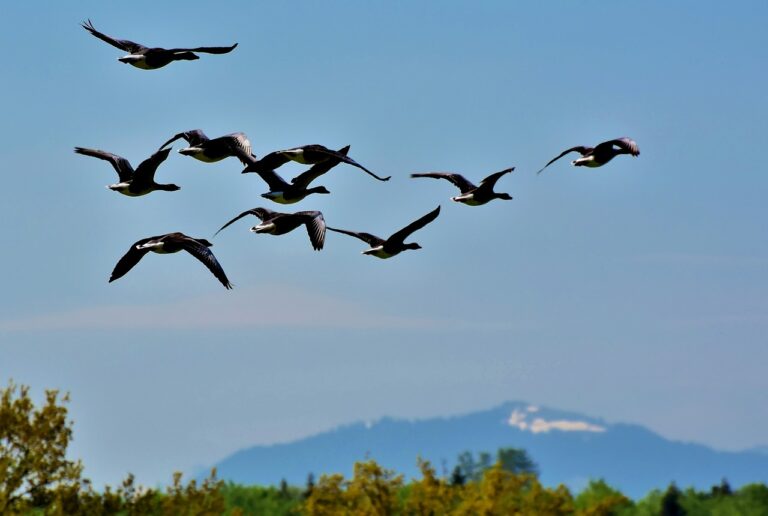
Sleeping while flying could be common among other bird species — such as common swifts (Apus apus), which can fly for 10 months without landing — though scientists have no direct evidence for this.

But perhaps more surprisingly, the study found that the frigatebirds, while flying, slept on average just 42 minutes per day, even though they typically got more than 12 hours of shut-eye on land.

Does Rattenborg think we’ll ever find an animal that doesn’t sleep at all?

“Anything is possible,” he said. “However, an emerging pattern among the studies of short-sleeping animals is that none are completely sleepless. This preservation of a little sleep suggests that there is a minimum amount of sleep that is essential, even in these remarkable short sleepers.”

Mitiyala Wildlife Sanctuary

Positioned at a short distance from Gir Forest National Park, Mitiyala Wildlife Sanctuary is also known as one of the hangout of the Asiatic lions that decides to walk up to the sanctuary from the nearby Gir National Park.

WSON Team

Spotted deer, wild boars and blue bull are the other wildlife species that can be seen here. Tall grasses, swelling hill tracks and semi-dry deciduous trees are the uniqueness of this wildlife reserve. The best time to visit this sanctuary is between November and March.

336 migratory birds reported dead in Himachal’s Pong Dam Wildlife Sanctuary

As many as 336 migratory birds were reported dead in Himachal Pradesh’s Pong Dam Wildlife Sanctuary area on Wednesday. In the Union Territory of Chandigarh, five birds have been found dead.

In all, avian influenza (H5N1) has led to the death of around 2,736 migratory birds in Himachal Pradesh, so far, in the sanctuary area in district Kangra of the State. In Chandigarh, the reason for the death of birds has not been ascertained so far.

An official statement from the State Forest department said that the cause of mortality in migratory birds at Pong Dam Wildlife Sanctuary has been identified to be H5NI avian influenza virus on the basis of test results of samples sent to the National Institute of High Security Animal Diseases (NIHASD), Bhopal.

“The wildlife wing of the Forest Department is working actively to control and contain this outbreak and field staff has been directed to maintain strict vigil and active surveillance on the situation. As per action plan of animal husbandry for preparedness, control and containment of avian Influenza issued by government of India, rapid response teams have been constituted and deployed for collection and safe disposal of dead birds as per protocol. The infected areas are being disinfected and sanitized,” said the statement.

In Chandigarh, five birds, including migratory birds, were found dead at Sukhna lake and its surrounding areas. The wildlife team of the Department of Forest and Wildlife on the evening of January 5 found one dead common coot bird, and on January 6, four more birds of other species, including a common crow, were found dead at the regulatory end of the Sukhna lake, said a statement.

The reason for the bird deaths has not been ascertained so far. Sample have been been sent for testing, it added.

Punjab Animal Husbandry Minister Tript Rajinder Singh Bajwa said that no case of bird flu has been reported in Punjab so far.

The State government, however, has taken all precautionary measures to deal with any situation, he said addressing a press conference here.

“People who eat eggs and meat do not need to be afraid. They just need to eat these products cooked properly,” he said, adding that the Animal Husbandry Department along with other departments of the State government was closely monitoring to ensure that sub-standard meat and fish were not sold in the market.

Rajasthan: Search Intensified After Tiger Spotted with Wire Snare Around Neck

In the wake of a Ranthambore tiger being spotted with wire snare around its neck, the forest department of the Rajasthan government has issued a ‘Red Alert’ till February 28, 2021 for all wildlife reserves, sanctuaries, and parks in the state. Under the ‘Red Alert’, all forest officials have been directed to intensify search operations and seek local police assistance to nab hunters and criminals.

The order issued on Saturday says, “All forest officials under the ‘Red Alert’ have been directed to intensify search operations and seek help from local police to nab hunters and criminals. The department further cancels leaves of all field officers, and directions have been issued for effective patrolling against illegal activities in protected areas,” it says further.

The order also added that reports had earlier been received from the Ranthambore Tiger Reserve about animals being caught in traps laid by hunters.

“Recently, five hunters have also been arrested in Mount Abu for hunting a sambar deer, looking to which red alert has been announced till February 2021,” it said. Forest department’s senior officer Shruti Sharma gave clear orders that all officers and employees will work seriously in hunting for the hunters during the red alert.

Earlier, a total of 26 tigers have also been reported missing from Ranthambore.

The tiger T-108 spotted with wire has raised many questions, such as, have these tigers also fallen prey like T-108? What happened to them is yet to be answered by the forest department officials.

Rajsamand MP, Diya Kumari, earlier in August had sent a letter to Union Minister of Environment and Forests Prakash Javadekar and raised a demand to issue necessary guidelines to the state government for investigating the causes of the recent tiger deaths so that such incidents do not recur.

Jamjir Waterfalls – A Scenic Place to Arouse Your Poetic skills

Jamjir Waterfalls – A Picture Perfect Place for Photographers

It’s proven that 75 percent of the human brain consists of water and sound of running water helps reducing depression, increases pro-social behaviour and gives us more energy. Now, if you agree to this and are looking for place to boost your mental wellbeing, Jamjir waterfalls are the place you must head to!

Jamjir falls, a mesmerising place near sasan gir, is a heaven for creative people like painters, writer and poets, provided you forget your gadgets and carry just a pencil or pen and paper (Exception for photographers).

Considered as the largest one in Gujarat, Jamjir falls in Saurashtra region and very near to Kodinar town. As the water falls into a deep pool with great falls, its sound and intensity will surely make you say – WOW!

Location

WSON Team

Jhamjir waterfalls is a part of Junagadh district and is located at a distance of 23 kilometres from the world famous Gir Wildlife Sanctuary and 37 kilometres from Kodinar.

Best Time to Visit

As this a natural waterfall, it flows all round the year, but still the best time to visit is July to September. As it is the monsoon season the flow is really high.

Reaching Jamjir waterfalls

The nearest airport to this place is Diu, located about 45 kilometres away and Veraval railway station is just 50 kilometres from this scenic place.

Accommodation

WSON Team

The nearest option to stay here is Jamjir reatreat, A homestay provided by prince of royal state of Chuda in Saurashtra, Falgun Singh Jhala. If you wish to indulge in some spiritualism as well, there is also an ashram just near the entry/exit of waterfalls.  There are also more than two dozen of hotels and resorts in Sasan Gir. Many local people are also offering homestays at an affordable rate.

Beware

WSON Team

Though Jamjir is a delight for selfie lovers, one needs to be very careful while pursuing this sport as it has already claimed several lives. As there is no access to the bottom of the pool where water falls down, it is not safe place to bath or swim. Also there is trek of 5-10 mints from car parking area towards the fall which is rocky and can be problematic for leg /knee/foot patients.

To do

The best thing to do here is enjoy some solitude and give sometime to yourself. Carry a pen and notepad and just like the water let your thoughts flow on that piece of paper. The local people are very warm, welcoming and mostly farmers, so a visit to groundnut or sugarcane fields will surely make your tip a memorable one. Taking a tour at one of the Jaggery workshops can be interesting.

Jamjir is also a grat place for Bird watching and bird photography. A historic Shiva temples and Hanuman Temple is very near to the waterfalls. The trip can be combined with other two water falls on way and other nearby places.

Food

vegfoodrecipes.in

Local food items like Bajri Rotla (millet bread) served with Baigan Bharta (eggplant vegetable) are popular delicacies among local people. Chhash (butter milk) and white butter is an essential part of traditional food of Saurashtra. Authentic Gujarati taste can be enjoyed by having food offered at homestays.

Nearby tourist places

WSON Team

Tulsi-Shayam is a famous temple very neat to this Jamvala. While your stay a jungle safari at Gir Wildlife Sanctury is a thing one cannot afford to miss.  Neaby tourist places include Somnath, Junagadh, Diu and Dwarka.