
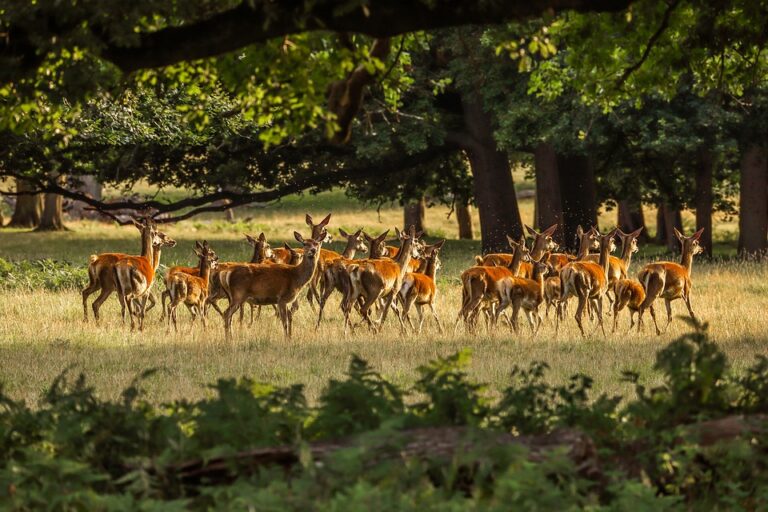
Centre Releases Management Report Of 146 National Parks, Wildlife Sanctuaries

Environment Minister Prakash Javadekar on Monday released Management Effectiveness Evaluation (MEE) report of 146 national parks and wildlife sanctuaries in the country, saying 70 per cent of global tiger population and over 60 per cent of leopard population in India is a certificate of its thriving biodiversity.

The minister also announced that from this year onwards ten best national parks, five coastal and marine parks and top five zoos in the country would be ranked and awarded every year.

“Seventy per cent of the global tiger population, 70 per cent of asiatic lions and more than 60 per cent of leopards” population in India is a certificate of India’s thriving biodiversity, as these big cats sit at the top of food chain and their growing numbers shows the well being of the whole ecosystem,” Javadekar said while releasing the report for the fist time.

As per the MEE report, West Bengal’s Jaldapara national park and Raiganj wildlife sanctuary, Himachal Pradesh’s Sainj and Tirthan wildlife sanctuaries as well as the Great Himalayan national park have been declared as top five national parks and wildlife sanctuaries in India.

Two wildlife’s sanctuaries in UP — Turtle WLS and Jai Prakash Narayan Bird sanctuary — and one each in Haryana, Assam and Rajasthan ranked as the bottom five.

At present, India has a network of 903 protected areas covering about five per cent of the total geographic area of the country. In order to assess the efficacy of protected areas, evaluation of management effectiveness is required, the ministry said.

Management Effectiveness Evaluation (MEE) of Protected Areas (PAs) has emerged as a key tool for PA managers and it is increasingly being used by governments and international bodies to understand the strengths and weaknesses of the protected area management systems, it said.

“MEE is a very important document that provides valuable guidance on various aspects of wildlife and protected areas…A new framework for MEE of Marine Protected Areas has been also jointly prepared by Wildlife Institute of India (WII) and the ministry and it will be very useful document to implement,” the ministry said.

The assessment process of India’s National Park and Wildlife Sanctuaries was adopted from International Union for the Conservation of Nature (IUCN) World Commission on Protected Areas (WCPA) framework of Management Effectiveness Evaluation (MEE).

There are 30 ”Headline Indicators” developed under six elements of MEE framework suitable in Indian context for evaluation.

Each ”Headline Indicator” had four possible answers, ”poor” (score 2.5), ”fair” (score 5), ”good” (score 7.5) and ”very good” (score 10) to choose for evaluation. The total score would be 300 by including a maximum score of all questions.

The ratings are assigned in four categories, as Poor — up to 40 per cent; Fair — 41 to 59 per cent; Good — 60 to 74 per cent; Very Good — 75 per cent and above.

The environment minister also launched the Management Effectiveness Evaluation of Indian Zoos (MEE-ZOO) framework which proposes guidelines, criteria and indicators for evaluation of zoos of the country in a manner which is discrete, holistic and independent.

The assessment criteria and indicators look beyond the traditional concepts, include issues of animal welfare, husbandry and sustainability of resources and finance.

“The MEE-ZOO exercise is moving towards developing highest standards in zoos across India and adhering to core values of accountability, transparency, innovation, use of technology, collaboration and integrity to achieve the mandate of conservation of endangered species,” it said.

Unleashing the princely beauty- Devgadh Baria

The name constructed by the shared grandeur of a hill and a village.

Devgadh Baria is one of the most splendid towns in Gujarat captivating a bunch of welcoming people and scenic beauty that makes it worth visiting especially during the monsoons. Crossing the lush green meadows on a three plus hour road trip from Ahmedabad is totally worth its charisma.

WSON Team

Seeing the drama of the peahens and peacocks welcoming you to the town of simplicity will make you go gaga over the subtle magnificence of the same. While the families of Baria visit Devgadh (the hill) to celebrate every little joy of their lives, the devi mandir at the top rewards you with the best of scenic treat which is popularly known as Baria (the town).

Baria, on one hand is a collective vase holding pretty fresh buds ready to bloom at the earliest as the town has featured most of the top Chartered Accountant students. Not only this, but Baria has witnessed over four Bollywood film shoots namely parts of Saheb, Biwi aur Gangster, shot mostly at the Raj Mahal; capsuling a spacious land with immense greenery.

Sakshi Saxena, WSON Team

Devgadh Baria surprises you more than you expect because every time you cross the main chauraha of the town, you either end up smelling the enticing Samosa-Kachoris from the Mehtas or get entangled in the loopy conversations of the ultra-sweet gentry. With the facilities of a well-organized Govt. hospital plus dispensary, ATMs, Gymkhana, eateries, etc. Baria, on the whole offers you time and peace. With well managed little offices to minimal workloads, people find their pouch of happiness in their work.

Sakshi Saxena, WSON Team

The town mostly shuts by 9 in the night and in case you lose the track of time in your schedule, the Ghantaghar’s bell is right there to ring you up every hour denoting the course of day. The oldest Vidyalaya, Ranjitsinh ji High School, still echoes the sound of boys playing cricket in the hot summer playground.

In a conversation with Dr. Ashok Johri, who happens to be a pediatrician as well as a close family member says-“Baria is a wonderful place to be at, it gets wonderful during Monsoons” and now it’s been over than a decade he’s residing in the town and holds a hospital for the kids of the town.

Talking about the attractions in and around the town, one shouldn’t miss the beauty of Raj Mahal which still is the dwelling space of the Chauhans.

Raj Mahal

Sakshi Saxena, WSON Team

The royal house in the dainty town of Gujarat is a space spread over acres of land where the royal family of the Chauhans still reside. Offering over 60+ rooms, the majestic white beauty is a soulful treat to every visitor of Baria. While the Raj-Maali maintains the garden outside the bungalow, the fountains add to the beauty of it.

Sakshi Saxena, WSON Team

Since the population isn’t over a bunch of 10,000 souls, Baria makes you feel homely even when you visit it for the first time and the people readily wake up early on their Sundays to show you the place around.

Devgadh BaapJi Mandir

Sakshi Saxena, WSON Team

What is the best gift India gives you while you trek high up a hill? It gives you a mandir, a little dainty space that’d offer a spectacular vision down the hill and the one you’re surely going to take your cameras out on.

An interesting fact that comes along this mandir is the sacred craft of the region which are the terracotta horses with an open mouth. People here, have a strong belief in the local god Baapji that pours in the pious energies and also fulfills the wishes been asked by the visitors.

A common practice here is to turn the face of the horses to the back when the wish is fulfilled with the positive blessing of Baapji. Located on the top of the hill, you can either trek your way through the path for an adrenaline rush in the blood or can even opt for a gypsy ride that can drop you right at the top.

Hawa Mahal (ruins)

Sakshi Saxena, WSON Team

Next to the temple at the top, you’d be mesmerized by the beauty of these ruins of Hawa Mahal hold a strong history and was earlier a place for the Chauhan kings to hide themselves during a war and was later defined as a servant quarter where all the workers of the royal family stayed.

Sakshi Saxena, WSON Team

The breath-taking narrow steps of the palace are sure to take you to a state of complete wonder as it opens up to a balcony as photogenic as the hill top. Places with a strong cultural and communal sense are sure to leave you stunned at Devgadh Baria.

RanjitSinh ji Sr. High School

Sakshi Saxena, WSON Team

A former student of the school and a native of Baria, Hiten bhai expresses his love for the school by saying, -“The Banyan tree here still reminds me of my childhood wherein the whole school would gather under the tree for assemblies, blood-donation camps, polio Sundays, etc.” The big banyan tree has been in the school for more than 80 years now and it truly reflects the glory of a happy town, Baria.

Sakshi Saxena, WSON Team

Located in the Dahod district of Gujarat, the town is perfect for your weekend getaway from Ahmedabad/Baroda. While the best season to visit Devgadh Baria begins from August-October, it is always suggested to drive carefully on the concentric hill roads of the town. Not restaurant grand, but Baria offers decent food at the little eateries which is then coated with love and joy and served to you with a smile. Fresh Lassi and Kulfi also are a must bite at the town.  Moreover, the princely state is truly worth a visit.

Uncovering the rufous hummingbird migration

0

One fall when Josée Rousseau was banding birds as a field technician at a station in Northern California, she was surprised to capture rufous hummingbirds. The species migrates from breeding grounds in Alaska and Oregon to wintering sites in Mexico, but California wasn’t known to be along the bird’s fall migration route.

“I just became more and more curious,” said Rousseau. So with some original funding from Western Hummingbird Partnership, then as part of her PhD research at Oregon State University, she set out to find out more about the tiny birds’ migration and what it might mean for the declining species.

She led a study published in Avian Conservation and Ecology looking at long-term records of every migrating rufous hummingbird (Selasphorus rufus) ever banded to determine their migration patterns and uncover how these changed due to sex and age.

When it came to collecting long-term, large-scale data, Rousseau was in luck. “In North America, all of the people capturing birds, regardless of the bird species they are banding, receive their bands from the USGS Bird Banding Lab. In return, they have to give the Bird Banding Lab back data including age and sex,” she said. “I think it’s a huge treasure of information to tap into if you’re interested in large-scale patterns.”

Rousseau and her colleagues already knew from local studies that adult males, adult females and young birds started their migration at different times. The bird banding data confirmed that.

When they looked deeper, they found that the routes the birds took changed based on their age and sex.

“Adult males were migrating first on average, but they seemed to be using a much more eastern route than any other age-sex category,” she said.

Mature hummingbirds usually migrated through the Rockies. Young birds, regardless of sex, migrated more westerly. “A lot of them were migrating through California — much more than the adults,” she said. That explained the rufous hummingbirds she captured as a technician. They also found that adult females tended to have a southbound migration route that was parallel to and between those of young and adult males.

Rousseau said she hopes to learn more about why there are differences in migrations based on age and sex, but she suspects climate and plant phenology may play a role. Males leave two weeks before females, and three to four weeks before young birds. “When you think about when plants are flowering and when storms are coming in the fall, that must have an impact on the hummingbirds as they’re migrating,” she said. “I suspect this might have something to do with the selection of migration routes.”

Rousseau and her colleagues hope the research provides more information about the declining species, especially since birds often have a lower survival during migration.

“If you combine the fact that they’re a declining species and migration is one of the riskiest stages in their life, adding information about their migration is super relevant to conservation,” she said. “If different ages or sexes are encountering different conditions of climate or plant phenology, they may be affected differently and have different survival rates.”

Impact of urbanization on wild bees underestimated

Wild bees are indispensable pollinators, supporting both agricultural productivity and the diversity of flowering plants worldwide.

But wild bees are experiencing widespread declines resulting from multiple interacting factors. A new University of Michigan-led study suggests that the effects of one of those factors — urbanization — may have been underestimated.

The study, led by a group of current and former U-M students and conducted at sites across southeast Michigan, looks at one aspect of this topic they say has received scant attention from bee researchers: the sex ratio of wild bees and how it changes across a rural-to-urban land-use gradient.

The team found that the sex ratio of wild bees became more male-dominated as urbanization increased, mainly driven by a decline in medium- and large-bodied ground-nesting female bees. The study, published March 6 in the journal Scientific Reports, is believed to be the first investigation of observed sex ratio in a complete wild bee community along a rural-to-urban gradient.

“These findings have potential implications on bee population health and pollination services, since male and female bees often have different pollination behaviors,” said Paul Glaum, one of the study’s first authors and a postdoctoral researcher in U-M’s Department of Ecology and Evolutionary Biology.

Female and male bees of the same species often pollinate different plant species. As a result, a decline in female bees has the potential to limit pollination services for part of the plant community, he said.

Additionally, a declining female population can mean fewer mates for male bees. This threatens ground-nesting bees’ reproduction rates and their ability to maintain future generations of pollinating bees. It may even threaten the genetic diversity of these species, Glaum said.

“Our results suggest that research may be underestimating the negative impacts of urbanization on ground-nesting bees and highlight the importance of considering sex-specific differences in bee behavior when analyzing the effects of environmental change on bee populations,” he said.

To better understand how urbanization affects wild bee populations, the U-M-led team sampled wild bees at community gardens, nature reserves and farms across southeast Michigan. Sampling was done at 26 sites spanning nearly 70 miles.

Land use surrounding the sampling sites ranged from densely populated cities to suburban to rural-agricultural. Sampling was done in several southeast Michigan cities, including Dexter, Ann Arbor, Ypsilanti, Dearborn and Detroit.

Team members caught more than 3,300 bees from 143 species. Because they were strictly interested in the effects of urbanization on wild bees, domesticated European honeybees were not included in the analysis.

Seventy-four percent of the captured bees belonged to species that nest underground (ground-nesting), and the rest belonged to species that nest above ground in cavities or hollow tree stems.

The researchers found that the sex ratio of the wild bees became more male biased as urbanization increased, mainly driven by a decline in medium- and large-bodied ground-nesting female bees. In their Scientific Reports paper, the researchers suggest several possible explanations for these findings.

In urban landscapes, where floral resources are scattered and patchy, larger-bodied male bees are more likely than females to disperse sufficiently far from their home nest to reach food sources and to survive.

An alternative explanation for the observed sex ratio shift has to do with urbanization-induced changes in sex allocation by bees.

In most bee species, the production of reproductive females requires a greater investment of food resources than the production of males. As a result, a scarcity of pollen and nectar could result in a shift toward production of more male bees.

“While multiple studies have found reductions in ground-nesting bee populations in urban areas, the magnitude of these reductions may be greater than what total abundance measures indicate if, as we suggest in this study, urban ground-nesting bee populations are subsidized by males dispersing from less urban areas,” the authors wrote.

Populations of many wild bee species are in widespread decline worldwide to due multiple interacting factors.

Habitat loss, parasites and disease, pesticide use and climate change have all been blamed. Urbanization contributes to habitat loss, and that trend is expected to accelerate in coming decades.

Previous studies have consistently found a reduced abundance and/or diversity of ground-nesting bees in urban areas, a finding that has been attributed to the lack of suitable nesting sites in cities.

Hundreds flock to Maryland park to view ‘exceptional’ rare bird

Hundreds of people have flocked to the Washington DC area to catch a glimpse of a new, celebrated arrival who has offered some welcome relief following a bruising year. No, it’s not Joe Biden.

Excited birders have crammed into a Maryland park, braving rain and dismally low temperatures, to witness the painted bunting, a brightly coloured bird that usually reserves its elan for the warmer climes of Florida. Word spread of the bird’s presence after a posting on the eBird website, causing a surge of visitors to the Chesapeake and Ohio Canal National Historical Park, found on a bend of the Potomac River, a short journey north-west of Washington. On Saturday, more than 80 cars were still in line to get into the park shortly before its sundown closure, the Washington Post reported.

The birders included Jacques Pitteloud, whose day job is Switzerland’s ambassador to the US. “To see it close to DC, that was absolutely unrealistic,” Pitteloud, who has been birdwatching since he was a young boy, told the Post. The painted bunting was “exceptional”, he added.

The unusual avian arrival is highly distinctive, with its brilliant blue head, red belly and flashes of green and red on its back. The bird spotted in the park was a male – the females are a more uniform green colour.

Painted buntings are about 5in in length, dine on seeds and insects and prefer to construct nests in dense foliage. The species is also one that is having its preferred conditions warped by the climate crisis, according to Audubon, with rising global temperatures causing changes in the range of the painted bunting along with other species such as the western bluebird, American goldfinch and spotted towhee.

Species in various countries are now being pushed north as conditions heat up, with researchers warning last year that two-thirds of North American bird species are at risk of extinction due to the climate crisis. “Climate change is disrupting hundreds of bird species, and thanks to community scientists all across the country, we can visualize these disruptions in real time and plan conservation efforts accordingly,” said Sarah Saunders, a quantitative ecologist at Audubon.

But, for now, people near Washington can at least enjoy the presence of a flamboyant arrival that is set to become the latest winged celebrity following Barry the barred owl and the “hot duck”, both found in New York City’s Central Park. “While it’s not a good sign for climate change, a painted bunting, one of my favorite birds, being in our nearby park brings me joy!” tweeted Margaret Johnson, a professor at the University of Baltimore School of Law.