Frogs, toads on the verge of extinction: study

A deadly disease is threatening to wipe out frogs and toads, a new report has shown.

The report, published on nature.com, shows Chytridiomycosis, a fatal fungal disease, as responsible for the continuous decline in the population of the amphibians worldwide.
It is estimated that more than 100 species of frogs and toads are already extinct and populations of many more are severely depleted because of the disease.

“Chytridiomycosis is a fatal fungal skin disease that affects amphibians. The disease affects approximately 42 per cent of species examined, causing declines and extinctions around the world,” says the report.

The researchers noted that the frogs and toads were declining fast, adding that there was urgent need to find ways to reverse the trend.

Frogs and toads play an important role in the production of food by eating deadly insects. They are also a source of food to birds and snakes, and are used in research. Culturally, frogs played an important role in telling folk tales. Their decline may also be indicative of a compromised environment.

International Union of Conservation and Nature data shows 1,800 species of amphibians face extinction.

Researchers discover new species of snail-eating snake in Arunachal Pradesh

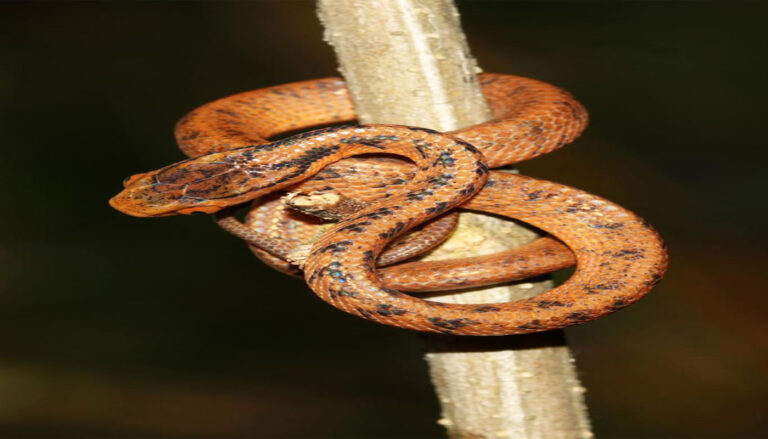
A team of researchers have discovered a new species of snail-eating snake Pareas kaduri, of the genus Pareas from the eastern Himilayas.

Members of the snake subfamily Pareinae, are strictly nocturnal, arboreal and are one of the most fascinating groups of snakes that feed on rather unusual prey. They specialise in feeding on snails and present a remarkable case of dietary specialization where they have asymmetry in their dentition on the maxilla to devour prey like snails and slugs.
The research team includes Harsha Bhosale and Mandar Sawant from Bombay Natural History Society, Mumbai, Pushkar Phansalkar from Pune, Gaurang Gowande from Abasaheb Garware College, Pune, Harshil Patel from Veer Narmad South Gujarat University, Surat, and Zeeshan A Mirza from National Centre for Biological Sciences, Bengaluru.

Zeeshan told TOI, during a herpetological expedition from June 25 to August 5 2019, we surveyed several localities across the northeastern state of Arunachal Pradesh. During the surveys, we collected specimens of Pareas which looked visually similar to each other that were later identified to belong to two sympatric species based on the structure of the hemipenis. One population was attributed to the species P. monticola based on ventral scale number and lack of keels on dorsal scales and shape of hemipenis. The other, however, could not be attributed to any of the species reported from India, owing to the differences in scalation and hemipenis morphology.

“To identify the second population that was collected from near Kamlang Wildlife Sanctuary in eastern Arunachal Pradesh, we generated molecular data for the collected specimens and compared them with known species. Results from the molecular analysis show that the specimens are genetically distinct from other species of thile genus and comparison of the morphology of known species further attests the findings. Hence, we described the population of Pareas from eastern Arunachal Pradesh as a new species following an integrative taxonomic approach incorporating morphological, osteological and molecular data,” Zeeshan said. The species has been named Pareas kaduri, after Bangalore based National Geographic photographer Sandesh Kadur. A research paper on the new species was published in the European Journal of Taxonomy.
Stressing on the need for conservation, he said, “This is the third discovery of a species from the area. Unfortunately, this area is close to Dibang Valley, where the government has proposed a hydroelectric power project, which will lead to the destruction of natural habitat.

Kutch: Flamingos throng Kutch amid lockdown

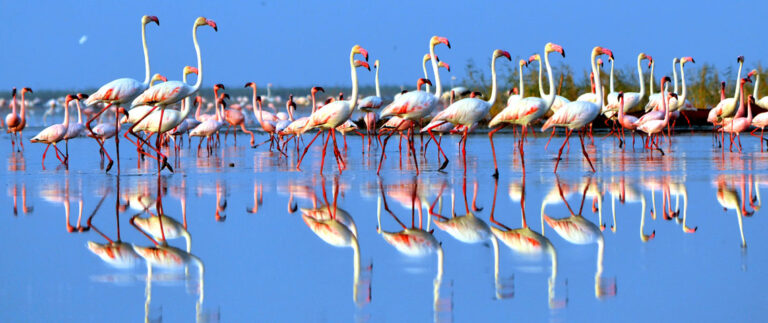
With flamingos thronging Gujarat after the onset of monsoon, the Kutch Desert Wildlife Sanctuary has been bathed with hues of pink. Flamingos also called as Surkhab, is considered to be Lakhajee’s friend, a famed ruler of Kutch in ancient times.

As the human activities are minimal during the lockdown, the visit of majestic flamingos have increased manifold and the sanctuary has turned into ‘Surkhab Nagri’. Nalsarovar and Kutch provide a haven to approximately 12 lakh birds. Experts believe that amid lockdown Kutch has become a host to a massive influx of flamingos

For the first time after 2012, more than three lakh flamingos have visited Kutch and built 10,000 nests. Better known as Surkhab Nagar, this place is the largest flamingo breeding sight in the country. At least 30 per cent migratory birds from Russia come here and make nests.

Exotic birds are currently being spotted at all the bird sites in Kutch, including Khadir Bet, Amarapar, Shanku Lake, Anda Bet, Hang Bet of the Great Rann of Kutch. These birds arrive in Kutch from Siberia and other places during winters.Not only the desert, but the hills and seashore of Kutch are also suitable for the habitat of a variety of birds. It is estimated that there are about 100 small and large sites for birds in Kutch and so bird watchers from 120 countries come to Kutch.

Climate change may be making migration harder by shortening nightingales’ wings

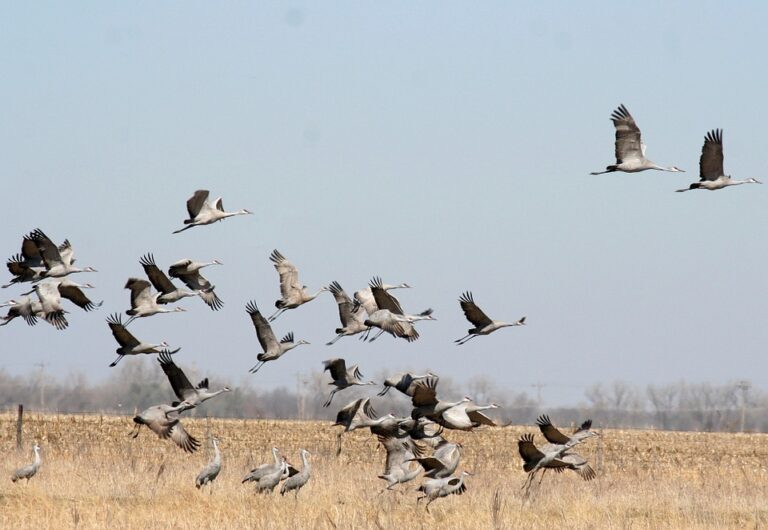
The Common Nightingale, known for its beautiful song, breeds in Europe and parts of Asia and migrates to sub-Saharan Africa every winter. A new study published in The Auk: Ornithological Advances suggests that natural selection driven by climate change is causing these iconic birds to evolve shorter wings, which might make them less likely to survive their annual migration.

Complutense University of Madrid’s Carolina Remacha and Javier Pérez-Tris and their colleagues analyzed twenty years of data on wing shape variation and survival in two populations of nightingales from central Spain. They found that nightingales’ average wing length relative to their body size has decreased over the past two decades, becoming less optimal for migration. Shorter-winged birds were less likely to return to their breeding grounds after their first round-trip to Africa. But if this change in wing length is negatively affecting survival, what is driving it?

The “migratory gene package” hypothesis predicts that a suite of adaptations related to migration — including a long wingspan as well as a higher resting metabolic rate, larger clutch size, and shorter lifespan — may all be controlled by a set of genes that are linked so that selective pressures on one trait also affect the others. In recent decades, the timing of spring has shifted in central Spain and summer droughts have become longer and more intense, leaving nightingales with a shorter window in which to raise their young. This means the most successful birds may be those that lay smaller clutches of eggs, giving them fewer young to care for. And if natural selection is favoring smaller clutches, it may simultaneously push nightingales away from all of the linked traits in the “migratory gene package.”

Natural selection on clutch size that inadvertently leads to shorter wings and, therefore, reduced survival is an example of “maladaptation,” where organisms’ responses to changing conditions end up being harmful instead of helpful. “There is much evidence that climate change is having an effect on migratory birds, changing their arrival and laying dates and their physical features over the last few decades,” says lead author Carolina Remacha. “If we are to fully understand how bird populations adapt to new environments in order to help them tackle the challenges of a rapidly changing world, it is important to call attention to the potential problems of maladaptive change.”

Why do dogs have cold noses?

0

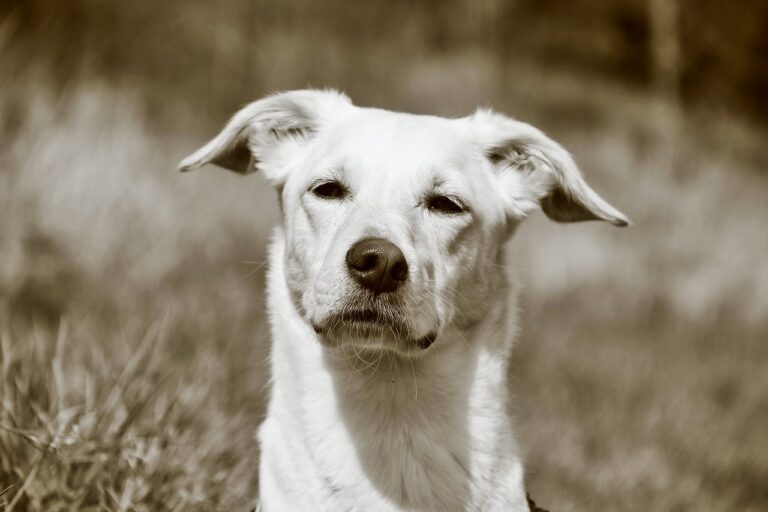
After an especially good belly rub, a dog might bump its nose into its human as a way of saying thanks. Often, this snoot boop feels cold and wet. The owner might wonder: Is it normal for a dog’s nose to feel like this?

The answer is yes, it’s normal. But so is a warm nose, especially after snoozing, said Anna Bálint, a researcher who studies animal behavior at Eötvös Loránd University in Budapest, Hungary. “When a dog is asleep, their nose usually warms up, and it also dries,” she told Live Science. Then, the dog wakes up, gives its nose a lick, and it’s back to cold.

But why are dogs’ noses cold, and could there be a benefit? One idea is that the dog’s cold nose could help the furry beast regulate its body temperature. But the nose tip is so small, it’s likely unable to meaningfully contribute to a dog’s overall thermal regulation, Bálint said.

To investigate further, an international team of scientists measured the temperature of many animals’ noses, including a horse, dog and moose. By the time Bálint joined the project, the team had already learned that the nose tips, or rhinariums, of dogs and carnivorous animals are usually cooler than those of herbivores. Perhaps, a cooler nose tip could be an advantage in the wild, the researchers thought.

The team conducted two experiments — one looking at behavior and another at the brain — to see whether a cold rhinarium could make for better heat detection. In the first experiment, the team successfully trained three pet dogs to choose a warmer object, about the same temperature as potential prey, over an object at room temperature. The results indicated that dogs can detect weak thermal radiation from a distance akin to hunting prey.

In the second, brain-centric investigation, scientists presented a box containing warm water and an insulating door to 13 pet dogs trained to lie still in a functional MRI scanner. The dogs’ brains had a higher response when the insulating door was open, revealing the warmer surface, as compared with the neutral one. The region that lit up on the MRI was located in the left hemisphere only. This side of the brain interests scientists because it tends to process responses to food, which in turn has been linked to predatory activity in many vertebrates, Bálint said. The specific region that lit up in the dogs — known as the somatosensory association cortex — helps bring together different sensations such as vision, body position and warmth, she added. This part of the brain combines these senses simultaneously in order to plan an action toward a goal, like targeting an object.

Given that this left-sided neural region lit up when the nose tip was exposed to a warm surface, it’s possible that dogs, and possibly other cold-nosed animals, could be using a heat detection sense along with other senses in their ‘hunting toolbox’ when they’re in pursuit of prey, the researchers said.

Although the recent study, published in February 2020 in the journal Scientific Reports, is too small to firmly close the case on cold noses, Bálint said a cold nose could be more sensitive to differences in temperature. “People think canines follow their olfaction [sense of smell], which is probably really true,” Bálint said. But windy conditions or stormy weather can make it hard for a working dog to follow scents. “A heat signal could help them.”

So, why is a dog’s nose cold? Bálint and her team continue to search for answers to this question. Now, they’re wondering at what distance this type of heat detection could be useful. For now, only the dog’s nose knows.