How birds evolved big brains

0

Brain evolution traced from tyrannosaurs to modern crows

An international team of evolutionary biologists and paleontologists have reconstructed the evolution of the avian brain using a massive dataset of brain volumes from dinosaurs, extinct birds like Archaeopteryx and the Great Auk, and modern birds.

The study, published online today in the journal Current Biology, reveals that prior to the mass extinction at the end of the Cretaceous Period, birds and non-avian dinosaurs had similar relative brain sizes. After the extinction, the brain-body scaling relationship shifted dramatically as some types of birds underwent an explosive radiation to re-occupy ecological space vacated by extinct groups.

“One of the big surprises was that selection for small body size turns out to be a major factor in the evolution of large-brained birds,” says Dr. Daniel Ksepka, Curator of Science at the Bruce Museum and lead author of the study. “Many successful bird families evolved proportionally large brains by shrinking down to smaller body sizes while their brain sizes stayed close to those of their larger-bodied ancestors.”

In order to understand how bird brains changed, a team of 37 scientists used CT scan data to create endocasts (models of the brain based on the shape of the skull cavity) of hundreds of birds and dinosaurs, which they combined with a large existing database of brain measurements from modern birds. They then analyzed brain-body allometry: the way brain size scales with body size.

“There is no clear line between the brains of advanced dinosaurs and primitive birds,” notes co-author Dr. Amy Balanoff of Johns Hopkins University. “Birds like emus and pigeons have the same brains sizes you would expect for a theropod dinosaur of the same body size, and in fact some species like moa have smaller-than-expected brains.”

The two groups of birds with truly exceptional brain sizes evolved relatively recently: parrots and corvids (crows, ravens, and kin). These birds show tremendous cognitive capacity, including the ability to use tools and language, and to remember human faces. The new study finds that parrots and crows exhibited very high rates of brain evolution that may have helped them achieve such high proportional brain sizes.

“Several groups of birds show above average rates of brain and body size evolution,” remarks co-author Dr. N. Adam Smith of the Campbell Geology Museum at Clemson University. “But crows are really off the charts — they outpaced all other birds. Our results suggest that calling someone ‘bird-brained’ is actually quite a compliment!”

“Crows are the hominins of the bird kingdom,” says co-author Dr. Jeroen Smaers of Stony Brook University. “Like our own ancestors, they evolved proportionally massive brains by increasing both their body size and brain size at the same time, with the brain size increase happening even more rapidly.”
Gir National Park: The land of Asiatic lion

0

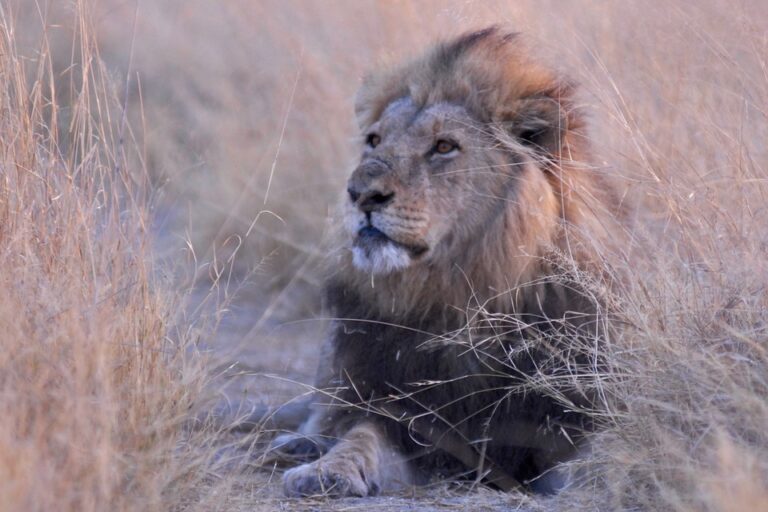
Scraggly, brown, dry and thorny. Gir, the last bastion of the Asiatic lion, is a beautiful but harsh teak dominated habitat in the Junagadh district in Kathiawar, Gujarat. Far from the stereotypical vision most people have of forests in the tropics, Gir is anything but ‘lush’. It is, nevertheless, one of India’s most precious and vital biodiversity vaults.

WSON Team

A semi-arid wilderness emblazoned by rust, beige and the occasional scarlet, when the flame of the forest and silk cotton trees are in bloom, Gir brings to mind visions of distant Africa, despite the fact that it lacks the extensive grasslands of the Masai Mara. Yet, something in these ecological circumstances proved to be just what the lions needed, for it is only here, in relatively small fragments of forests, supported by ‘poor quality’ teak, that one of the world’s rarest large cat survives.

WSON Team

The best time to visit the forest is any time between December and April. The weather is hot and dry, and in summer (February to June) temperatures can soar to over 430C. Winter (October-February) temperatures can be as low as 50C.

Monsoons last from June to October, when the park is closed to visitors. Gir is semi-arid with scanty rainfall (1,016 mm.) and almost every third year there is a drought with less than 500mm. of rainfall

WSON Team

Transport:

By Air:
Keshod is the closest airport about 60 km. away. It is well connected by road to Gir.

By Rail:
Junagadh railway station is 65 km. from Gir and is well connected by road. Sasan is the closest railway station, on the meter-gauge line. Slow steam trains run to Veraval twice daily, and to Delwada and Junagadh once a day.

By Road:
Sasan Gir to Ahmedabad 895 km., Rajkot 160 km., Junagadh 65 km., Veraval 43 km. State transport buses make the two-hour trip between Junagadh and Veraval via Sasan Gir throughout the day.

New research unpicks root causes of separation anxiety in dogs

0

Separation anxiety in dogs should be seen as a symptom of underlying frustrations rather than a diagnosis, and understanding these root causes could be key to effective treatment, new research by animal behaviour specialists suggests.

Many pet owners experience problem behaviour in their dogs when leaving them at home. These behaviours can include destruction of household items, urinating or defecating indoors, or excessive barking and are often labelled as ‘separation anxiety’ as the dog gets anxious at the prospect of being left alone.

Treatment plans tend to focus on helping the dog overcome the ‘pain of separation’, but the current work indicates dealing with various forms of frustration is a much more important element of the problem.

Animal behaviour researchers have now identified four key forms of separation anxiety, and suggest that animal behaviourists should consider these underlying reasons as the issue that needs treating, and not view ‘separation anxiety’ as a diagnosis.

The team, led by scientists from the University of Lincoln, UK, identified four main forms of distress for dogs when separated from their owners. These include a focus on getting away from something in the house, wanting to get to something outside, reacting to external noises or events, and a form of boredom.

More than 2,700 dogs representing over 100 breeds were included in the study.

Daniel Mills, Professor of Veterinary Behavioural Medicine in the School of Life Sciences at the University of Lincoln, said: “Until now, there has been a tendency to think of this as a single condition, ie “My dog has got separation anxiety” and then to focus on the dependence on the owner and how to make them more independent. However, this new work indicates that having separation anxiety is more like saying “My dog’s got an upset tummy” which could have many causes and take many forms, and so both assessment and treatment need to be much more focussed.

“If your dog makes themselves ill by chewing something it shouldn’t, you would need to treat it very differently to if it has picked up an infection. One problem might need surgery and the other antibiotics.

“Labelling the problem of the dog who is being destructive, urinating or defecating indoors or vocalising when left alone as separation anxiety is not very helpful. It is the start of the diagnostic process, not the end. Our new research suggests that frustration in its various forms is very much at the heart of the problem and we need to understand this variety if we hope to offer better treatments for dogs.”

The new study, published in the academic journal Frontiers in Veterinary Science, highlights how different emotional states combine to produce problem behaviours in dogs. Although it is first triggered by the owner’s departure, the unwanted behaviour arises because of a combination of risk factors that may include elements of the dog’s temperament, the type of relationship it has with the owner and how the two of them interact.

The research team will soon be building on the latest study to examine in greater detail the influence the dog-owner relationship has on problem behaviours triggered by separation. It is hoped the research will open up new, more specific treatment programmes for owners.

Velavadar National Park: Blackbuck

0

Velavadar is situated in the Bhal region of Saurashtra in Gujarat. It is a unique grassland ecosystem and perhaps the only tropical grasslands in India to be deemed a National Park. It is most renowned for its enchanting blackbuck population.

The elegant blackbuck is endemic to India and Velavadar is one of its prime home territories. Wolves are the main predators of blackbuck in the park. It is highly recommended for any birdwatcher, with several birds like the Lesser Florican visiting the area. Besides, Velavadar has also earned fame as the world’s largest roosting site of the harrier. Pack your bags, right away!

WSON Team, Click By- Kartik Bhavsar

Velavadar National Park extends over an area of 35 sq. km. comprising mainly flat grasslands. The Park lies between two rivers, some distance away from the Gulf of Cambay. The fertile soils are believed to have arisen from the sea.

This is a unique National Park with exclusive grassland habitat. The savannah type grasslands extend uniformly, interspersed with dry thorny scrub. The grasses on an average grow about 30-45 cm. tall.

Velavadar must feature on any birdwatcher’s itinerary. The international harrier expert, Roger Clarke of the UK, has certified the harrier roost at Velavadar National Park as one of the largest in the world. Harriers mainly arrive during the winter. Species found include the Pale Harrier, Montague Harrier, Marsh Harrier and the Hen Harrier.

WSON Team, Click By- Kartik Bhavsar

Several other bird species are also found in Velavadar. Sarus and Demoiselle Cranes, Painted and White Storks, the Spot-billed Duck and the White Ibis are some of the prominent amongst these. Sandgrouse, pintails and partridges abound while species like the Red Wattled Lapwing also make the occasional appearance.

Five species of larks are found at Velavadar including the Sykes’ Lark. The Red-necked Falcon, Painted Francolin, Rain Quail and flocks of the Indian Courser may also be encountered within the park. The Oriental Pratincole is fairly common and the Little Bustard Quail is sometimes seen.

WSON Team, Click By- kartik Bhavsar

The dainty Lesser Florican arrives in time for the rains, almost like clockwork, year after year. Velavadar is often quoted as one of the best places to observe the Lesser Florican. Sightings are almost assured during the monsoons, when they arrive to breed.
More than 1,000 blackbuck exist on the open grasslands of Velavadar.

These are shy and extremely graceful animals and the fastest of all Indian antelopes. The male has ringed horns spirally twisted into three or four turns; up to 70 cm. long. Females are light brown and usually lack horns. Wolves and jackals are prime predators in the park. Other mammals seen in Velavadar include the fox, jackal, jungle cat, wild pig, nilgai, the blacknaped hare and several rodents.

Transport:

WS0N Team, Click By- Kartik Bhavsar

By Air: The nearest airport is at Bhavnagar (65 km.).

By Rail: Bhavnagar, 65 km. from Velavadar is a convenient railhead. There are direct trains everyday from Ahmedabad to Bhavnagar (299 km.) Bhavnagar is 65 km. from the Park.

By Road: The park is 315 km. from Rajkot and 170 km. from Ahmedabad. It is most easily accessible from Bhavnagar city (65km.) Buses ply everyday between Bhavnagar and Velavadar. Two buses leave Bhavnagar every afternoon and return the next morning. The buses halt at Vallabhipur, 45 km. from the park. You can also hire taxis if you want to simply make a day trip to the park.

Eleven new species of rain frogs discovered in the tropical Andes

Eleven new to science species of rain frogs are described by two scientists from the Museum of Zoology of the Pontifical Catholic University of Ecuador in the open-access journal ZooKeys. Discovered in the Ecuadorian Andes, the species are characterized in detail on the basis of genetic, morphological, bioacoustic, and ecological features.

On the one hand, the publication is remarkable because of the large number of new species of frogs. Regarding vertebrate animals, most studies only list between one and five new to science species, because of the difficulty of their collection and the copious amount of work involved in the description of each. To put it into perspective, the last time a single article dealt with a similar number of newly discovered frogs from the western hemisphere was in 2007, when Spanish scientist Ignacio de la Riva described twelve species from Bolivia.

On the other hand, the new paper by Nadia Paez and Dr Santiago Ron is astounding due to the fact that it comes as part of the undergraduate thesis of Nadia Paez, a former Biology student at the Pontifical Catholic University, where she was supervised by Professor Santiago Ron. Normally, such a publication would be the result of the efforts of a large team of senior scientists. Currently, Nadia Paez is a PhD student in the Department of Zoology at the University of British Columbia in Canada.

Unfortunately, amongst the findings of concern is that most of the newly described frog species are listed as either Data Deficient or Threatened with extinction, according to the criteria of the International Union for Conservation of Nature (IUCN). All of the studied amphibians appear to have very restricted geographic ranges, spanning less than 2,500 km2. To make matters worse, their habitats are being destroyed by human activities, especially cattle raising, agriculture, and mining.

Amongst the newly described species, there is the peculiar Multicolored Rain Frog, where the name refers to its outstanding color variation. Individuals vary from bright yellow to dark brown. Initially, the studied specimens were assumed to belong to at least two separate species. However, genetic data demonstrated that they represented a single, even if highly variable, species.

The rest of the previously unknown frogs were either named after scientists, who have made significant contributions in their fields, or given the names of the places they were discovered, in order to highlight places of conservation priority.