Dogs evolved ‘puppy eyes’ to better communicate with humans: Study

0

Dogs have evolved facial muscles over thousands of years allowing them to make the cute ‘puppy eyes’ to better communicate with humans, a study claims. The study, published in the journal Proceedings of the National Academy of Sciences (PNAS), is the first detailed analysis comparing the anatomy and behaviour of dogs and wolves.

Researchers from University of Portsmouth in the UK found that the facial musculature of both species was similar, except above the eyes. Dogs have a small muscle, which allows them to intensely raise their inner eyebrow, which wolves do not.

The team suggests that the inner eyebrow raising movement triggers a nurturing response in humans because it makes the dogs’ eyes appear larger, more infant like and also resembles a movement humans produce when they are sad.

“The evidence is compelling that dogs developed a muscle to raise the inner eyebrow after they were domesticated from wolves,” said Juliane Kaminski, from University of Portsmouth.

“We also studied dogs’ and wolves’ behaviour, and when exposed to a human for two minutes, dogs raised their inner eyebrows more and at higher intensities than wolves,” said Kaminski.

“The findings suggest that expressive eyebrows in dogs may be a result of humans unconscious preferences that influenced selection during domestication,” she said.

“When dogs make the movement, it seems to elicit a strong desire in humans to look after them. This would give dogs, that move their eyebrows more, a selection advantage over others and reinforce the ‘puppy dog eyes’ trait for future generations,” she added.

Kaminski’s previous research showed dogs moved their eyebrows significantly more when humans were looking at them compared to when they were not looking at them.

“The movement is significant in the human-dog bond because it might elicit a caring response from humans but also might create the illusion of human-like communication,” Kaminski said.

“To determine whether this eyebrow movement is a result of evolution, we compared the facial anatomy and behaviour of these two species and found the muscle that allows for the eyebrow raise in dogs was, in wolves, a scant, irregular cluster of fibres,” she said.

The raised inner eyebrow movement in dogs is driven by a muscle which doesn’t consistently exist in their closest living relative, the wolf. This is a striking difference for species separated only 33,000 years ago.

The remarkably fast facial muscular changes can be directly linked to dogs’ enhanced social interaction with humans.

“It is really remarkable that these simple differences in facial expression may have helped define the relationship between early dogs and humans,” said Adam Hartstone-Rose, at North Carolina State University in the US.

The only dog species in the study that did not have the muscle was the Siberian husky, which is among more ancient dog breeds.

It is not known why or precisely when humans first brought wolves in from the cold and the evolution from wolf to dog began, but this research helps us understand some of the likely mechanisms underlying dog domestication.
Mysuru zoo to get four Asiatic lions

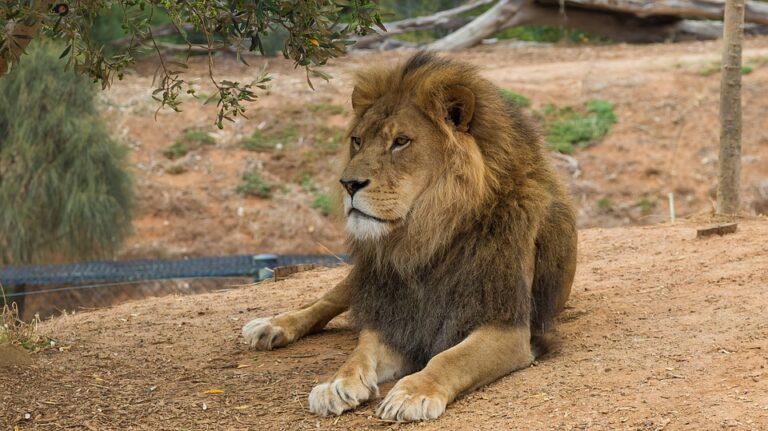
The Mysuru zoo will get four Asiatic lions under its animal exchange programme from a zoo in Gujarat soon.

The Mysuru zoo authorities will bring two pairs of lion from the SakkarbaugAsiatic lions zoo, Junagadh, in Gujarat. The zoo will send a pair of hippopotamuses and Indian Gaurs in return.

Sakkarbaug Zoo has bred several lions and also releasing them into forest as the numbers increased. The authorities of Mysuru zoo and Zoo Authority of Karnataka had visited Sakkarbaug Zoo recently. The authorities are completing the formalities to exchange the animals. Earlier too, Mysuru zoo had received lions from Gujarat

A seven-year-old Asiatic lioness Ranitha died due to injuries at the zoo in December 2017. Ranitha was brought from Sakkarbaugh zoo in 2016.

Sasan Gir: National Park to remain shut for four months from June 16

The Gir National Park, which is home to over 520 Asiatic lions, will remain shut for tourists, both domestic and foreigners, from June 16 to October 15, an official said Saturday.

The park is closed during this period every year as it is the breeding season for many animals, including the big cats, said Rajiv Gupta, Additional Chief Secretary of Environment and Forest Department of Gujarat government.

“Four months of monsoon are considered the best season for the breeding,” he said.
The Gir sanctuary, located at Sasan in Junagadh district, is the only home for the Asiatic lions and attracts a large number of tourists from India and abroad.

“During the monsoon, the condition of roads inside the forest area also deteriorates and it becomes unsafe for visitors to travel on such roads,” he said.

Besides, the forest department also undertakes maintenance work of the national park in September as peak tourist season starts from November and continues till March end, the official said.

How understanding animal behavior can support wildlife conservation

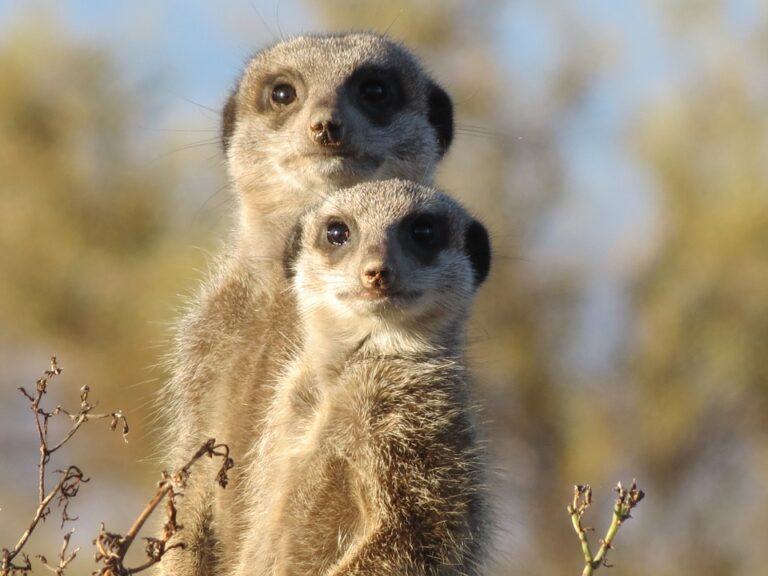
Advancement in sensor technologies has meant that field biologists are now collecting a growing mass of ever more precise data on animal behaviour. Yet there is currently no standardized method for determining exactly how to interpret these signals. Take meerkats, for instance. A signal that the animal is active could mean that it is moving; alternatively, it could indicate that it is digging in search of its favorite prey, scorpions. Likewise, an immobile meerkat could be resting — or keeping watch.

In an effort to answer these questions, researchers from EPFL’s Laboratory of Movement Analysis and Measurement (LMAM) teamed up with colleagues from the University of Zurich’s Population Ecology Research Group to develop a behavior recognition model. The research was conducted in affiliation with the Kalahari Research Centre.

Assessing human impact on wildlife

“Human activity is having ever greater and more frequent impact on animal behavior,” says Pritish Chakravarty, a PhD student at the LMAM. “Once we understand how animal behaviour changes in response to external stimuli, we can better shape our conservation efforts.” Chakravarty explains, for instance, that authorities can designate known feeding and hunting grounds as protected areas. “But that can only happen if we know with high accuracy which signals mean the animal is searching for food, changing location or engaged in a static activity.”

A new biomechanical approach

The new model draws on general biomechanical principles such as posture, movement intensity and frequency. It allows researchers to precisely determine what an animal is doing — resting, keeping watch, running, or searching for food — using input from a wearable accelerometer. The device, which is compatible with a variety of species, has been repurposed by the LMAM research team to capture data such as body inclination, acceleration, vibrations and impacts.

First, the model distinguishes between two broad categories of behavior — dynamic (running, searching for food) and static (resting, keeping watch) — by analysing movement and posture intensity. If the animal is still, the researchers can tell whether it is resting or keeping watch by looking at the inclination of its torso. And when the animal is on the move, they can use movement intensity and frequency to determine whether it is running or searching for food.

Field data

The fieldwork was carried out by specially trained long-term volunteers at the Kalahari Research Centre. The team fitted sensor collars to 10 meerkats, then recorded data and filmed the animals going about their business for three hours. After analysing the recordings to identify different types of activity, the researchers developed a hybrid model, using biomechanical principles and the data collected in the field to train a machine-learning algorithm to recognise different patterns of behavior.

The researchers’ work marks the first step towards a standardized method for analysing animal behavior from wearable accelerometer signals. The model could be refined to produce more accurate and detailed information about specific behaviors in future studies. “The model could be used, for instance, to provide an estimate of how much energy an animal expends searching for food,” says Chakravarty. “That would tell us how much time and effort it takes for a meerkat to find something to eat, and whether a particular spot is of particular interest for the group.”

The Kalahari Research Centre was set up in 1993 by the University of Cambridge and is the site of several research projects.

Birds use social cues to make decisions

A new study in The Auk: Ornithological Advances suggests that some birds prioritize social information over visual evidence when making breeding choices.

The quality of an environment can be difficult for a bird to assess and, therefore, continuously gathering information is a good way to stay up-to-date with breeding conditions. In this field study, researchers tested how the wild Zebra Finch (Taeniopygia guttata) is attracted to successful nest sites. They presented the Zebra Finch with different visual or acoustic cues in nest boxes, simulating the presence of small or large broods, in order to test how birds assess the quality of a potential breeding site.

When discussing the costs and benefits of social information, scientists often argue that socially acquired knowledge is less reliable and more prone to deception. The sounds made by nesting birds, however, are honest indicators of the number of chicks. Predators can use these cues to locate nests. While the calls of chicks serve as signals for the parents and siblings and (inadvertently) also as cues for predators, it is unknown whether chick calls can also function as cues for prospective breeders.

Researchers here aimed to test which social cues from the nests of Zebra Finches attract other Zebra Finches. In two separate experiments, they presented wild Zebra Finches with either acoustic cues (playback of chick calls) or visual cues (eggs) with either small or large broods. Using playbacks of chick calls or nests with unhatched eggs, respectively, allowed them to completely discern brood size from parental activity.

If the presence of fledglings in an area alone would provide all relevant information, there would be no need for wild Zebra Finches to visit nests beforehand. With this experiment, researchers tested the hypothesis that chick begging calls can serve as a source of social information for prospecting Zebra Finches. If the begging calls can also serve as indicators for breeding success, Zebra Finches should visit larger (and potentially more successful) broods more than small ones, as clutch size is correlated with reproductive success. The researchers further predicted the acoustic cues (representing nests at later stages) may be perceived as more reliable than visual cues (i.e. nests at early stages) and hence the distinction between small and large broods should be more pronounced in the nests with chick calls as cues than those with egg cues.

The results showed that more Zebra Finches visited experimental nests that were associated with playback recordings of calls of large broods (7 chicks) as opposed to calls of small broods (3 chicks). Visual cues (nests with different numbers of eggs or rocks), however, representing nests at early stages, did not influence either the probability of visits, nor number or duration of visits. This is the first evidence that calls of chicks in the nest can provide social information that influences bird breeding behavior.

This result is in accordance with the hypothesis that the wild Zebra Finch preferentially visits more successful broods. The chick calls alone provided the necessary social information to attract potential breeders.

Overall, this study provides the first evidence that wild birds can use calls from chicks at the pre-fledging stage as a social signal. This social information could be an important cue to infer breeding success. Even though the parental feeding activity at nests is a known indicator of breeding success in some species, the value of the begging calls in the nest as inadvertent social information has not been demonstrated previously.

“This study helps us understand which cues the Zebra Finches use to find the best nest site,” said lead author Hanja Barbara Bandl. “Deciding in which location to build a nest is crucial for birds in order to maximize their breeding success.”