WWF report: 60% wildlife wiped out, ours last generation that could act

Over-exploitation of nature has wiped out about 60 per cent of the wildlife and 87 per cent wetlands since 1970, and ours is possibly the last generation of humans with a chance to act and reverse this trend, warns the WWF’s Living Planet Report-2018.

The biannual report mapped serious threats to pollinators like bees, soil ecology and wetlands which have direct repercussions on human food security and health. The report also recorded a rise in ecological footprint or consumption of natural resources by 190 per cent in the past 50 years. India was among the countries with the lowest footprints. However, it was among the worst when it came to soil biodiversity.

The report held over-exploitation of nature, through agriculture and deforestation as major causes behind the findings. It also held invasive pollution, dams, fires, mining, and climate change as additional sources of pressure on nature.

“Globally, 40 to 33 per cent forest land was converted between 2000 and 2010,” the report stated. “Average abundance of 16,704 populations representing 4,005 species monitored across the globe declined by 60 per cent between 1970 to 2014,” the report states, adding that the current rates of species extinction are 100 to 1,000 times higher than those before human pressure became a prominent factor.

The species monitored were vertebrate species, or animals with a backbone, with database containing information on over 22,000 population of mammals, birds, fish, reptiles and amphibians.

The abundance of pollinators, which has over 20,000 species of bees including other insects and animals, has been threatened due to intensified agriculture, the report said. “More than 75 per cent of leading global food crops depend on pollinators Economically, pollination increases the global value of crop production by $237-$577 billion per year to growers alone and keeps price down for consumers,” the WWF report stated.

The report also warns of a sharp decline in wetlands, with WWF-India officials believing India to be one of the most affected.

“Globally, wetland extent is estimated to have declined by 87 per cent in the modern era… Index shows an 83 per cent decline in freshwater biodiversity since 1970, equivalent to 4 per cent every year,” the report said.

The population of the critically endangered “gharial” across its range in India and Nepal declined by approximately 58 per cent between 1997 and 2006, the report states. “We are the first generation that has a clear picture of the enormous impact we have on nature. We may also be the last that can act to reverse this trend, from now until 2020 will be decisive moment in history,” the report stated.

Soil biodiversity, where India looks in a bad position, was mapped for the first time to find potential threats. “A risk was generated combining eight components including pollution, loss of above ground diversity, nutrients overloading, overgrazing, intensive agriculture, fire, soil erosion,” the report added.

It suggests that India’s ecological footprint is among the lowest at less than 1.75 global hectares per person.”These are hard times… Nature globally provides services worth around $125 trillion a year… we need more research, efforts from government, business and financial sectors, researchers and conservation communities to revive the planet,” said Ravi Singh, Secretary General and CEO, WWF-India.
Carcass of blackbuck found in Kabisurya Nagara forest range

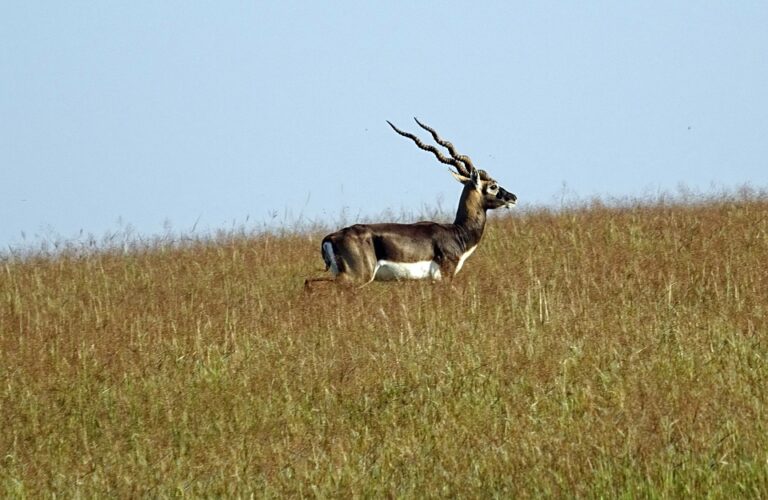
The carcass of a blackbuck was found on Friday in Ganjam district, the only habitat of the endangered animal in Odisha, forest officials said.

Forest officials recovered the carcass of a three-year old female blackbuck at Kandha Kharida under Kabisurya Nagara forest range, about 50 km from here.

The animal might have died due to some ailments on Thursday. Some stray dogs have eaten parts of the carcass. Forest officials rushed to the spot and sent it for post mortem, said forest ranger Ramesh Chandra Sahu.

With this at least 11 blackbucks have been died in Bhetanai area of the forest range in the last two months, officials said.

While most of them died due to different diseases, two died in road accidents and two others due to old age, they said.

At least 28 blackbucks have died in the area since March this year. As many as 18 and 21 blackbucks had died in 2016-17 and 2015-16 respectively, the officials added

Tigress Avni’s post mortem report shows she hadn’t eaten for a week, cops still on lookout for her cubs

The post-mortem report of tigress Avni is out and the report reveals that she had not eaten for more than a week. The officials now suspect that her cubs must also be starving to death following which around 100 forest officials have been deployed to search them immediately and save their life. The Wildlife experts, however, say saving their life may be difficult.

Skin samples and muscle pieces collected from the area where the tigress was shot have been sent to the Regional Forensic Laboratory in Nagpur for ballistic and chemical analysis. The dart with the collared needle along with the muscle tissue from her left thigh will be analysed for information on Xylazine, Ketamine or any other tranquilliser or anaesthetic drug if used.

Other items sent to the lab for analysis include urine sample, heart blood, two pieces of bullet retrieved from the carcass, bone and muscle pieces adhering to the bullet-lodging area, and pieces of ribs broken by the bullet.

Meanwhile, Shafat Ali Khan, the father of shooter Asghar Ali, has threatened to take legal action against Maneka Gandhi for calling him “a criminal” and a suspect in a case of murder.

Maharashtra Navnirman Sena chief Raj Thackeray also made a sensational claim when he claimed that tigress Avni was killed by the BJP-led Maharashtra government to “save” a proposed project of industrialist Anil Ambani in Yavatmal. However, a spokesperson of the Anil Ambani group has said the group has no project in Yavatmal district.

A district official in Yavatmal also said the site of the proposed project by the Ambani group is far away from the area where the tigress was shot.

Interior department sued for ‘secretive process’ in at-risk species assessment

Center for Biological Diversity says new program bypasses findings and leaves decisions to employees who are not experts

Environmental advocates are suing Donald Trump’s interior department for using what they call a secretive process that ignores science in refusing protections for at-risk species.

The Center for Biological Diversity says a new program called the Species Status Assessment bypasses findings from scientists and leaves protection decisions to career federal employees who are not experts and may be under pressure from bosses.

“It’s like going into the hospital and having a team of doctors diagnose you and then leaving the decision up to the chief financial officer of the hospital about what treatment they’re going to pursue,” said Ryan Shannon, an attorney for the group. “There’s a disconnect here.”

Shannon said Trump officials are looking for “wiggle room” to deregulate.
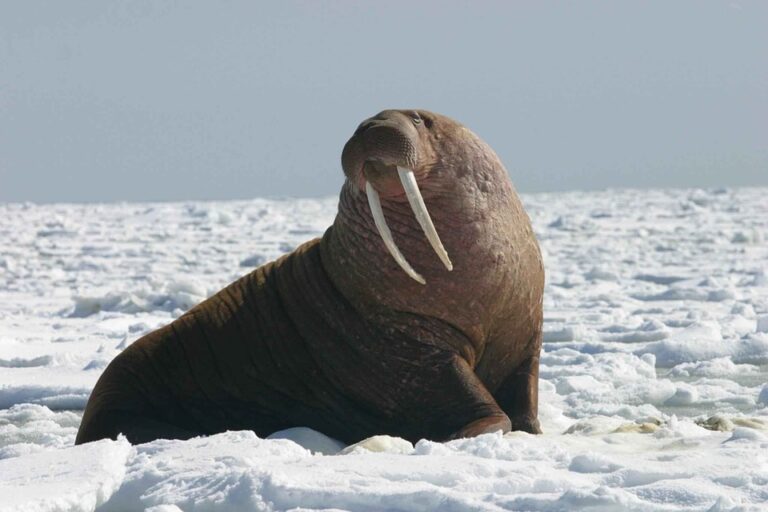
The administration last year declined to list the Pacific walrus as endangered, arguing that the animals could adapt to sea ice melting from climate change.

Additionally, two scientists have said they were rushed in assessing the threats from farming to the endangered American burying beetle and felt the interior’s Fish and Wildlife Service would conclude agriculture is not a risk regardless of what data they presented.

The interior department has eased species protections in other ways, including not automatically requiring the same efforts for threatened species as for endangered ones. It also is allowing more “incidental” killings of birds by industry.

The lawsuit, in district court in Washington DC, is in anticipation of similar decisions against species protection in the coming months, Shannon said.

The suit argues the department should have sought public comment on the program, according to the Endangered Species Act.

A Fish and Wildlife Service spokesman could not comment on litigation or immediately make staffers available to discuss the program.

Man-eater tigress killed in Yavatmal

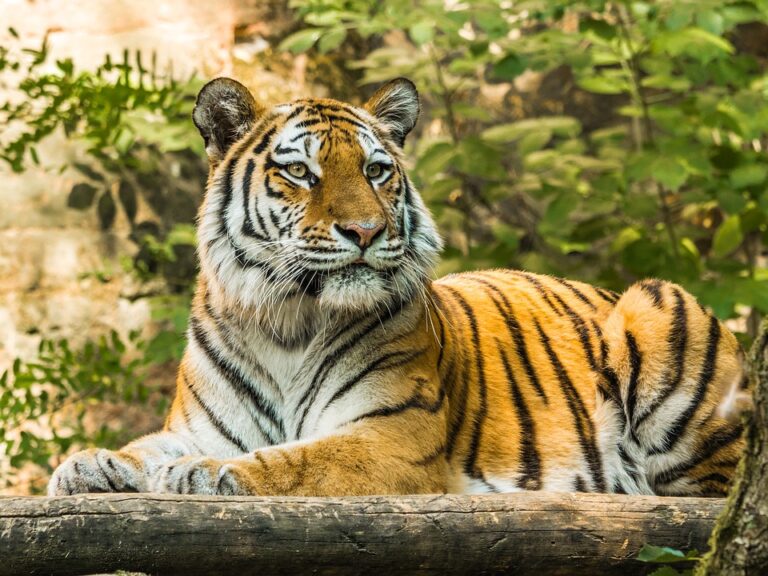
A man-eater tigress named Avni, who was allegedly responsible for the death of 14 people in the Pandharkawda forest in Maharashtra, was on Friday night killed in Yavatmal.
The Maharashtra Forest Department had earlier issued shoot-at-sight orders against the tigress.

On October 16, the Bombay High Court’s Nagpur bench had sought reply about the change in the sequence of steps to be taken to address the issue as mentioned in the PCCF’s (Principal Chief Conservator of Forests) order as opposed to the CCF’s (Chief Conservator of Forests) order.