The migration of the monarch butterfly (Danaus plexippus), from the highland of Mexico to fields and backyards throughout North America is well known. But what about the journey of the green darner?
A new paper in Biology Letters describes the full life cycle of a dragonfly for the first time. Researchers found the common green darner (Anax junius) takes three generations to complete its annual cycle. One generation migrates north in the spring.
The second heads south in the fall. The third occupies its southern range throughout the winter. “There are massive insect declines going on around the world,” says Peter Marra, director of the Smithsonian Migratory Bird Center and second author on the paper,
“so understanding these complex biological patterns is essential to determine why different populations might be declining.”
The breeding seasons of wild house finches are shifting due to climate change, a ashington State University researcher has found.
The effect of climate change on the breeding season of birds has been documented before, but in a limited context. Heather Watts, an avian physiologist, reported her finding in Ibis, the International Journal of Avian Science.
“We know that many birds are breeding earlier as temperatures get warmer,” Watts said. “Almost all of those studies are on birds that eat insects or other animals. What we don’t know is if seed-eating birds are shifting the timing of breeding too.”
Until now.
Studying seed-eaters is important because it can help clarify how temperature is affecting breeding habits. It is still uncertain if temperature is having a direct effect on the animals or if it causes indirect effects like shifts in the timing of plant growth. Previous studies suggest that plant-eating animals are likely to experience stronger effects due to climate change compared to those that eat other foods because of these indirect influences.
To clarify these effects, Watts studied when house finches lay eggs. House finches are an abundant bird often seen at backyard feeders throughout the United States. Watts and her coauthors gathered museum records of house finch nests found in California between 1895 and 2007. They paired these records with spring temperature data for the regions where the nests were located.
“For every degree Celsius increase in temperature, they’re laying about four-and-a-half days earlier,” said Watts, an associate professor in WSU’s School of Biological Sciences. The magnitude of this shift was large compared to studies of other species, which fits with predictions that climate change would have stronger effects on plant-eaters than other animals.
These results aren’t necessarily problematic for the house finch. The birds could be changing their breeding timing to match the availability of seeds. This shift could even be beneficial if birds take advantage of the longer breeding season to make multiple nests and have more offspring.
“We have no evidence that under current conditions this is a problem for house finches,” Watts said. “But as climate continues to change, we could reach a point where birds are no longer able to either time breeding appropriately, or food resources could change in such a way that it has negative impacts on breeding.”
In fact, while this species is expanding into new areas of North America, it is declining in some parts of its native range.
Animals have vastly different needs in terms of food and habitats. Studies like these are important in understanding the subtle and possibly unique effects that climate change can have on different species.
Watts and her colleagues, undergraduate students from Loyola Marymount University, were supported in this research by the National Science Foundation.
If your home has a garden in your home, then there’s a strong chance that you may play host to a number of unexpected visitors from time to time. Usually if you find various wildlife creatures in your garden, this means that your property has provided them with a very hospitable environment.
Discovering a hedgehog chilling in the bushes or a frog hiding among the blades of grass is no cause for concern. It was recently reported that the numbers of hedgehogs found in rural areas had plummeted drastically, which is why providing them with protection and care if you come across them is important.
Furthermore, pesticides are posing a great risk to bees, with the honey-loving insects becoming “addicted” to the harmful chemicals. From the birds to the bees, here’s how you
can protect the wildlife that you find in your garden:
Bees
WSON Team
Many people fear coming across bees in the garden, afraid that they’ll be stung if they come too close. However, bees shouldn’t be removed from the garden. On the contrary, having bees in your garden can prove extremely beneficial for the growth of your plants.
The Royal Horticultural Society explains that bees speed up the process of pollination by gathering nectar and pollen from flowers to feed on and then moving around among different flowers. Bees aren’t the only insect to carry out pollination. Other insects that also pollinate flowers include butterflies, moths and flies.
Using pesticides in your garden can pose a risk to bees and other helpful insects.
The RHS proposes using “biological control” to control the quantity of pests in your garden if needs be, which involve releasing organisms such as insect-pathogenic nematodes.
Hedgehogs
WSON Team
If you find a hedgehog in the garden, then a nice thing to do is to create a home for them among the foliage. The RSPCA recommends leaving certain parts of your garden “wild” by forming piles of leaves and logs that the hedgehogs can use to nest in.
Furthermore, these areas may also attract other kinds of creatures, such as slugs and beetles, that the hedgehogs can then feed on. While hedgehogs can find food for themselves, you can also leave out shop-bought foods such as tinned dog or cat food or crushed pet biscuits for them to snack on.
St Tiggywinkles, a British animal welfare charity and veterinary hospital, also suggests leaving out bowls of water for the hedgehogs to drink. However, it’s important to note that hedgehogs shouldn’t be given milk or bread.
If you have drains or holes in your garden or a body of water like a pond or a swimming pool, it’s advised that you cover them so that the hedgehogs don’t accidentally fall in.
Using poisonous products like slug pellets can put the lives of hedgehogs at risk, so it’s suggested that you find a natural alternative if necessary.
If you have a pet and are afraid that they may injure the hedgehogs that are in your garden, Hedgehog Street states that you should try to warn the hedgehogs before your pets go outside.
You can do this by turning on an outside light before you let out your pet, keeping your pet on a lead or making a note of the daily routine of the hedgehogs and keeping your pet inside when the hedgehogs are out and about.
Frogs
WSON Team
Froglife, an organisation that looks after the conservation of amphibians and reptiles, explains that it’s perfectly normal to find frogs in your garden. “Amphibians spend the majority of their life on land and are often found in gardens, sometimes hundreds of metres from the nearest waterbody,” the organisation states.
“Common frogs are frequently found in urban areas and gardens are an important amphibian habitat in their own right. ”While common frogs shouldn’t pose a threat to pets, Froglife warns that pets may experience an allergic reaction if they come into contact with the toxin produced by common toads.
If this occurs, it’s advised that you should take your pet to a vet as soon as possible.
During the winter, frogs and toads will usually take residence in heaps of foliage, under objects found in the garden or at the bottom of a pond.
They can normally take care of themselves without assistance. However, if you have a pond that freezes over during winter, then it may be worth investigating where the frogs or toads found in your garden are spending their time.
Birds
WSON Team
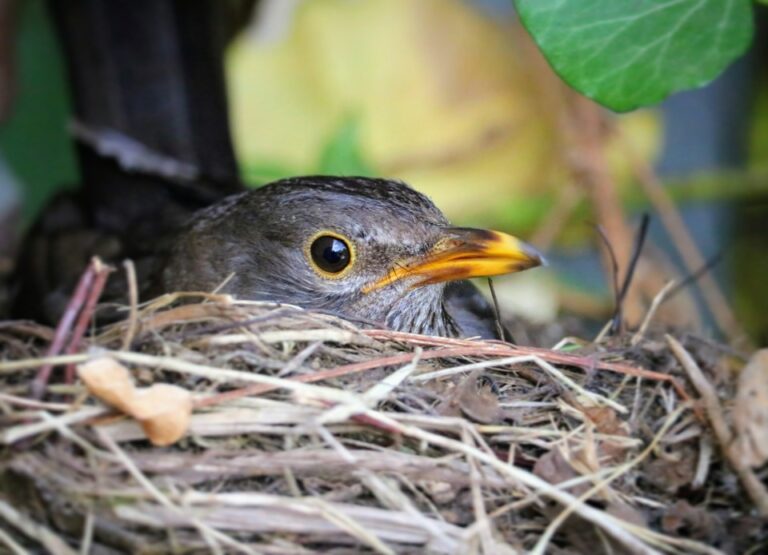
When you have an outdoor garden, it’s more than probable that you’ll frequently spot a variety of garden birds hanging around or simply passing through.
The birds most likely to frequent your garden include robins, sparrows, starlings and greenfinches, as explained by the Royal Society for the Protection of Birds.
Birds will feel more inclined to visit your garden if there’s food available for them to indulge in, such as fruits and berries However, they may also be enticed by bird feeds filled with nutritious bird seed mixtures.
The RSPB recommends avoiding adding seeds such as split peas, beans, and lentils in the mixtures, as these can only be consumed by large species of birds. You may want to buy a birdbath for your garden that visiting birds can drink from and bathe in.
However, you can also create one yourself by using an object such as a dustbin lid that you’ve stuck firmly in the ground.
Nearly 50 tigers have died in India this year with the highest number of deaths recorded in Madhya Pradesh, the Lok Sabha was told Friday.
Minister of state for Environment Mahesh Sharma in a written reply said as per figures recorded till december 12, total tiger mortality stood at 49, with 13 and 10 deaths registered in madhya pradeshand karnataka respectively.
he also said around 13 elephant casualties in train accident have been reported in 2018-19 up to november 15 in 2018.
The Gujarat government announced a range of new initiatives for the conservation of the Asiatic lions, including building a state-of-the-art hospital in Sasan-Gir to treat them as well as other wildlife.
The hospital, to be built at a cost of Rs 100 crore, will have a laboratory to conduct various tests to ascertain the cause of infections among animals, Gujarat Forest Minister Ganpat Vasava said Tuesday.
The announcement came in the wake of the deaths of 27 lions in and around Gir Wildlife Sanctuary during the last two months due to infighting, pneumonia, Canine Distemper Virus and Protozoa infection. Vasava made the announcement after attending the 14th meeting of the State Board for Wildlife in Gandhinagar.
Chief Minister Vijay Rupani, who chaired the meet, sanctioned Rs 350 crore for implementing various initiatives for the long term conservation of lions in the state, Vasava told reporters after the meeting.
“The state government will spend Rs 350 crore towards protection and conservation of lions. We will build a state-of-the-art hospital in Sasan-Gir at a cost of Rs 100 crore. This hospital will also have a laboratory to conduct various tests” Vasava told reporters.
To run the animal hospital and laboratory, the CM has approved to set up a separate Veterinary Cadre, for which around 120 experts and technicians will be recruited, said Additional Chief Secretary, Forest, Rajiv Kumar Gupta.
Other measures include deployment of drones to keep a watch on lions’ movements, installing a camera network in Gir forest, building eight new rescue centres, deployment of 33 Rapid Response Teams in the forest and recruitment of 100 ‘trackers’ to keep an eye on lions, said Vasava.
To increase the prey base for lions, we will open four new breeding centres for these animals (such as nilgai and antelopes). We have also planned to create vast grasslands inside the sanctuary for lions,” said Vasava.
He added that a dedicated ambulance service for lions and a 24-hour helpline, for getting vital information from public about lions, will also be launched soon. Vasava also announced that Gujarat will get five new safari parks, including a lion safari park near Gandhinagar.
“Apart from the lion safari park, a Tiger safari park would come up near Kevadia in Narmada district. We have also planned leopard safari parks in Bhavnagar, Surat and Dang districts” Vasava said.
He said CM Rupani had instructed the officials to chalk out a plan to save some of the endangered bird species of Gujarat, such as Lesser Floricans, Great Indian Bustards and vultures.