
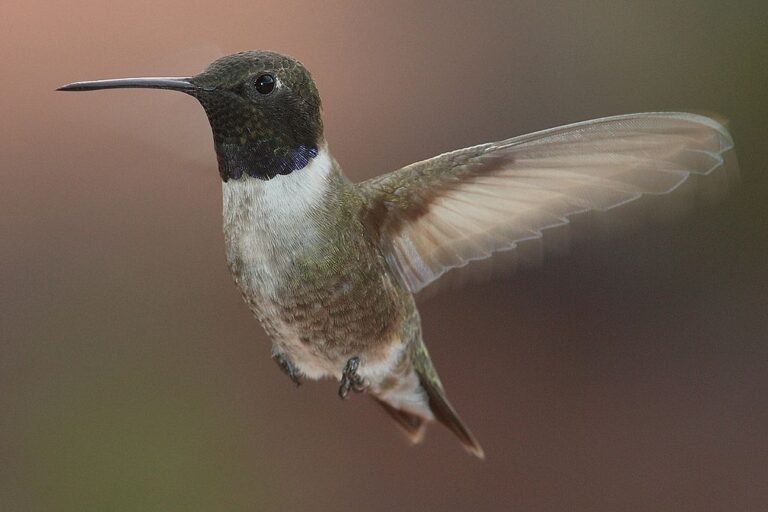
Male Costa’s hummingbirds in North America use their tail feathers to create a whistling sound to impress their female counterparts, a US-Canada research has found. The birds twist their tails sideways while flying by females, who chose their mates according to their speeds. The diving fashion increases the apparent speed due to Doppler effect, said researchers. ( News Source : inshorts.com )
Eleven lions killed by poisoning in Uganda national park
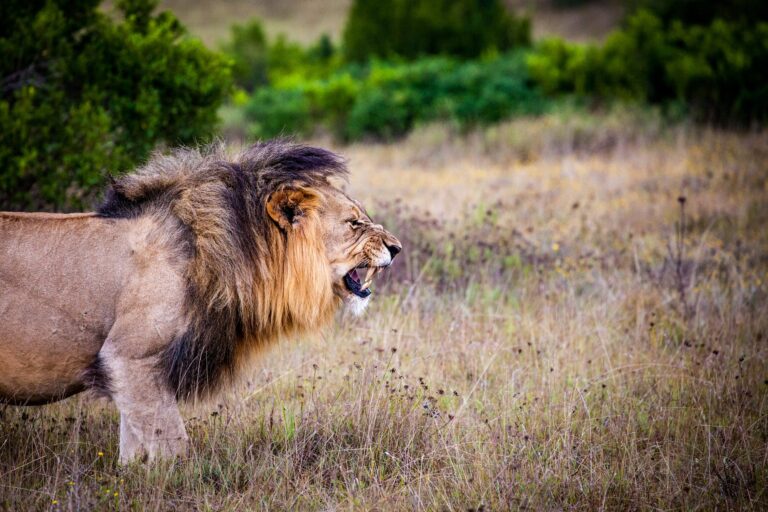
Conservationists are mourning the death of 11 lions that were killed with poison in a national park in Uganda.
The three lionesses and eight cubs are thought to be victims of villagers who blame wildlife for killing a cow.
The Uganda Wildlife Authority said it was launching an investigation after the pride was found dead at the Queen Elizabeth National Park.
It is believed only 19 lions are now left in the park, and experts warned of potential extinction across Africa.
There were immediate calls for “domestic animals” to be banned from the park and for the authority to compensate farmers whose cattle are killed by big cats in an effort to prevent future revenge attacks on wildlife.
Conservationists are worried the lion population in Africa is falling. A 2013 survey found the population had dropped by 30 per cent, and numbers in Uganda are now estimated at 400. The park is one of the last strongholds of the big cats in the country.
Wildlife experts also say the lions’ natural prey is declining, while the number of humans is rising and encroaching on lions’ traditional roaming areas, leading to greater conflict over land use.
The authority told The Independent: “Investigations will confirm the type of poison that was used. Investigations should lead to the identification, arrest and prosecution of the people behind this heinous act.”
But a spokesman denied natural prey was in decline. “The challenge is that there are people who graze cattle in the wildlife sanctuary so lions can easily prey on the cows. We have more than enough natural prey for the big cats,” he said.Richard Kamara, a ranger with the authority, posted on Facebook: “The solution should be that all communities living within the park MUST not have any domestic animal, or else communities be relocated to other areas outside protected area.”
Mark Jones, associate director of the Born Free Foundation in the UK, said: “Uganda’s lions face an uncertain future, and cannot withstand these kinds of incidents.
“These animals need protecting from revenge killing and poaching through robust law enforcement, efforts to help local people live alongside wildlife without conflict, and ending the trade in their body parts.
“Without robust and swift action, the unimaginable disappearance of lions from Uganda and many other African countries they have called home for millennia, could become a cold reality.”
Bashir Hangi, communications manager for the Uganda Wildlife Authority (UWA), said a compensation project existed in that area but the authority hoped to have it enshrined in law.
“In the area where the lions were poisoned, there is a mechanism of compensating people; we are the people who can testify that they were compensated,” he said.“We want a harmonious co-existence between wildlife conservation management and communities because we are all stakeholders in protecting wildlife.
“We are reviewing the UWA Act to put in place punitive measures for poachers, traffickers and all those found guilty of killing wildlife. ( News Source : www.independent.co.uk )
Mumbai: Golden jackal rescued from Vikhroli creekside
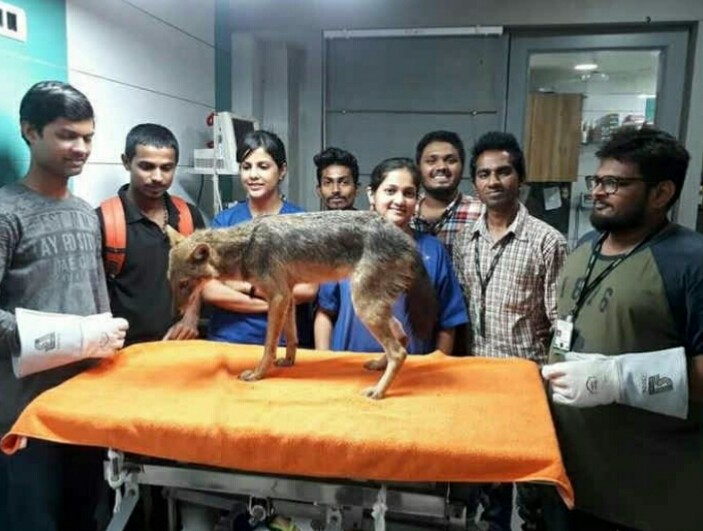
A young male Golden Jackal was rescued from Godrej Creekside Colony in Vikhroli by the team members on Resqink Association for Wildlife Welfare on Thursday.The jackal is currently in the custody of forest officials.
“A distress call was reported to our team by the residents and security staff regarding a jackal lying on the ground. A responding team was immediately assigned to visit the site check situation and locate the animal and evaluate the situation.
It was further observed that the animal was totally dehydrated, traumatised and in shock and required immediate medical attention,” said activist Pawan Sharma of RAWW. Wasting no time,
the Rescue Team headed by Mahesh Ithape and Harshit Savla initiated the rescue operation with other team members Ravi Suryavanshi, Pareen Shah, Akshay Nimbre, Rajesh Mahadik, Nikhil Chandivade and Hasmukh Valanju took the jackal to our Honorary Wildlife Vet Dr Rina Dev in a Wildlife Ambulance. The jackal had a couple of canine bites, dehydration, shock and trauma for which it was immediately provided with medical treatment.
“All necessary samples of pressure, ECG, Blood, Distemper and Rabies etc were carried and we are now awaiting for the results,” added Sharma. ( News Source : The Times Of India )
This elephant is Smoking elephant clip spreads like wildfire

A bizarre video showing an Asian elephant smoking has gone viral. The video, showing a wild elephant “ingesting” charcoal and “blowing out ashes” has been posted on YouTube by Wildlife Conservation Society. According to the researchers who shot the unusual video- Vinay Kumar, assistant director, WCS India and Srinath Rao, the female elephant’s behaviour is something that the duo “had never witnessed before, and it has probably not been commonly captured on film earlier either”.
“As cameras clicked, I switched on to the video mode and filmed what would be an amazing sight to behold, and a behaviour that has had experts trying to decipher the exact nature of the action,” Kumar wrote on the WCS page as he described the rare experience.
According to Kumar, what the duo saw that day almost appeared as though the elephant was smoking. “She would draw up a trunk full of ash close to her mouth and blow it out in a puff of smoke! I quizzed my colleague and elephant biologist, Dr Varun R Goswami, on what was going on. In all likelihood,
he concluded, the elephant was trying to eat wood charcoal. That made sense as the elephant appeared to be picking up something from the burnt forest floor, blowing away the ash that came along with it in her trunk, and consuming the rest,” he said. According to Kumar, “charcoal has well recognised toxin-binding properties, and although it may not have much nutritional content, wild animals may be attracted to it for this medicinal value”. “Charcoal can also serve as a laxative, thereby doubling its utility for animals that consume it after forest fires, lightning strikes, or controlled burns of the type we saw in Nagarahole that day,” he said in his post on the website.
( News Source : timesnownews.com )
World’s last surviving male northern white rhino euthanised

The world’s last male northern white rhino, 45-year-old Sudan, was euthanised in Kenya on Monday after his condition worsened and he was unable to stand. His muscles and bones had degenerated and his skin had extensive wounds, researchers said. Sudan had been part of an effort to save the subspecies from extinction with the help of the two surviving females. ( News Source : Inshorts )