Children Aims to include more societies by next year.
Vadodara,
Instead of distributing and installing the sparrow nests like every year about 20 children from Vasna based residential society in a unique initiative conducted the census of the Home Sparrows.
Residing in Samruddhi Society located on Vasna Road, the children said that they had decided to celebrate the day differently and instead of forwarding the messages on whatsapp and installing the sparrow nests at their homes, they decided to take stock of the efforts which were made earlier. While there are more than 30 children in the age group of 5 to 14, about 20 of them got together and decided to conduct the census.
wildstreakofnature.com
“Members of our society have been installing sparrow nests and because of that we have seen substantial increase in the number of home sparrows. We realized that we have no idea how many sparrows were there five years back and how many are there today and that is when the idea of counting the sparrows in our own society struck,” said Dwij Pandya.
The children divided themselves into groups and each group was assigned the job of counting the sparrow nesting in their respective lanes. “In many homes there were nests but either it had no nesting or they were occupied by other birds. Even we were surprised to learn that and we realized that not all the sparrow nests are fit for Home Sparrows,” said Krisha Desai one of the participating children.
wildstreakofnature.com
Another participant of the census, Hetanshu Sevak said, “We would like to cover other societies as well and for that we would get in touch with children from the societies adjacent to ours. If 20 of us can take up this task why can’t all the children from Vadodara get together and conduct the census.”
The children estimated about 96 sparrows in a single residential society. “In all there were total 48 nesting out of which 43 were of House Sparrow and rest of the nests were of other birds like Myna, Robin and other small birds. That means we have 86 sparrows in our society. We were really excited to realize this fact and now we are going to work hard on how we can increase this number.”
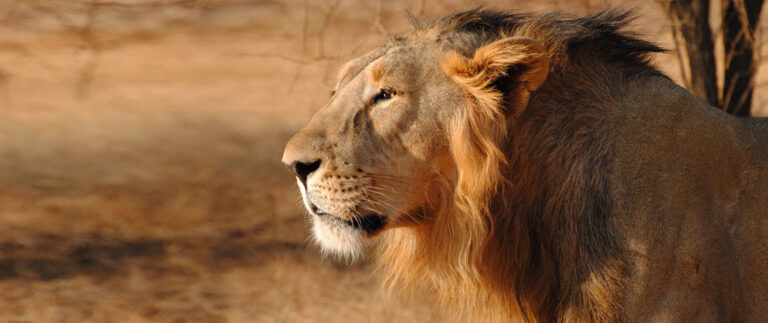
The Gujarat government today admitted in the Legislative Assembly that 32 Asiatic lions died due to “unnatural causes” such as falling into wells in the last two years in and around Gir Wildlife Sanctuary in the state.
While 12 lions, including cubs, died in 2016, 20 died of unnatural causes — in various kinds of accidents — in 2017, Forest Minister Ganpat Vasava told the House in a written reply during the Question Hour.
Congress’s Gyasuddin Shaikh had sought details of lion deaths, causes, and the government’s plan to prevent deaths.
Vasava said a total of 184 lions died in and around the Gir sanctuary in the last two years — 104 in 2016 and 80 in 2017.
Thirty-two of them died of unnatural causes (12 in 2016 and 20 last year), the Assembly was told.
The minister admitted that wells without parapet walls often become death traps for the animals who fall in and drown.
There are 27 open wells in Amreli district near the sanctuary, Vasava said, adding that parapet walls would be built around these wells “as soon as possible”.
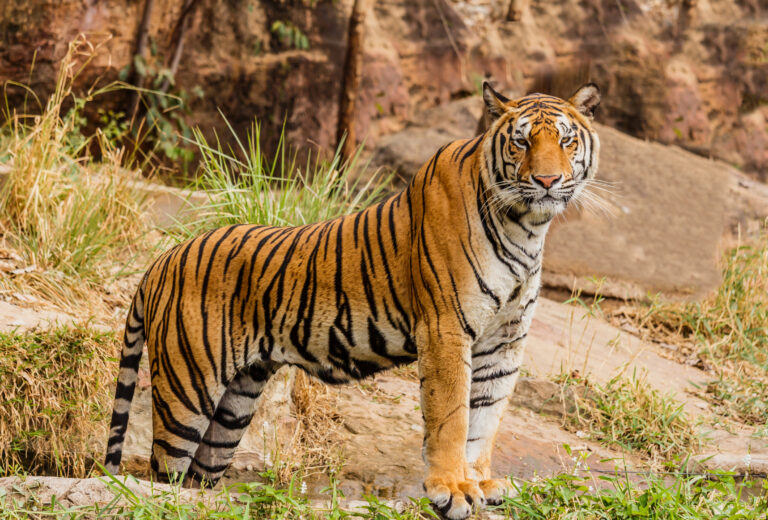
As many as 122 tigers died of various reasons across the country in 2016, with 32 of the fatalities occurring in Madhya Pradesh, the Rajya Sabha was informed today.
The death of these big cats were attributed to factors like, disease, infighting, natural death and poaching, among other causes, Union minister of state for environment, forest and climate change Mahesh Sharma said in a written reply to a question.
According to the data shared by the minister in his reply, 81 tiger had died in the year 2015 and 79 in 2014.
In the year 2016, as many as 17 tigers died of various reasons in Karnataka and Maharashtra, and 14 in Uttarakhand, among other states, it said.
According to the state-wise details shared on elephants, 60 of them died in the year 2016-17, as many as 62 in 2015-16 and 80 in 2014-15.
On the question of the number of leopards killed during the last three years, he said, the cases of death of wild animals, including leopards,. have come to the notice of the ministry.
“Information on the death of wild animals in the states/Union territories is not collated in the ministry,” Sharma said, and shared the state-wise details of the death of tigers and elephants, as available with the ministry.
It is a startling statistic which beggars belief, but the truth is there are more tigers living in captivity in the US than survive in the wild in their natural habitat in Asia — several sub-species are already extinct, and those that remain cling on in their last bastions. They have some prominent champions — including the Russian President and the governments of Cambodia and Kazakhstan — and there are some positive signs with India reporting an increase in numbers.
There is no room for complacency. Far from it. The tiger’s closest and most famous cousin, the African lion, is the subject of sad news, setting alarm bells ringing. Lion numbers are reported to have fallen by 40 per cent in just two decades, with the lion now only occupying 17 per cent of its historic range — and the “King of the Beasts” faces the prospect of being dethroned. And even if some tiger populations are recovering, they are a long way from the levels seen at the start of the 20th century — before uncontrolled hunting took its toll.
wildstreakofnature.com
Hunting may well be banned and international trade regulated to the point of prohibition, but this does not mean that poaching does not occur. Tiger skins and other body parts command phenomenal prices on the black market, and even the modest share of the booty offered to those at the sharp end presents a temptation too great to resist for people scraping a living in harsh, unforgiving environments providing limited options for making a livelihood. Reduced tiger populations in Asia is also bad news for lions, as its body parts are seen as a possible substitute.
The problems afflicting the lion and the tiger also affect their smaller cousins, such as the snow leopard and the Asiatic cheetah, both of which are suffering from reduced habitat and depletion of their prey species. The snow leopard, known locally as the “Ghost of the Mountains”, occupies a vast and inhospitable terrain at high altitudes in the mountains of Central Asia and probably numbers fewer than 10,000. The terrain makes survey work difficult, and so the figures are the best estimate experts can give.
wildstreakofnature.com
Even in the mountains, the snow leopards are not safe from their main enemy — people — and the effects of climate change and growing human demand for space are making encounters — and conflict — more common. Warming temperatures are opening more and more areas to pastoralism; so as well as being hunted for the pelts and body parts for traditional medicine, snow leopards are even more exposed to persecution by farmers seeking to protect their livestock.
Wildlife tourism is not a viable option in Central Asia — the area is inaccessible and lacks the infrastructure which all but the hardiest of travellers want. There is also no guarantee that visitors will even catch a glimpse of the elusive creatures. It is not only agriculture that is encroaching on unspoilt leopard territory; there are also plans to develop ski resorts in the mountains, with the implicit threat of bringing more people and more disturbance. Any such developments need to be planned sensitively to ensure minimal impact and maximum sustainability.
wildstreakofnature.com
There are two contrasting elements essential for the success of conservation efforts undertaken on behalf of the snow leopard. The first is recognition of the fact that because they cross national borders, the Range States that host them have to cooperate. Fortunately, governments are fully aware of this and the President of Kyrgyzstan has initiated high-level meetings which have resulted in the establishment of the Global Snow Leopard and Ecosystem Protection Programme (GSLEP).
The second element is bringing local communities and livestock owners on board. As tourism is unlikely to make much significant impact in terms of new employment opportunities, conservation programmes must include measures to reduce the negative impact of the cats’ presence; examples of this being the provision of predator-proof corrals for livestock and setting up insurance schemes to compensate farmers for any animals lost to the leopards.
wildstreakofnature.com
Despite their apparent sparseness and harsh terrain, the mountains support a surprisingly large range of plants and animal species, and the snow leopard serves as an indicator of the ecosystem’s health; so if they are thriving, chances are that the wider environment too is in good shape.
The UN Convention on the Conservation of Migratory Species (CMS) is lending its support to World Wildlife Day and I commend our colleagues at the Convention on International Trade in Endangered Species of Fauna and Flora (CITES), who take the lead in organising the campaign each year. Focussing on big cats this year helps raise awareness of their precarious conservation status and complements the efforts of Range State governments such as Kyrgyzstan by emphasising the need for international cooperation to address the threats and ensure that lions, tigers, snow Leopards and the rest can survive in the wild.
(Dr Bradnee Chambers is the Executive Secretary of the UN Convention on the Conservation of Migratory Species of Wild Animals. The views expressed are those of CMS)
Positioned in the tribal district of Dangs, this sanctuary is known for dense forest cover with over 700 species of plants and trees. Spread over 160 sq kilometre with a generous population of animals like Leopard, rhesus macaque, bonnet macaque, common mongoose, Indian civet cat, Indian porcupine, four-horned antelope, barking deer, sambar, chital, hyena, jungle cat, flying squirrel, python and lizards. Most commonly spotted birds at this sanctuary are Common grey hornbill, grey jungle fowls, barbets, woodpeckers, shrikes, cloropsis, bee-eaters, flycatchers and raptors. The best time to stopover at Purna Wildlife Sanctuary is between November and March.