‘This really hurts’: LA’s celebrity mountain lion P-22 euthanized

Experts and officials mourn cougar who became ‘an iconic ambassador for wildlife’ in the city

The reign of Los Angeles’s most famous mountain lion – hailed as an “ambassador for wildlife” in the city – has come to an end, after health and behavioral concerns led to P-22’s euthanization.

The cougar, who became another LA celebrity after making his home in the city a decade ago, “went to sleep” on Saturday morning, according to state wildlife officials.

“This really hurts and I know that,” said an emotional Chuck Bonham, head of the department of fish and wildlife, according to the Los Angeles Times. “For myself, I’ve felt the entire weight of the city of Los Angeles.”

The decision to euthanize P-22 came after he was apparently hit by a car. Subsequent investigations revealed a skull fracture and chronic illnesses, including a skin infection and diseases of the kidneys and liver. “His prognosis was deemed poor,” Bonham said.

The big cat, who lived in Griffith Park and normally hunted deer and coyotes, had also killed a Chihuahua mix who was being walked in the Hollywood Hills in November; this month, he was the suspect in another Chihuahua killing, this time in the Silver Lake neighborhood.

He was captured in a backyard in nearby Los Feliz on 12 December and underwent a CT scan, according to officials, who determined that he would either face euthanasia or confinement in a sanctuary – a difficult prospect for a wild lion. He lived to be roughly 12 years old, older than most wild males of his species.

The California governor, Gavin Newsom, offered a tribute in a testament to the cat’s fame in a Saturday statement: “P-22’s survival on an island of wilderness in the heart of Los Angeles captivated people around the world and revitalized efforts to protect our diverse native species and ecosystems.”

Wildlife authorities say the cougar’s impact will continue to reverberate. He was the face of the campaign to build a wildlife crossing over a Los Angeles-area freeway to give big cats, coyotes, deer and other wildlife a safe path to the nearby Santa Monica Mountains, where they have room to roam.

“He changed the way we look at LA. And his influencer status extended around the world, as he inspired millions of people to see wildlife as their neighbors,” said Beth Pratt, California regional executive director for the National Wildlife Federation, in an emotional eulogy sent to reporters.

Ground was broken this year on the crossing, which will stretch 200ft over US 101 – the busy freeway that P-22 is believed to have crossed to reach Griffith Park from the Santa Monica Mountains, where genetic testing indicates he was born, according to the Natural History Museums of Los Angeles County (NHMLAC), where he is the subject of an exhibit.

P-22’s surge to fame began with a picture on a motion-sensing camera in the park in 2012, after which he was captured by local biologists and given a tracking collar. The P in his name stands for puma; he was the 22nd subject of a federal study of the animals.

The cougar was “an iconic ambassador for wildlife in Los Angeles. His passing is a painful moment, but we are so thankful for how he created a better understanding of the coexistence of urban wildlife, humans and LA’s biodiversity,” said Miguel Ordeñana, senior manager of community science at the museums. “His story is a catalyst for change.”

Construction on the bridge is expected to be completed by early 2025.

“P-22’s journey to and life in Griffith Park was a miracle,” Pratt wrote. “It’s my hope that future mountain lions will be able to walk in the steps of P-22 without risking their lives on California’s highways and streets. We owe it to P-22 to build more crossings.”

Man Discovers Fluorescent Green ‘Alien’ While Walking On Beach

33-year-old Mike Arnott was taking a stroll along Portobello Beach in Edinburgh on Monday when he stumbled upon the strange creature.

A man was left stumped after he came across a strange green, fluorescent object on the sand, thinking it to be some sort of an extra-terrestrial animal. 33-year-old Mike Arnott was taking a stroll along Portobello Beach in Edinburgh on Monday when he stumbled upon the strange creature, the Independent reported. The beachgoer first assumed that it was a moss-covered pinecone, but later he found the creature “alive”.

Social Media

“I saw this fluorescent green thing with weird needles – I had no idea what it was. The bright green and gold colours drew me straight to it. I flipped it over and saw it had lots of tiny legs – I had never seen anything like it. It being an alien definitely crossed my mind – or I thought it might be something from way out in the deep sea,” Mr Arnott told Edinburgh Live.

However, Pete Haskell from the Scottish Wildlife Trust dismissed his speculations and identified the animal as a sea mouse, a type of worm.  “It looks a bit strange being out of the water, but it’s a type of marine bristle worm that’s found all around the UK coast,” Mr Haskell said.

The worm looked unusual and different from other marine animals because of its shimmering green and gold bristles. The bristles can also flash green, blue or red, to warn off predators. They can grow up to 30cm in length and feed on small crabs and hermit crabs and other worms.

A few days back, a photo of a mysterious sea creature lying ashore on a beach in Ireland also left the internet stumped. Many users said that the creature has pig-like features, while others thought that it resembles a “beheaded seal”.

Officials on high alert after leopard attack in Bengaluru: Report

Residents of south Bengaluru have been on their guard ever since a leopard ventured into the area and killed a calf on Saturday. Forest department officials have been on high alert as they aim to capture and rescue the big cat.

The leopard’s kill took place in Banashankari 6th Stage near the Turahalli forest area, The Times Of India reported. Rescue officials have set up a cage near the carcass of the calf in case it visits again. The leopard was spotted near the Talaghattapura area, a Karnataka forest department official told the publication.

“While the presence and movement of leopards around Kengeri were recorded, their movement in these areas was only rumours all these days. But this is for the first time that we have come across such movements and attacks on livestock in this part of the range,” a forest official said.

The range forest officer of Kaggalipura said they are vigilant and have been tracking the movements of the big cat. They have also spread awareness of the danger to nearby localities and resident welfare associations (RWAs), guiding locals to move in groups, particularly in the early mornings and late evenings.

A representative from a Residents’ Welfare Forum in Banashankari 6th Stage, told the publication that leopard pugmarks have been found in some parts of the locality. He said the area has dense vegetation and hence an earthmover has been arranged which will clear bushes on unoccupied lands.

The Turahalli forest had last been in the news when a charred body had been discovered in the woods. There have also been protests by residents and conservationists against real estate projects proposed to be built on the forest land.

See ‘Dominator’ – The Largest Crocodile In The World

0

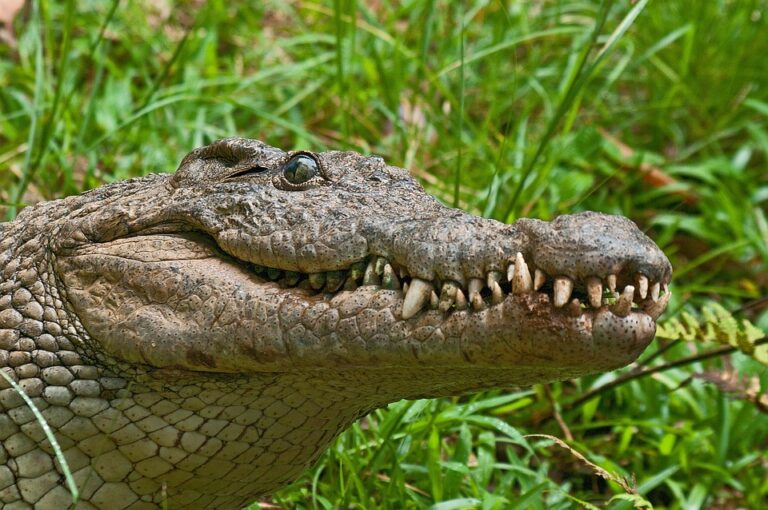
The largest crocodile in the world, the estuarine crocodile, or “saltie,” is 22 feet long and can weigh up to 2,200 pounds. Other crocodile species include the dwarf crocodile, which is less than six feet long, and the saltwater crocodile.

The warmer tropical waters of the Southern Hemisphere’s wetland ecosystems are home to a range of crocodile species. Because they are unable to control their body temperature inside, they rely largely on the sun to rewarm their bodies after they have submerged themselves in water to chill them.

WSON Team

That brings us to the beautiful country of Australia. While the country down under is known for animals such as koalas and kangaroos, one crocodile seems to stand out. Meet Dominator. Dominator, a 20-foot crocodile that weighs more than a metric ton, is reputedly the second-largest crocodile ever seen.

Australia’s saltwater croc populations are expanding, and the Adelaide River is one of the nation’s densely populated regions. Images of a massive crocodile ripping a pig in half before eating it made headlines throughout the world last year.

WSON Team

In comparison to Lolong, who is held captive in the Philippines, he is only three inches shorter. He was caught in 2011, and at 20 feet three inches long from nose to tail, he is the largest crocodile ever recorded.

This big croc lives in the murky waters of the Adelaide River and likes to show off for tourist boats. While this giant croc will have your jaw on the floor, he’s not the only one in the area. His rival is named Brutus and is ever so slightly smaller than Dominator. One thing’s for sure – you won’t catch me swimming in the Adelaide River.

Crocodile Rivalry

WSON Team

Crocodiles are extremely social creatures that assemble in sizable, mixed groups of adults and young ones. The males, though, become extremely territorial towards the beginning of the mating season and defend their particular stretch of river bank from the competition by raising their massive heads high in the air and howling at intruders.

Proof of dominance can be spotted in how Dominator and Brutus interact with one another. It’s safe to say that these two guys don’t like each other. Dominator will often sneak up behind Brutus and begin chomping on his tail, leaving Brutus thrashing in the water for his life.

There is a myriad of videos online that show just how large Dominator is. Tourist boats use fresh meat on a long stick to tempt the croc to come close to the boat. Some videos show the apex predator launching its one-ton body out of the water to catch a snack. Either way, you just have to check out how large this creature is to fully grasp what he’s capable of!

How Big Do Crocodiles Get?

WSON Team

Dominator is quite large, even for his species. Typical estuarine crocodiles grow to be between 10 and 16 feet long. Males are usually considerably longer than females. That length is made up of bony-plated skin, a long powerful tail, a crocodile’s signature slim snout, and up to 67 teeth embedded in jaws that are reportedly strong enough to rip through metal!

Key Points

  • The largest crocodile in the world is 22 feet long and can weigh up to 2,200 pounds.
  • The second largest crocodile is 20 feet three inches long from nose to tail.
  • The average typical estuarine crocodiles grow to be between 10 and 16 feet long.

CITES COP19: India’s freshwater turtle in danger of extinction

India puts forward proposal to move it to Appendix I; Common hippo, straw-headed bulbul, African elephant at risk too

India has put forward a proposal to better protect a species of freshwater reptile called the red-crowned roofed turtle (Batagur kachuga) under the Convention on International Trade in Endangered Species (CITES). The turtle, native to India and Bangladesh, is at a high risk of extinction, it said. 

CITES is an agreement regulating the movement across international borders of certain wild animal and plant species. The 19th Conference of the Parties to CITES began November 14 in Panama and will go on Till November 25, 2022.

WSON Team

The summit would have a series of proposals to protect threatened and vulnerable wild animals. It has three appendices and the first one is for species currently threatened with extinction. 

The second appendix is for species not necessarily threatened with extinction but demands intervention to keep a check on trade and avoid its utilisation that may threaten their survival. The third is used when a specific country wants to regulate trade in a given species. 

In the CITES COP19 agenda, countries have proposals to amend the appendices for wild animals, which include transferring hippopotamus, straw-headed bulbul, red-crowned roofed turtle and African elephant to Appendix I. It also proposes to include requiem and hammerhead sharks in Appendix II.

WSON Team

The red-crowned roofed turtle is already classified as critically endangered under the International Union for Conservation of Nature Red List. The list cites threats like habitat loss due to pollution and hydrological projects specific in the Gangal lowlands of northern India and Bangladesh. 

Overharvesting the animal for illegal consumption and illegal international trade are other reasons for its extinction threat. Over 11,000 tortoises and freshwater turtles have been seized in India from 2009-2019, found a study by TRAFFIC, a global NGO working on trade in wild animals and plants and their conservation.

The poached animals were illegally traded year after year and identification were absent in 51.5 per cent of the cases.

WSON Team

The common hippopotamus is threatened with extinction, as per another proposal made by Benin, Burkina Faso, Central African Republic, Gabon, Guinea, Liberia, Mali, Niger, Senegal and Togo. The species was listed as vulnerable in the IUCN Red List of Threatened Species in 2006.

A 2016 IUCN assessment estimated the wild animal population to be about 1,30,000 and stable, but it has decreased in 65 per cent of states with hippo ranges. 

The primary threats and reasons mentioned are the illegal and unregulated hunting of the species for meat and ivory. The other reasons noted are the residential and commercial development along with human interventions such as agriculture, aquaculture, hunting and trapping. 

The animal-human conflict is also responsible for the decline in population.

Malaysia, Singapore and the United States have also raised concerns about the declining population of straw-headed bulbul (Pycnonotus zeylanicus) from Southeast Asia.

Highly popular for its distinctive calls, the species was listed as Critically Endangered in the IUCN Red List of Threatened Species in 2018. It is estimated to be a mere 600 to 1,700 mature population now.

WSON Team

The proponents fear that the species has been rooted out from countries like Thailand, Java and Sumatra islands in Indonesia and Myanmar. The experts note that the species is declining at an extremely fast pace due to the trapping of wild birds for the cage bird trade along with habitat loss. 

Meanwhile, countries like Burkina Faso, Equatorial Guinea, Mali and Senegal have demanded the African elephant be considered for Appendix I because of the ongoing threat of increasing ivory trade demand. 

There has been a steady decline in the elephant population in various parts of Africa.

The wild animal population declined by 62 per cent in the Congo basin range, amounting to a loss of 100,000 elephants in three years. The declining population trend was also termed irreversible by the African Elephant Database (AED) and other data sources. 

The elephant population is spread across 37 countries in sub-Saharan Africa.