A tigress entered Almora from Corbett and was shot; Where is the accountability?

There is no vision to tackle incidents and situations of this sort in India; the country does not have infrastructure because political appointees control wildlife governing bodies

It could have been Avni 2.0, or a redux of what happened in Valmiki Tiger Reserve last month; instead, November 14, 2022 became a blot on India’s tiger management records.

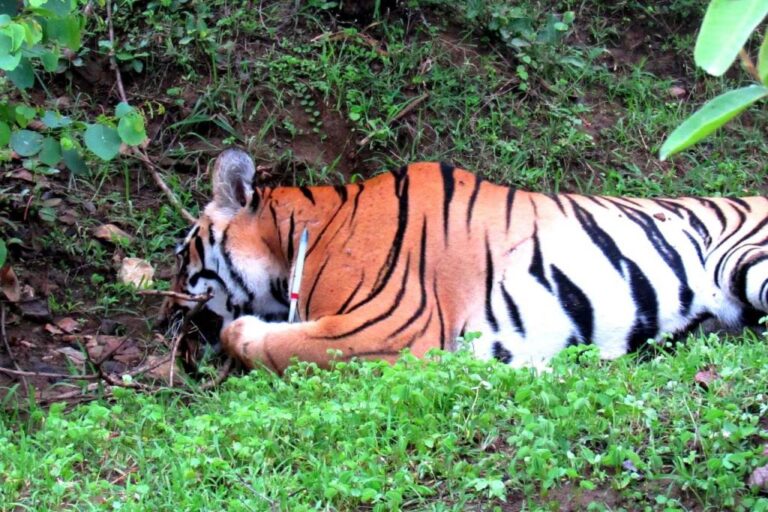
A tigress strode into a busy marketplace in the district of Almora on the night of November 14, 2022. Then, in a move that has had many outraged across the country, the animal was shot with a service rifle used by forest department staff.

According to reports emerging from the area, the animal was aged 11-12 years. It had strayed into the Marchula Bazar area from the Kalagarh division of the Corbett Tiger Reserve.

The Times of India quoted Samir Sinha, chief wildlife warden of the Uttarakhand Forest Department as saying, “We have set up a probe. The director of Corbett has been asked to furnish a detailed report within 48 hours.”

A press statement issued by the Corbett Tiger Reserve said forester Mohan Chandra Bhatt had fired nine rounds from a .315 bore gun into the air to scare the tigress and push it back towards the forest.

“But the firing did not work and the tigress became more violent. It was then that forest guard Dheeraj Singh fired two rounds to the ground with a .12 bore gun. He could not fire into the air as a huge crowd had gathered on the rooftops. The tigress was hit in its right hindlimb by one round,” the statement said.

A postmortem revealed that the cause of death was excessive bleeding in the hindlimb due to the bullet. The statement said Singh had been suspended. An inquiry is also being conducted.

‘A ticking time bomb’

According to a number of media reports, the animal was not tranquilised. That is because India does not have enough veterinarians in its protected areas, Nawab Shafath Ali Khan told Down To Earth.

Khan had to face a lot of flak from wildlife activists after his son, Asghar, fired the shot that killed the tigress Avni in a human-dominated landscape, some 50 kilometres from Tipeshwar wildlife sanctuary in Maharashtra in 2018. Avni had killed 13 people.

“Ideally, Corbett should have 200 tranquilising guns. It is such a big park. But I don’t think there are more than four,” he told Down To Earth.

He added that there should be a rapid action team that should be able to cover the park within minutes. Khan, who has worked in Africa, noted that that protected areas there have small helicopters that can transport field staff from one part of the reserve to the other in a short time.

A rapid action team should ideally be reporting for duty 24X7. Their modern vehicle should be at standby. The team should consist of a driver, a tracker and a veterinarian. They can work in shifts.

“But that does not happen in our country. We have not learnt anything. Even after Avni. The National Tiger Conservation Authority is clueless as to what to do,” Khan said.

The problem, at the end, is related to power play. Both, the National Board for Wildlife (NBWL) and the State Boards for Wildlife (SBWL) are filled with people who are appointed by politicians.

“There is not one person who has worked on the field. The Prime Minister and Chief Ministers who head the NBWL and SBWLs should appoint people with field expertise in these bodies,” Khan said.

But the problem of lack of infrastructure is the most glaring. Why can’t the government invest in the latest technology used in such situations like the aforementioned helicopters, drones, tranquiliser guns, all-terrain vehicles?

“The Government of India is sitting on Rs 40,000 crore of Compensatory Afforestation Fund Management and Planning Authority (CAMPA) funds that it has collected from state governments. They have been turned into fixed deposits and interest is being derived from them,” Khan claimed.

If these funds are properly utilised, there would not be any lack of infrastructure in India’s protected areas.The problem of human-wildlife conflict has been staring at India for decades now. Khan calls it a ‘ticking time bomb’.

In an overpopulated country like India, Corbett National Park’s boundaries should be defined, compartmentalised, have a 20-feet high chain link fence, so that the tigers are kept inside and the humans outside.

“There will be no encroachment. Stray cattle will not go in, diseases like foot-and-mouth will not affect our wildlife. That is the only common sense solution left for India. And CAMPA funds should be used from tomorrow,” Khan said.

Elephant Tickles Reporter On Duty, Internet Says “Sweetest Of Blessings”

The video captures the hilarious moment when the elephant ticked the journalist in the ear and showered him with kisses as he was making a report.

Elephants are considered to be one of the most adorable creatures, who win our hearts with their cute and playful antics. They are also exceptionally intelligent and sensitive animals, capable of understanding emotions. A recent viral video captures an absolutely heartwarming moment between a TV reporter and an elephant. As the reporter was talking about a wildlife trust, while standing amid elephants, one of them decided to shower him with love and affection.

Social Media

Sheldrick Wildlife Trust, a Kenya-based organization that works for the “rescue, rehabilitation and release of orphaned baby elephants,” shared the video on their official Instagram account. “Everyone wants to be the star! Kindani was so inspired by Alvin’s performance that she decided to steal her own moment in the spotlight,” read the video’s caption.
https://www.instagram.com/p/Ck7_GcEKCv2/?utm_source=ig_embed&utm_campaign=embed_video_watch_again
The video captures the hilarious moment when the elephant tickled the KBC journalist in the ear and showered him with kisses as he was making a report. Meanwhile, journalist Alvin Patterson Kaunda tried to keep a straight face and maintain professionalism the entire time. However, he burst into laughter after the elephant used its trunk to kiss him on his face. The crew was also heard joining him in the laughter.

Social Media

The sweet video has gone viral, and people can’t get enough of the adorable act. One user wrote, ”First on my feed this morning, couldn’t think of a better way to start the day…sweetest of blessings.” Another commented, “That is gorgeous-just what you need on a cold , misty morning to cheer you up.” A third said, “I’ve watched this over and over, and it still makes me laugh every time! Silly girl Kindani, I wouldve have expected this from Bondeni.”

Know, “King of all birds,” eagles are large and powerful birds

0

Nicknamed the “king of all birds,” eagles are large and powerful birds of prey that appear to soar majestically in the air, searching for their next meal.

Although not the most agile flyer, its remarkable speed in the air certainly belies its enormous size relative to other birds. Most species are well-protected by governments, conservation organizations, and international acts around the world, but a few of the more obscure species are in danger of extinction.

  6 Incredible Eagle Facts!

Social Media
  • The Eagle bird probably first evolved from kites some 36 million years ago.
  • The eagle bird has served as a very common symbol of strength and power in many human cultures. They have adorned the national emblems of Rome/Byzantium, Russia, and many Germanic states. The unusual-looking double-headed eagle is a common historical motif that may stretch back to the time of ancient Mesopotamia.
  • The grip of the bald eagle is actually 10 times stronger than a human.
  • Despite their much smaller bodyweight, the eye of an eagle is about the same size as a human eye.
  • Eagles undergo a process called molting in which they gradually lose their feathers one at a time and grow completely new ones about every year. Some species will lose feathers equally on both sides to maintain proper balance.
  • he Eagle bird can carry up to four times their own body weight, making it one of the strongest birds in the world.

    The Eagle Bird Scientific Name

    Social Media

    An eagle is a group of particularly large birds that belong to the family of Accipitridae (this scientific name is derived from the Latin word accipiter, which means hawk). Many different types of birds belong to this family, including vultures, kites, and hawks. What distinguishes the eagle is its larger size and massive beak. There are some 60 species of eagles still living in the world today. They can be divided into several main groups: the fish or sea eagles, serpent eagles, forest eagles, and booted eagles. These are informal groups and not necessarily taxonomical ones. What many Americans may not know is that the bald eagle (scientific name Haliaeetus leucocephalus) is actually a type of sea eagle.

    Common Types of Eagles

    Social Media
    • Bald Eagle Bird – The bald eagle is the national bird of the United States. These birds have white heads and tails with brown bodies and are found near open bodies of water with old growth trees that they use for nesting.
    • Harpy Eagle Bird – Harpy eagles are found in tropical rainforests in Mexico, Central America, and South America. These birds have dark grey feathers with white undersides, a black band across their necks, and grey feathers on their heads.
    • Golden Eagle Bird – Golden eagles can be found in Europe, Asia, North America, and parts of Northern Africa. Adult golden eagles are dark brown with slightly paler wing feathers and golden napes.
    • Stellar’s Sea Eagle Bird – Stellar’s Sea Eagles live in coastal habitats of northeastern Asia. These birds can be identified by their dark bodies, white shoulders, foreheads, tails, and thighs, and bright yellow bills.
    • White-Tailed Eagle Bird – White-tailed eagles breed in Northern Europe and northern Asia and generally live near open bodies of water. They have brown body feathers and pale heads and necks with white tail feathers.

    Eagle Appearance

    Sociam Media

    The eagle is among the largest of all birds; only some condors and vultures can rival it in sheer size. The largest species of eagles, such as the harpy eagle and Steller’s sea eagle, weigh up to 20 pounds and display a wingspan of around 7 or 8 feet from tip to tip. Females actually tend to be larger than males on average, but it’s not entirely clear why; perhaps it’s to protect the chicks from danger while the male is away. In addition to their size, the eagles are further distinguished by their sharp, heavy beaks (which end in a downward-sloping point) and four big talons on each foot. They also have small projections on the bottom of their feet called “spicules” to grasp prey. Unlike the scavenging vulture, eagles also have a fully-feathered head, sometimes capped off in a luxurious-looking crest.

Do you know about 10 Types of Wild Cats?

0

Lion, Tigers, and jaguars are the best-known big cat breeds. However, most members of the Felid family are small wild cats that weigh under 50 pounds.

Many types of wild cates prowl the forests, mountains, and jungles of the world. They vary in size, habitat, and fur type, but they share many traits. These wild felines are just as graceful and powerful as their larger cousins. As of 2017, there are 41 recognized species of wild cats. Here are 10 of the world’s most unusual, stunning wild cats and some interesting facts about each.

1. Ocelot: Spotted Beauty

WSON Team

The Ocelot (Leopardus pardalis) is one of the most beautiful wild cats in the world. This medium-size cat can weigh up to 33 pounds and grows to about 3 ½ feet long. It has a stunning, thick coat with dark spots that make it look like a miniature leopard. The ocelot has an extensive range that extends from the southwestern part of North America into South and Central America. An excellent swimmer, climber, and runner, the ocelot is an almost perfect predator.

As a nocturnal animal, Ocelots tend to be shy and hides away during the day. Their excellent eyesight allows them to hunt and stalk prey in the dark, and they communicate with other ocelots through quiet meows. They mostly hunt small animals on the ground but have also been know to attack monkeys, turtles, anteaters, and even undersized deer.

2. Black-Footed Cat: Fierce Fighter

a-z-animals.com

This lovely cat (Felis nigripes) is the smallest wild cat in Africa and one of the smallest wild cats in the world. In size and shape, it looks strikingly like a domestic cat. The black-footed cat has adapted to its habitat with furry feet that protect it from the hot sand. This cat has a reputation for fierceness, and it is considered the most successful hunter of all cats. It is an excellent climber and can jump 5 feet into the air.

3. Sand Cat: Tiny Desert Dweller

WSON Team

One of the smallest of all the big cat breeds, the sand cat (Felis margarita) looks like a cute, cuddly domestic cat, but it thrives in a harsh desert habitat. It has an average weight of 6 to 8 pounds. Like the fennec fox, the sand cat is a psammophile, which is an animal that thrives in the sand. It is native to the deserts, grasslands, and rocky valleys of the Middle East and North Africa. The temperatures where it lives are extreme. By day, they can reach 126 degrees Fahrenheit, but they drop to 23 degrees at night.

4. Snow Leopard: Mountain Mystery

WSON Team

The snow leopard (Pantera uncia) is one of the most mysterious of the wild cats. These gorgeous cats are known for their snowy, spotted coats and bright blue eyes. Because they’re elusive cats who live high in remote mountains, we know less about these than we do other types of wild cats. The snow leopard lives in the mountains of Central Asia at altitudes of 11,000 to 22,000 feet. It also hunts in the forests and grasslands at lower elevations.

5. Fishing Cat: Skilled Swimmer

WSON Team

The fishing cat (Prionailurus viverrinus) is native to Southeast Asia. The fishing cat stands out among other types of wild cats because it is a strong, skilled swimmer. It reaches a length of 4 feet and a weight of 11 to 35 pounds. The fishing cat gets its name for its ability to swim. Identification of a fishing cat is easy because of its partially webbed feet and thick, waterproof undercoat. These adaptations allow the fishing cat to swim well, even underwater. Most of its diet is fish, and it also eats small rodents.

6. Rusty-Spotted Cat: Smallest of the Big Cat Breeds?

a-z-animals.com

This fierce little feline (Prionailurus rubiginosus) is native to IndiaSri Lanka, and Nepal. This nocturnal feline may be the smallest wild cat in the world. Measuring under 2 feet in length, it looks like a tiny leopard with its spots, long tail, and pointed ears. Identification of the rust-spotted cat, as its name implies, is from the rust-colored spots on its fur. With its enormous eyes and tiny size, it looks utterly adorable, but this cat is a skilled predator.

7. Caracal: Exotic Beauty

WSON Team

This unusual wild cat (Caracal caracal) is easy to identify because of its unusual ears with long, hairy tufts. This beautiful wild cat has a lean, elegant body and reddish golden fur. It may be the most beautiful of African big cat breeds. Caracals are native to North Africa and Egypt. There is evidence that the caracal was important culturally to the ancient Egyptians. The caracal stands about 1 ½ to 2 feet tall and weighs from 20 to 45 pounds. Its preferred habitat is dry scrubland and grassland, where it is a deadly predator.

8. Pallas Cat: Small and Fluffy

WSON Team

The Pallas cat (Octolobus manual) is native to the mountains of Asia. Also known as the steppe cat or rock wild cat, it has been spotted in IranPakistan, northern India, and China. Like the snow leopard, it has adapted to life at high altitudes and wintry weather. The Pallas cat, however, is much smaller than a leopard. It grows up to 2 feet long and weighs about 10 pounds. This gorgeous wild cat has a stocky build and thick, fluffy fur. For a cat of small size, it has a wide territory, where it hunts pikas and other small mammals.

9. Jaguarundi: Outstanding Jumper

a-z-animals.com

The jaguarundi (Herpailurus yaguarondi) is slightly larger than a domestic cat. They are native to MexicoBelize, and other countries in Central and South America. The jaguarundi is a superb jumper who can leap more than 6 feet in the air to catch its prey. It moves swiftly and low to the ground, which allows it to hunt rabbits and small rodents. A jaguarundi weighs 8 to 16 pounds and has a solid brown or gray coat.

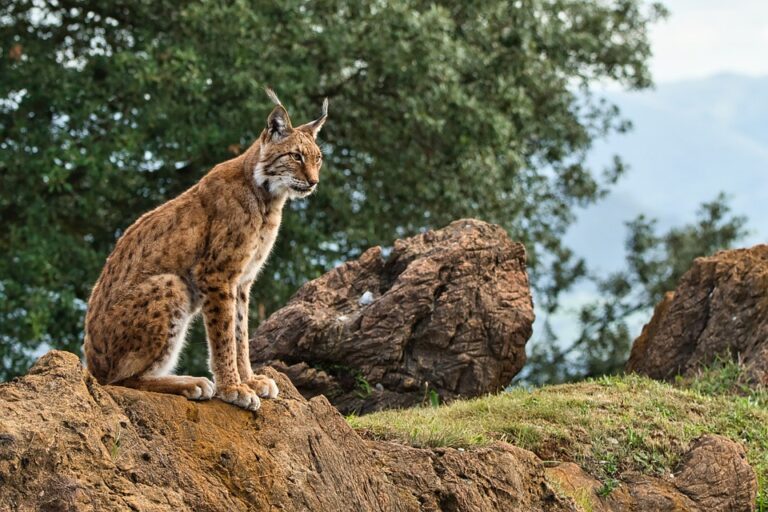
10. Iberian Lynx

WSON Team

This beautiful wild cat (Lynx pardinus) has long, tufted ears and fluffy paws. It is native to the mountains of Spain, where it preys on rabbits, rodents, and other small mammals. The Iberian lynx almost became extinct, but a concerted conservation effort reintroduced lynxes that were bred in captivity. It has a fawn-colored coat with dark spots and long legs. An Iberian lynx weighs up to 35 pounds.

Key Points

  • Wild cats show similarities to house cats, except they are larger and more powerful.
  • Many flourish in wet and dry environments all over the world.
  • Wild cats are elusive and stealthy hunters.

Freddie and Elton 2 cheetahs were released in Kuno National Park’s bigger enclosure

Freddie and Elton were the first pair to be released into the larger enclosure on November 5 after being quarantined for about 50 days.

The two male cheetah siblings, who were released into a larger enclosure at the Kuno National Park in Madhya Pradesh, have made their first kill within 24 hours of their release from quarantine. The cheetahs hunted down a cheetal or spotted deer somewhere between 6 pm Sunday and Monday morning, according to forest department officials.

Freddie and Elton were the first pair to be released into the larger enclosure on November 5 after being quarantined for about 50 days. A senior forest official told The Indian Express, “The cheetahs making their first kill within 24 hours is beyond expectations. This signifies that the big cats are absolutely fit and the worries of these cheetahs losing any muscle strength owing to the time they spend in quarantine is unfounded.”

While Freddie and Elton became the first pair to be released from their quarantine, forest officials said they are taking a staggered approach to releasing the remaining five cheetahs. The officials will monitor the two cheetahs for about two days using satellite collars and cameras before releasing another. Forest officials are still observing one of the female cheetahs Asha, who was speculated to be pregnant, and will release her after November 10.

The cheetahs were declared extinct on Indian soil in 1952 after the last one was killed in 1947. In a bid to reintroduce cheetahs in India, the government under Project Cheetah had translocated eight of these big cats—including five females and three males—from Namibia. The male cheetahs are aged between 4.5 years to 5.5 years while the five female cheetahs are aged between two to five years. Elton and Freddie had been living in a 58,000-hectare private reserve of the Cheetah Conservation Fund (CCF) near Otjiwarongo in Namibia.

Prime Minister Narendra Modi had released three cheetahs in Kuno-Palpur National Park on September 17 and called it a historic moment. On Saturday, he expressed happiness at the cheetahs being released into their larger enclosure and doing well.