Migratory birds have lighter-colored feathers

0

Migratory birds are specially adapted to find their way over extreme distances that represent remarkable tests of endurance. Now, researchers have discovered an unexpected way that migratory birds keep their cool during such arduous journeys: lighter-colored feathers.

Migratory birds are specially adapted to find their way over extreme distances that represent remarkable tests of endurance. Now, researchers reporting December 6 in the journal Current Biology have discovered an unexpected way that migratory birds keep their cool during such arduous journeys: lighter-colored feathers.

“We found across nearly all species of birds, migratory species tend to be lighter colored than non-migratory species,” said Kaspar Delhey of the Max Planck Institute for Ornithology, Seewiesen, Germany. “We think that lighter plumage coloration is selected in migratory species because it reduces the risk of overheating when exposed to sunshine. Lighter surfaces absorb less heat than darker ones, as anybody wearing dark clothes on a sunny day can attest! This would be particularly important for long-distance migrants that undertake extensive flights during which they cannot stop to rest in the shade.”

WSON Team

Delhey and colleagues had been studying the effects of climate on bird coloration. Their earlier studies showed that, in general, lighter colored birds are found where temperatures are high and there is little shade. Presumably, that’s at least in part because the birds’ lighter plumage helps to keep them cooler in the hot sun. Around that same time, the researchers came across studies by others showing that some birds fly at much higher altitudes during the day compared to at night.

“Because flying at high altitude is likely costly, these changes required an explanation,” Delhey says. “One possibility was that flying higher, where it is colder, would offset the heat absorbed by the plumage when the sun was shining.”

If so, they realized, another way to reduce the risk of overheating would be to absorb less solar radiation in the first place. It raised a question: have migratory species evolved lighter feathers?

To find out, they quantified overall plumage lightness (from 0 = black to 100 = white) for all bird species, using bird images from the Handbook of the Birds of the World. Next, they compared the data on coloration with the species’ migratory behavior, while controlling for other factors known to affect plumage color.

Overall, the findings show that bird species get increasingly lighter as they migrate more. So, resident birds tend to be darker than short-distance migrants. Short-distance migrants are darker than bird species that travel farther. Delhey said that one of the biggest surprises was how consistent the effect was across different types of birds. They saw the same pattern in birds large and small. The same held true in waterbirds and land-dwelling birds, too.

The findings are another reminder of the important role of temperature and climate factors more broadly in shaping the evolution of animal coloration. They also have clear implications for understanding the impacts of global warming and potential adaptive evolutionary responses, the researchers say.

Delhey notes that many factors influence bird coloration and light colors are but one of many ways that migratory birds can avoid overheating. His team will continue exploring the connections between migration, climate, and other selective factors that shape the evolution of plumage colors in birds. They also suggest, in light of the new findings, that future studies should directly test how migratory species cope with thermoregulatory challenges.

Essex mega-prisons pose threat to rare wildlife, warn environmentalists

Campaigners have criticized plans to develop two mega-prisons on the site of a rare bird and amphibian habitat in England.

The government has been accused of reneging on commitments in the Environment Act to stop the decline of wildlife by proposing the development of the old Wethersfield airfield, which has become an important space for nature near Braintree, Essex.

Red-listed birds on the site in Essex include turtle doves. Photograph: Joe Blossom/Alamy

Seventy-four species of birds, many red-listed, nest nearby, and the area comprise 75,000 trees and shrubs. The site also includes ancient woodland, as well as great crested newts and rare orchids. Red-listed birds on the site include turtle doves, lapwings, and grey partridge.

Rosie Pearson, a planning and environmental campaigner, said she hoped a local campaign would force the plans to be scrapped and allow the area to be rewilded instead.

She said: “Already seven parish councils have come together to create a network, and a community action group has been created. It’s called Swap: Stop Wethersfield Airfield Prisons.

“We are in the process of appointing experts to assist in the campaign, and we are working on a better alternative – to see the land sold to a rewilding buyer. We would love to see the site protected. There is a farm adjoining the airfield which has been bought recently for rewilding.”

Pearson is convening a group of locals, including landowners, to develop and present an alternative plan for the site that would protect the wild areas from construction.

Building work on the Wethersfield site could begin in 2023 if the proposals are approved. The government is reviewing responses to consultations of residents conducted last month.

The council is backing the plans because of the funding and jobs it could bring to the area. The prison complex will include two 1,750-inmate prisons and 1,000 parking spaces.

The environment minister Victoria Prentis praised the idea and said in the planning document: “As part of our work to drive down crime, we have committed to creating 18,000 additional prison places by the mid-2020s. We believe that, following detailed feasibility work, land next to Wethersfield airbase would be a good location for two new prisons as part of the prison estates strategy.

“Our plans, if successful, would bring many benefits to the local community, such as hundreds of jobs during construction, careers within the prison sector, and an increased spend in local businesses.” But nature charities say by backing such plans, the government is reneging on its promise to protect wildlife.

Emma Marsh, the RSPB’s director for England, said: “We cannot keep pushing nature into smaller and smaller spaces and demand it fits in with our plans. Across England, our wildlife is disappearing and wild spaces that are providing a refuge for our rarest species during the nature and climate emergency are under threat.

“Our leaders in Westminster championed the Environment Act for delivering the world’s first legally binding targets for halting the decline of wildlife, and yet only a few weeks after being granted royal assent we now need to see nature included in all decision making, including planning, especially when compensation land could take a decade or longer to replace what has been lost under concrete.”

The Ministry of Justice (MoJ) says the development will protect local wildlife. A spokesperson added: “The landscape design strategy for the new prisons seeks as a primary objective to protect local wildlife, plants, and trees as much as possible.

“A lot of care has been taken to understand the existing context of the site, through research, surveys, and assessment, to respect the existing rural setting. The layout of the prisons has been designed conscientiously, to ensure that there will be minimal impact to the existing green infrastructure.”

The local MP, James Cleverly, refused to disclose whether he would support the plans. He told the Guardian: “I have spoken with MoJ ministers, elected members and officials at Braintree district council and local people about the pros and cons of these proposals. This is still at the very earliest stages, and no formal planning application has been submitted. I will continue to engage with local residents and local representatives.”

Lion Adopted A Baby Leopard After Losing Her Cub

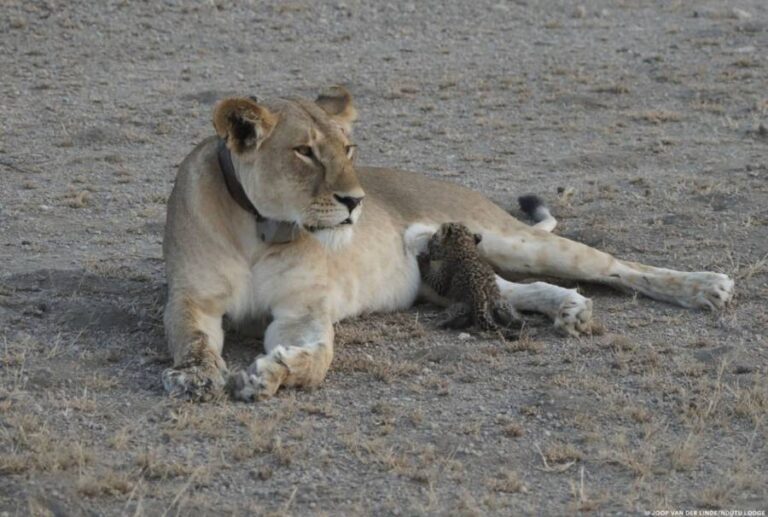
Researchers in Serengeti National Park in Tanzania came across a lioness who seemed to have adopted a newborn leopard. This is an incident similar to the one at the Gir National Park in India where, a small male cub, about 2 months old, had a lioness’ nursing, fed from her prey that has been killed by the lioness and played with her two own cubs, about the same age as the leopard on December 2018.

The researchers have been thoroughly confused by this uncommon incidence of inter-species fostering, which is described in the journal Ecosphere as “bizarre.” The care for the babies of another animal from an evolutionary point of view makes little sense.

pluto134340.com

Taking care of the young, collecting food for them, and keeping them safe will take a lot of time and energy and is often done to promote one’s own genes. These types of situations where an animal is caring for non-biological descendants of the same kind are not rare but “these actions help directly increase the reproductive success of the person who does this,” the study’s authors said. For example, female cheetahs adopt orphaned male cubs, who form broad coalitions with the mother’s own children once they reach adulthood

Adoption among species is very rare but adopting an offspring from a competitor animal almost never happens. The wild lioness named Nosikitok has found the solitary kitchen near the den where her cubs are, and they are almost the same age when it happens.

pluto134340.com

The lioness protects the cub as if it is her own, by keeping it close to her. The cubs of the lioness are believed to be dead since they were not seen for a long time. Lions are known to feed each other’s cubs, however, adults and cubs from other large cat species are also known to kill. This is probably a very rare incident.

Experts consider that the ideal result would be if the leopard could find a way back to his own mother, as he is not sure how the pride of Nosikitok could react to the newcomer.

“It is probable that she has come into contact with this leopard cub, which she adopted before her parental hormones shut off,” explains Sarah Durant, of the London Zoological Society. Nobody knows Whether the lioness will adopt the newborn leopard full time. Let’s hope that this Lioness will take care of the baby leopard till it grows up.

There may be more bird species in the tropics than we know

0

A study of a perky little bird suggests there may be far more avian species in the tropics than those identified so far. After a genetic study of the White-crowned Manakin, scientists say it’s not just one species and one of the main drivers of its diversity is the South American landscape and its history of change. These results are published in the journal Molecular Phylogenetics and Evolution.

“We found that the White-crowned Manakin probably originated in the highland forests of the Andes Mountains in northern Peru,” explains lead author Jacob Berv. “Today, this bird is also found across the Amazon Basin, in the lowland rainforests of Brazil, Peru, and many other countries, including parts of Central America.” Berv conducted this research while a Ph.D. student at the Cornell Lab of Ornithology and is currently a Life Sciences Fellow at the University of Michigan.

“This study shows that there is a lot of evolutionary history embedded in what is commonly referred to as a ‘single widespread’ species in Amazonia,” says co-author Camila Ribas at Brazil’s National Institute of Amazonian Research. “The White-crowned Manakin is an example of a phenomenon that is probably more the rule than the exception in Amazonia — diversity is vastly underestimated by the current taxonomy.”

Around 2.5 million years ago, populations of this manakin species expanded out of the Andes, though many populations remain there today. Those that moved eventually became isolated in pockets of habitat defined by mountains, plains, rivers, and climate. Over the course of time, White-crowned Manakin populations evolved independently, accumulating differences in their songs and plumage patterns. Study authors suggest many of these pocket populations are now different enough from one another that they should be recognized as separate species. This is especially true if the variations in song make it unlikely that isolated populations would be able to recognize one another and breed — the biological definition of a species.

“In order to understand evolutionary processes in Amazonia we need many more studies like this one, with dense geographical sampling,” Ribas says. “For this, we need to support biological collections that are able to accumulate samples through time.”

Study authors say underestimating the number of species in South America has important consequences for conservation, especially for endemic species threatened by the ongoing loss of habitat.

“We’ve basically just scratched the surface,” notes Berv. “If what holds true for this species is indicative of what’s taking place in other poorly studied species, then we have hugely underestimated the amount of biodiversity in the South American tropics.”

An Asian eagle has shown up in Canada, half a world away

How did an Asian eagle end up in eastern Canada?

Birders have been, well, flocking to see a Steller’s sea eagle (Haliaeetus pelagicus) as it made its way across North America, from Alaska’s Denali Highway to Quebec, New Brunswick, and on to Nova Scotia. Birders believe it even made a stop in South Texas last spring.

At about 4,700 miles away from its usual range, “it’s almost as far away from your origin as you can be,” Andrew Farnsworth, a senior researcher at the Cornell Lab of Ornithology, told the New York Times. “It’s mind-boggling.”

The birds are known to occupy a range that includes China, Japan, Korea, and Russia’s east coast, and while some have been spotted in western Alaska, the Times writes, they have never been spotted near the Atlantic Ocean.