Scientists say there are seven spotted skunks

0

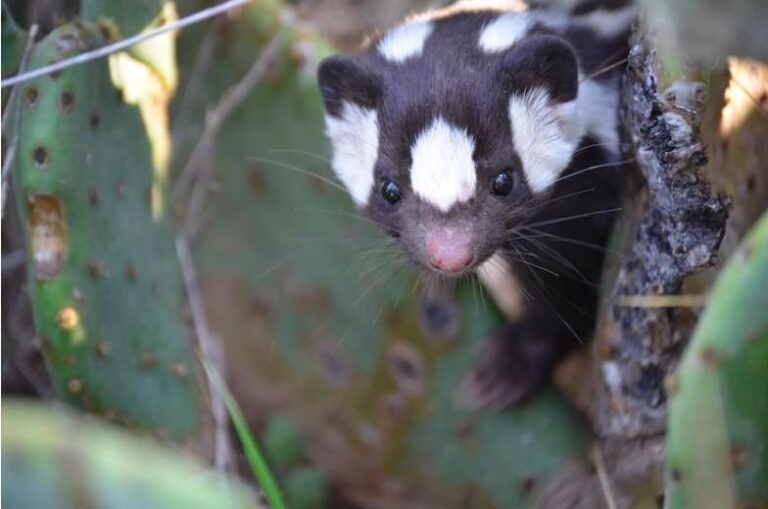
Spotted skunks are the handstand champions of the skunk world. Now, there may be more species of them than scientists previously recognized. Spotted skunks live across North and Central America, and until recently scientists had described four different species of them.

New research on the genetics of spotted skunk species shows that there are more genetic differences between populations than previously thought. There may actually be seven species of spotted skunks instead of just four.

To get lots of samples of spotted skunks from across their range, the research team used DNA from museum specimens and from wild skunks.

One of the types of spotted skunks, the Plains skunk (from the Great Plains region of North America), might be endangered. Listing it as a separate species could help efforts to protect it.

Now that the scientists see genetic differences between the skunk populations, they want to study the different populations. They are curious to see if they are eating different things or if they behave differently in other ways.

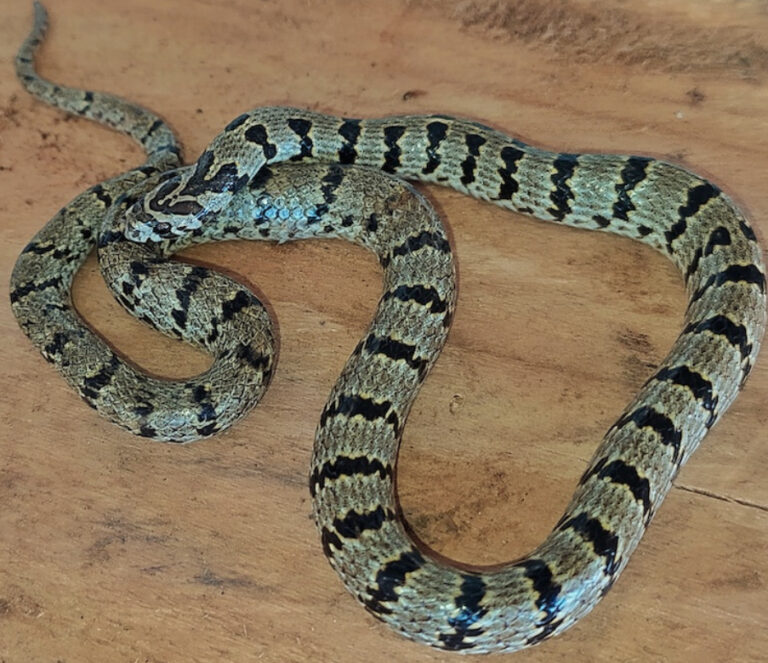
A newly discovered snake in the Himalayas found via Instagram

Researchers have found a snake species never before described by science — on Instagram!

During the COVID-19 lockdowns in India, Virendar Bhardwaj, a master’s student at Guru Nanak Dev University, Amritsar, was home in Chamba, a six-hour drive away at the foot of the Himalayas. While exploring his own backyard, Bhardwaj began photographing the snakes, lizards, frogs, and insects around his house and uploading those photos to Instagram.

In one of these posts, uploaded on June 5, 2020, Zeeshan A. Mirza, a herpetologist from the National Centre for Biological Sciences in Bengaluru, in southern India, noticed an unfamiliar snake. The snake belonged to a group commonly called kukri snakes, so-called for their teeth which are curved like a kukri, or Nepali dagger. But this specimen didn’t match the common kukri snake of the region.

Bhardwaj was able to locate two of the snakes, enough for the team, which included Mirza and Harshil Patel of Veer Narmad South Gujarat University, Surat, western India, to begin the identification process.

The work was put on hold due to COVID-19 restrictions, which made visiting labs and natural history museums difficult. But once the labs opened back up in early 2021, molecular data for the species confirmed it was indeed different from the common kukri snake. Morphological data from the literature, as well as computerized tomography (CT), scans of the species’ skeletal structure further revealed that the species was undescribed.

The new-to-science species was named Oligodon churahensis, after the Church Valley in Himachal Pradesh, a mountainous state in the western Himalayas where the species was discovered. A description of the species is published in the journal Evolutionary Systematics.

The western Himalayas are comparatively less explored than many other regions, and dedicated work in this region is necessary to reveal the biodiversity of the region, Mirza says. The region harbors unique species of reptiles that scientists have only begun to unravel in the last couple of years.

“It is quite interesting to note that how an image from Instagram led to the discovery of such a pretty snake that was unknown to the world, ” Mirza told Mongabay. “Exploration of your own backyard may yield species that are perhaps undocumented. Lately, people want to travel to remote biodiversity hotspots to find new or rare species, but if one looks at their own backyard, one may end up finding a new species right there.”

Male and female guinea baboons equally successful as leaders

0

The sun rises over the Senegalese savannah. The Guinea baboons have spent the night on their sleeping trees and set off together to forage. In order to depart simultaneously as a group and roam together during the day, the animals have to coordinate well. Researchers have studied which animals lead the group and how they decide when and in which direction to set off.

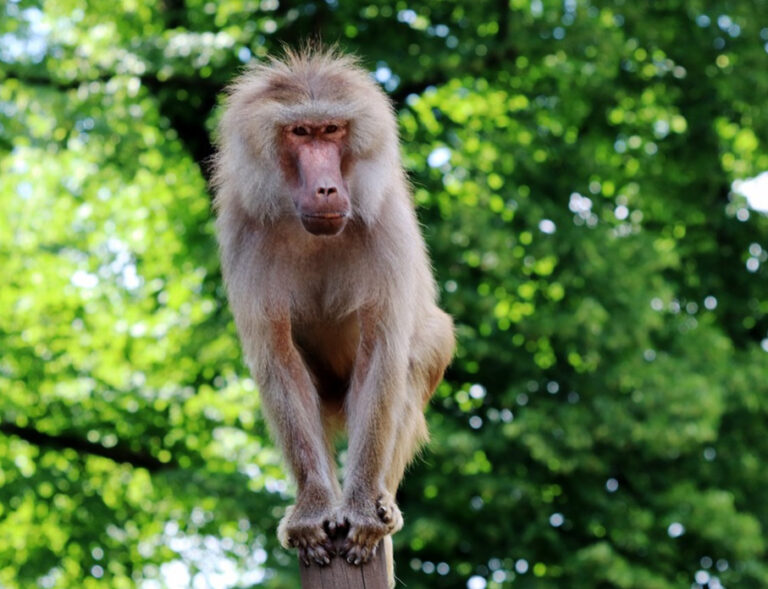
They observed Guinea baboons (Papio Papio) on their forays for two years. The overarching goal was to elucidate which factors favor despotic versus democratic decisions in groups. The authors found that both males and females initiate group departures and that both sexes are similarly successful in doing so. This pattern distinguishes Guinea baboons from hamadryas baboons (Papio hamadryas), in which group movements are initiated and led exclusively by males.

The sun rises over the Senegalese savannah. The Guinea baboons have spent the night on their sleeping trees and set off together to forage. In order to depart simultaneously as a group and roam together during the day, the animals have to coordinate well. Researchers from the German Primate Center (DPZ) — Leibniz Institute for Primate Research have studied which animals lead the group and how they decide when and in which direction to set off. They observed Guinea baboons (Papio Papio) on their forays for two years. The overarching goal was to elucidate which factors favor despotic versus democratic decisions in groups. The authors found that both males and females initiate group departures and that both sexes are similarly successful in doing so. This pattern distinguishes Guinea baboons from hamadryas baboons (Papio hamadryas), in which group movements are initiated and led exclusively by males. Because both baboon species live in a multilevel society but differ in how males and females relate to each other, the latter is critical in determining which individuals influence the coordination of a group: In Guinea baboons, females are more free and less subordinate to males. This is also reflected in the leadership structure.

Guinea baboons are one of six baboon species found in Africa. They differ in appearance and behavior, as well as in their social organization. Chacma, Kinda, olive, and yellow baboons live in uni-level societies. Groups consist of several males, females, and young. There are clear hierarchies between the sexes.

Guinea baboons and also hamadryas baboons, in contrast, live in multilevel social organizations. Hamadryas baboons establish one-male units in which a male lives with several females who mate only with him. Several such units form so-called clans, and several clans form bands. Male-male, as well as male-female relationships, tend to be characterized by competition and subordination in hamadryas baboons. Guinea baboons also live in small units with one ‘primary’ reproductively active male and up to six associated females and their offspring. Several units form parties and two to three parties form gangs that forage together. Unlike hamadryas baboons, males in Guinea baboons form close friendships with each other and aggression rarely occurs. The females choose their males freely and stay with them for weeks, months, or even years.

“We wanted to find out which individuals in Guinea baboons influence collective decisions like group departures,” says William O’Hearn, a Ph.D. student in the Cognitive Ethology Laboratory at DPZ and co-author of the study. “We already know that in chacma, olive, and yellow baboons, males and females lead the groups; in hamadryas baboons, it’s exclusively males. So it was interesting to ask what the situation is in Guinea baboons.”

For this purpose, the researchers led by Davide Montanari, a graduate student of the department, observed a group of 131 animals at the DPZ research station Simenti in Senegal over a period of two years. They analyzed 121 group departures and 100 group progressions. They recorded which group members initiated the departures and how the animals were distributed in group progressions, depending on the sex, age, and reproductive status of the males.

The researchers were able to make three important observations: First, both sexes initiate group departures. Adult and non-reproductive bachelor males did this more often in about 60 percent of all cases than adult females with about 36 percent. However, both sexes were similarly successful, because, in over 80 percent of the cases, the other animals followed the initiators, irrespective of whether the initiator was male or female. Second, the researchers found that both primary, reproductive males and females lead the group. However, both sexes were equally likely to be found in the middle or in the rear of the progression. Bachelor males, on the other hand, were more likely to march in front of the group. They do not belong to any unit, travel faster, and may thus overtake other group members. A third finding of the study is that members of a unit travel together, as they have closer bonds with each other than with members of other units.

“The results of the study show that although Guinea baboons live in a similar social system as hamadryas baboons, they have a different leadership structure,” explains Julia Fischer, head of the Cognitive Ethology Laboratory at DPZ. “Social organization alone does not determine who leads the group. More important are the inter-sexual relationships among the animals. In Guinea baboons, females have a high degree of social and physical freedom and are less subordinate to males than in hamadryas baboons. This is reflected in their behavior during collective movement decisions.”

Climate change an emerging factor in human-wildlife conflict

the largest marine heatwave in the U.S. hit the Pacific Coast. Whales moved closer to shore to find prey, but they came across something dangerous—they were getting entangled in crab fishing gear.

Crab fishermen and women wouldn’t usually be out at that time of year. But the change in climate was also causing an algal bloom, toxic to crabs. So the fisheries delayed their timing by several months—the same time migrating whales were on the coast.

“It was this double-whammy,” said Briana Abrahms, an assistant professor in the Department of Biology and Center for Ecosystems Sentinels at the University of Washington.

This was one of the topics Abrahms was studying when she realized there hadn’t been much-published research on how climate change is exacerbating human-wildlife conflicts. Looking at the scientific literature and government reports, she came across only a few dozen. And many of those were either buried in obscure journals or just anecdotal mentions.

In a paper published in Science, she delved deeper into this area and wrote a call to action for managers and researchers to focus on this issue.

Abrahms was working on another project at the same time as her whale research that was on completely different species in a completely different area but seemed to have some similarities when it came to climate and conflict.

In Botswana, a government report cited some of the highest numbers of human-wild conflicts on record, mostly large carnivores preying on livestock. That happened to be during an extreme drought in 2018. “It struck me how different these systems were, but the story was the same,” she said. “I felt like it was really important to tell this story and draw attention since these climate changes and conflicts are likely to increase in the future.”

As part of her paper, Abrahms applauded a new, proactive risk assessment developed by the state of California to help managers figure out when and where to close fisheries under different climate and ocean conditions. “If you understand what the underlying driver is, in this case, the climate is a factor in these dynamics, you can better prepare to make management decisions and reduce conflict—or avoid it in the first place,” she said.

Abrahms also pushes for more research in these areas, especially where there are geographic and taxonomic gaps. “We definitely need more research and also need to be synthesizing research across everything already out there to understand how much we should be more worried about long-term changes,” she said.

These events are not uncommon, she said. A two-decade study in New Mexico showed that black bears (Ursus americanus) coming into contact with humans and livestock changes with the El Niño and La Niña cycle. Drought conditions push them to look for more resources—often food left over by people. “I’m hopeful and optimistic that by increasing the recognition of the role climate plays in human-wildlife interactions, we can better be able to anticipate and manage for them.”

Assam’s Barak Valley May Soon Get Its Second Wildlife Sanctuary

The sanctuary will be spread over an area of 320 sq km and will be situated between the Barak river and the Sonai river.

The diverse wildlife of Assam’s Barak Valley may soon have a new address if a proposal by Silchar MP Rajdeep Roy for the creation of ‘Barak Bhuban Wildlife Sanctuary’ is accepted by the state government.

The sanctuary will be spread over an area of 320 sq km and will be situated between the Barak river and the Sonai river, Mr. Roy told PTI on the sidelines of the sixth Northeast Green Summit here on Thursday.

Named after the second-largest river in the northeast, the Barak Valley is home to 550 species of birds and 100 species of mammals. It comprises three districts — Cachar, Hailakandi, and Karimganj. If Mr. Roy’s proposal is accepted by the Assam government, the Barak Valley will get its second wildlife sanctuary.

“I got to hear from the experts who have come here for the last three days that there is a possibility of (creating) a sanctuary here that will be around 320 sq km. It lies between the main Barak river and one of its tributaries called the Sonai river,” the BJP MP said.

This area is home to reptiles, a special species of baboons, and a lot of other animals and can be converted into a sanctuary, Mr. Roy said.

“I have given a proposal to our (Assam’s) forest minister, who is an MLA from my constituency. It will go in the coming week. Let’s see what the Assam government thinks of it because we are thinking very positively,” he added.

The three-day Northeast Green Summit concluded on Thursday with experts from different fields making several recommendations for harnessing the economic potential of eco-services, biodiversity, and wildlife conservation in the northeast region and using sustainable technologies in a post-Covid world.