What I Wish Everyone Knew About Velavadar Blackbuck National Park Gujarat

0

The Velavadar Blackbuck National Park is located in the Bhavnagar district of Gujarat and is stretch over an area of about 34 sq km. Velavadar Blackbuck National Park Gujarat This is amongst the few places in India, The Velavadar Blackbuck National Park sanctuary was established in July 1976, as an initial protected area of about 18 sq km.

WSON Team, Click By- Kartik Bhavsar

here are over 120 species of birds that can be found in the The Velavadar Blackbuck National Park and around. If you’re lucky, you may even spot wolves! The best time to visit Velavadar Blackbuck National Park Gujarat is early in the morning when chances of seeing the wolves are a lot more.
https://wildstreakofnature.com/gu/veravadar-blackbuck-national-park-it-is-a-privilege-to-look-at-blackbuck-national-antique-antique-and-wolf/
The sanctuary was established in July 1976, as an initial protected area of about 18 sq km. In 1980, another 16 sq km were added to increase the total area to 34 sq km. Even though this is one of the smallest national parks of the country, it packs in a robust amount of species for the wildlife lover.

WSON Team

where one can cite a sizable population of Blackbucks. Apart from blackbucks, this Velavadar Blackbuck National Park national park is the secure habitat for the endangered Indian wolf, Jackal, Indian fox, Jungle cat, Blue bull antelope, Wild pigs, Hares and Rodents.ome 1800 inhabit the park, alongside blue bulls (India’s largest antelope) and birds such as wintering harriers from Siberia (about 2000 of them most years).

WSON Team

The southern part of the park is ideal for birdwatchers, while the southern border is also the much-loved place of packs of wolves. The best time to visit this Velavadar Blackbuck National Park is between the month of July and March.

How to get there

WSON Team, Click By- Kartik Bhavsar

By Road: Velavadar Blackbuck National Park is located 47km from Bhavnagar.

By Train: Velavadar Blackbuck National Park is located 47km from Bhavnagar which is nearest railway station.

By Air: Velavadar Blackbuck National Park is located 47km from Bhavnagar airport.

Healthy oceans need healthy soundscapes

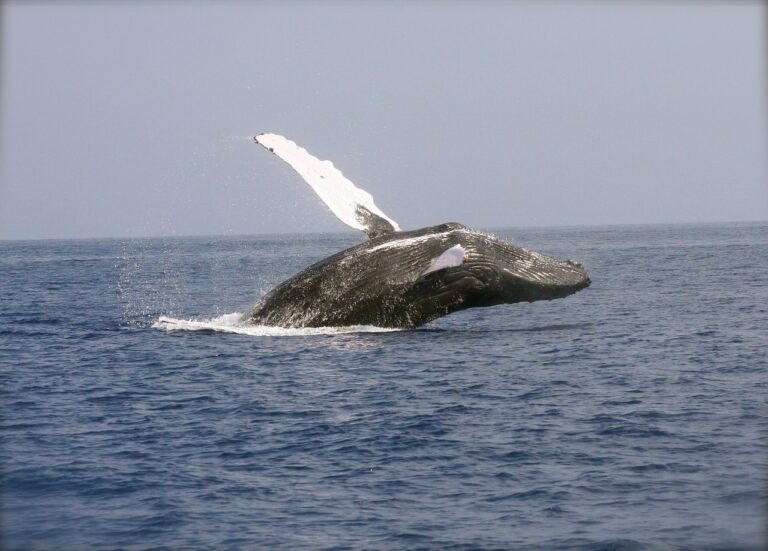
Rain falls lightly on the ocean’s surface. Marine mammals chirp and squeal as they swim along. The pounding of surf along a distant shoreline heaves and thumps with metronomic regularity. These are the sounds that most of us associate with the marine environment. But the soundtrack of the healthy ocean no longer reflects the acoustic environment of today’s ocean, plagued with human-created noise.

A global team of researchers set out to understand how human-made noise affects wildlife, from invertebrates to whales, in the oceans, and found overwhelming evidence that marine fauna, and their ecosystems, are negatively impacted by noise. This noise disrupts their behavior, physiology, reproduction and, in extreme cases, causes mortality. The researchers call for human-induced noise to be considered a prevalent stressor at the global scale and for policy to be developed to mitigate its effects.

The research, led by Professor Carlos M. Duarte, distinguished professor at King Abdullah University of Science and Technology (KAUST), and published in the journal Science, is eye opening to the global prevalence and intensity of the impacts of ocean noise. Since the Industrial Revolution, humans have made the planet, the oceans in particular, noisier through fishing, shipping, infrastructure development and more, while also silencing the sounds from marine animals that dominated the pristine ocean.

“The landscape of sound — or soundscape — is such a powerful indicator of the health of an environment,” noted Ben Halpern, a coauthor on the study and director of the National Center for Ecological Analysis and Synthesis at UC Santa Barbara. “Like we have done in our cities on land, we have replaced the sounds of nature throughout the ocean with those of humans.”

The deterioration of habitats, such as coral reefs, seagrass meadows and kelp beds with overfishing, coastal development, climate change and other human pressures, have further silenced the characteristic sound that guides the larvae of fish and other animals drifting at sea into finding and settling on their habitats. The call home is no longer audible for many ecosystems and regions.

The Anthropocene marine environment, according to the researchers, is polluted by human-made sound and should be restored along sonic dimensions, and along those more traditional chemical and climatic. Yet, current frameworks to improve ocean health ignore the need to mitigate noise as a pre-requisite for a healthy ocean.

Sound travels far, and quickly, underwater. And marine animals are sensitive to sound, which they use as a prominent sensorial signal guiding all aspects of their behavior and ecology. “This makes the ocean soundscape one of the most important, and perhaps under-appreciated, aspects of the marine environment,” the study states. The authors’ hope is that the evidence presented in the paper will “prompt management actions … to reduce noise levels in the ocean, thereby allowing marine animals to re-establish their use of ocean sound.”

“We all know that no one really wants to live right next to a freeway because of the constant noise,” commented Halpern. “For animals in the ocean, it’s like having a mega-freeway in your backyard.”

The team set out to document the impact of noise on marine animals and on marine ecosystems around the world. They assessed the evidence contained across more than 10,000 papers to consolidate compelling evidence that human-made noise impacts marine life from invertebrates to whales across multiple levels, from behavior to physiology.

“This unprecedented effort, involving a major tour de force, has shown the overwhelming evidence for the prevalence of impacts from human-induced noise on marine animals, to the point that the urgency of taking action can no longer be ignored,” KAUST Ph.D. student Michelle Havlik said. The research involved scientists from Saudi Arabia, Denmark, the U.S. and the U.K., Australia, New Zealand, the Netherlands, Germany, Spain, Norway and Canada.

“The deep, dark ocean is conceived as a distant, remote ecosystem, even by marine scientists,” Duarte said. “However, as I was listening, years ago, to a hydrophone recording acquired off the U.S. West Coast, I was surprised to hear the clear sound of rain falling on the surface as the dominant sound in the deep-sea ocean environment. I then realized how acoustically connected the ocean surface, where most human noise is generated, is to the deep sea; just 1,000 m, less than 1 second apart!”

The takeaway of the review is that “mitigating the impacts of noise from human activities on marine life is key to achieving a healthier ocean.” The KAUST-led study identifies a number of actions that may come at a cost but are relatively easy to implement to improve the ocean soundscape and, in so doing, enable the recovery of marine life and the goal of sustainable use of the ocean. For example, simple technological innovations are already reducing propeller noise from ships, and policy could accelerate their use in the shipping industry and spawn new innovations.

Deploying these mitigation actions is a low hanging fruit as, unlike other forms of human pollution such as emissions of chemical pollutants and greenhouse gases, the effects of noise pollution cease upon reducing the noise, so the benefits are immediate. The study points to the quick response of marine animals to the human lockdown under COVID-19 as evidence for the potential rapid recovery from noise pollution.

Using sounds gathered from around the globe, multimedia artist and study coauthor Jana Winderen created a six-minute audio track that demonstrates both the peaceful calm, and the devastatingly jarring, acoustic aspects of life for marine animals. The research is truly eye opening, or rather ear opening, both in its groundbreaking scale as well as in its immediacy.

Thol Lake Bird Sanctuary: The ideal place for birdwatcher

Thol Lake is an artificial lake near Thol village in kadi in mehsana district in the Indian state of gujarat. It was constructed as an irrigation tank in 1912. It is a fresh water lake surrounded by marshes. It was declared the Thol Bird Sanctuary in 1988; it is a habitat to 150 species of birds, about 60% are waterbird.

WSON Team

Many migratory birds nest and breed in the lake and its periphery. The two most prominent species of birds recorded in the sanctuary are flamingoes and sarus crane. Bird Sanctuary is the ideal place to visit if you want to grab some blissful time with nature as your company. Thol Lake covers an area of 7 sq km. More than 100 species of birds including migratory feathery guests can be spotted in this lake;

WSON Team

hence one can call this sanctuary a heaven for bird watchers. Cranes, flamingoes, geese, ducks, spoonbills, pelicans, whistling teals, egrets, and herons are some of the commonly spotted birds here. The best time to visit Thol Lake Bird Sanctuary is between November and February.

Study: sets baseline for sleep patterns in healthy adult dogs

0

“The study was necessary because research on dogs and sleep has outpaced our basic knowledge about what a ‘normal’ sleep/wake cycle looks like,” says Margaret Gruen, assistant professor of behavioral medicine at NC State and corresponding author of the work. “The studies currently available are over 20 years old, only followed small numbers of dogs or dogs that were not in a home environment, and didn’t really capture data that is relevant to how dogs live (and sleep) now. We designed the study to update these findings and fill the knowledge gap.

“And for me, someone interested in how dogs develop and age, it’s a critically missing gap: we talk about a symptom of age-related cognitive dysfunction in dogs as being a disruption in the sleep/wake cycle without really understanding where the baseline is.”

The study followed 42 healthy adult dogs — 21 male and 21 female — ranging in age from 2 to 8 years old. The dogs wore activity monitors on their collars for a two-week period, and their owners filled out a questionnaire on the dogs’ sleep patterns. Functional linear modeling of the activity data showed that most dogs have two activity peaks during the day: a shorter window from 8 a.m. to 10 a.m., followed by a midday lull and a longer active period from about 5 p.m. to 11 p.m. All dogs were more active during weekends than weekdays.

“Since most of the participants were pets of people who work outside the home, we saw that the dogs were most active when human interaction happens,” Gruen says. “There were the occasional outliers — we did capture some midday ‘zoomies’ — but the pattern held true on average across 14 days for each dog. These findings aren’t surprising — they line up with many of the assumptions we’ve been making, but now the data are characterized and documented.”

The research revealed that weight and sex had an effect on the active periods; lighter dogs tended to be more active in a short period just after midnight, while female dogs seemed to be more active during the evening peak than males. Even in these healthy adult dogs, age had an effect; older dogs were less active during the peak activity times.

“Our hope is that this will serve as a foundational study for future work on the relationship between pain, cognitive dysfunction and sleep disruption, and as a study that is relevant to the way dogs live now,” Gruen says. “By establishing norms, we can better identify abnormalities and intervene earlier in the process. We can also use this as a baseline to evaluate development of adult sleep patterns in puppies.”

Southern Africa’s most endangered shark just extended its range by 2,000 kilometers

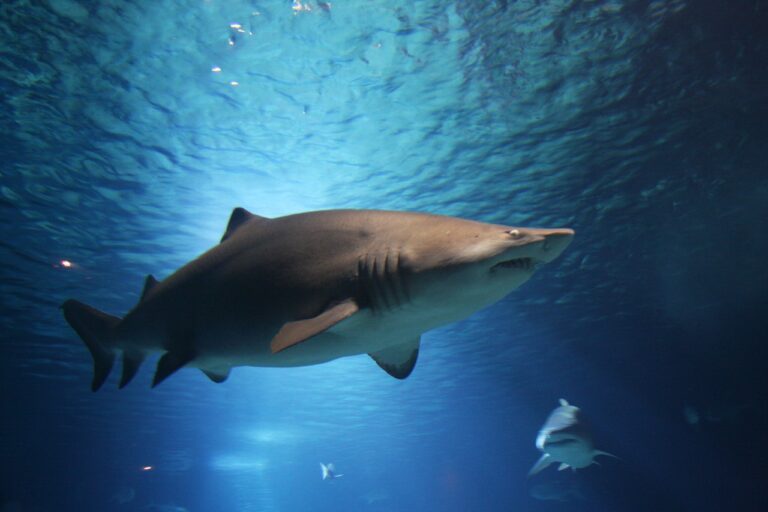
Publishing their findings in the journal Marine Biodiversity, the team said that the discovery was based on several records of the shark including underwater video surveys collected in 2019, recent photos of shore-based sport anglers’ catches, and the identification of a specimen collected in 1967.

The diminutive shorttail nurse shark reaches lengths of approximately 75 centimeters (30 inches). Owing to its strong association with coral reefs, it is under particular threat from overexploitation by coastal fisheries and habitat degradation, and is suspected to have declined by more than 80 percent over the last 30 years.

The scientists say that the findings expand the species range southward from the coast of Tanzania by some 2,200 kilometers (1,367 miles) and 1,100 kilometers (683 miles) westward from Madagascar across the Mozambique Channel.

One of the records of the shark, from Mozambique’s Ponta do Ouro Partial Marine Reserve, suggests that the species benefits from some degree of protection within a large coastal marine protected area (MPA). The authors though warn that the species range within Mozambique may span a large proportion of the country’s unprotected coral reef habitat.

Said Rhett Bennett, WCS Shark and Ray Conservation Program Manager, Madagascar & Western Indian Ocean: “The shorttail nurse shark is under threat within much of its Mozambique range. There are no species recovery plans in place for the species and no specific regulations pertaining to its harvest, other than a listing on the Kenya threatened and protected species list.”

The authors recommend that the species should be considered for legal protection in Mozambique and throughout its limited range. In addition, they say it should be better monitored, and subject to improved management measures to reduce targeted and incidental catch.

WCS works on shark conservation around the world. The majority of the global trade in both shark fins, and other products such as meat, remains unregulated, pushing many species toward extinction. In 2019, at CITES CoP18, WCS helped lead efforts to expand the protection of sharks from unsustainable trade.

The work was conducted in partnership with the Mozambique Instituto Nacional de Investigação Pesqueira, and the South African Institute for Aquatic Biodiversity.

Aspects of this project were funded by the Shark Conservation Fund, a philanthropic collaborative pooling expertise and resources to meet the threats facing the world’s sharks and rays. The Shark Conservation Fund is a project of Rockefeller Philanthropy Advisors.