This tree snake climbs with a lasso-like motion

0

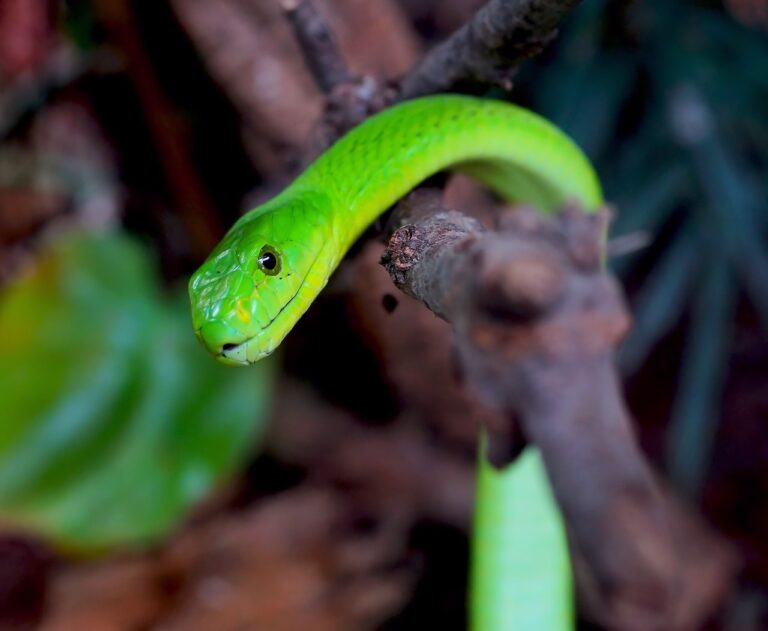
Researchers reporting in Current Biology on January 11 have discovered that invasive brown tree snakes living on Guam can get around in a way that had never been seen before. The discovery of the snake’s lasso-like locomotion for climbing their way up smooth vertical cylinders has important implications, both for understanding the snakes and for conservation practices aimed at protecting birds from them.

“Our most important finding is a new mode of snake locomotion,” says co-senior author Julie Savidge of Colorado State University (CSU). “Only four major types have been recognized for nearly 100 years, and we have discovered a fifth mode.”

The discovery of a fifth mode of locomotion — in additional to the known rectilinear, lateral undulation, sidewinding, and concertina modes — was a matter of serendipity. Savidge was working on a project aimed at protecting the nests of Micronesia starlings, one of only two native forest species still remaining on Guam.

People accidentally introduced the nocturnal snakes to Guam in the late 1940s or early 1950s. Shortly thereafter, bird populations started to decline. It’s now recognized that the invasive snakes have decimated forest bird populations on the island. They are also responsible for extensive damage and many power outages across the island each year.

“Most of the native forest birds are gone on Guam,” says Savidge. “There’s a relatively small population of Micronesian starlings and another cave-nesting bird that have survived in small numbers.”

“Understanding what brown tree snakes can and cannot climb has direct implications for designing barriers to reduce the dispersal and some of the deleterious effects of this highly invasive species,” says co-senior author Bruce Jayne of the University of Cincinnati.

“For example,” adds Thomas Seibert, also at CSU, “given that brown tree snakes can use lasso locomotion to defeat poles or cylinders of a certain size, we can design baffles to better protect bird houses used for restoring some of Guam’s birds.”

In the new study, the researchers were attempting to use a three-foot long metal baffle to keep the brown tree snakes from climbing up to bird boxes. The same baffles have been used to keep other snakes and raccoons away from nest boxes in the yards of birdwatchers. But, they soon found, their ability to deter brown tree snakes was rather short lived.

“We didn’t expect that the brown tree snake would be able to find a way around the baffle,” Seibert says. “Initially, the baffle did work, for the most part. Martin Kastner, a CSU biologist, and I had watched about four hours of video and then all of a sudden, we saw this snake form what looked like a lasso around the cylinder and wiggle its body up. We watched that part of the video about 15 times. It was a shocker. Nothing I’d ever seen compares to it.”

Jayne explains that snakes typically climb steep, smooth branches or pipes using concertina locomotion, bending sideways to grip in at least two places. But lasso locomotion is different. Using the loop of the “lasso,” the snakes form a single gripping region.

By recording and carefully analyzing high-resolution video of this new climbing method, the researchers found that the snakes have these little bends within the loop of the lasso. Those bends allow them to advance upwards slowly, by shifting the location of each bend.

That’s not to say this way of climbing isn’t a struggle for the snakes. In the process of their lasso locomotion, the researchers observed the snakes moving quite slowly. They also slip often, stop to rest, and breathe heavily.

“Even though they can climb using this mode, it is pushing them to the limits,” Jayne says.

Savidge and Seibert say they hope to continue with the development of a baffle that brown tree snakes can’t get around, which could then be used on Guam for bird restoration. Jayne plans to further test what brown tree snakes can and cannot traverse. He also wants to test the limits of the locomotor abilities of other snake species and learn more about the anatomy and physiology involved.

For wildlife, fat is fit

For people, being fit involves watching what we eat and getting regular exercise. To be healthy and enjoy a high quality of life, humans work to avoid putting on too many pounds because, for the most part, a fat person is not healthy.

For wintering wildlife, the opposite is true. A healthy bird, rabbit or raccoon is one with an ample amount of blubber — as in whale fat, or animal fat. A healthy whale maintains almost half of its weight in fat. Some healthy birds layer on enough fat to be 25 percent. That’s a lot for an animal that relies on flying to move from place to place. A human with 25 percent fat is considered to be obese.

The reason is simple. Fat is nature’s way of storing energy. Humans long ago learned store up food to ensure having enough calories to survive during the lean times. A few animals do this, too — like squirrels making caches of acorns and other nuts, or like nuthatches that spend a lot of time hiding seeds under the loose bark of trees in the fall and much of the winter prying them out for food. Most animals don’t store food.

They either have to feed on a daily basis to get enough energy to power through their daily routine or they have to store enough fat, as an energy reserve, to have the calories they need to survive. Typically, higher body mass and fat reserves increase chances of survival and, for some species, reproductive success.

Maintaining that fat is especially important for wildlife during winter, when harsh weather conditions can interrupt an animal’s ability to feed and acquire energy. When you or I are faced with cold weather, we either stay inside or layer on extra clothes when we have to go outdoors.

Animals can’t layer on some wool socks or hunker into a warm jacket when the polar vortex descends on them. They have to depend on the hair, fur, feathers or down covering their bodies and that can only do so much.

Butterfly wing clap explains mystery of flight

0

The fluttery flight of butterflies has so far been somewhat of a mystery to researchers, given their unusually large and broad wings relative to their body size. Now researchers at Lund University in Sweden have studied the aerodynamics of butterflies in a wind tunnel. The results suggest that butterflies use a highly effective clap technique, therefore making use of their unique wings. This helps them rapidly take off when escaping predators.

The study explains the benefits of both the wing shape and the flexibility of their wings.

The Lund researchers studied the wingbeats of freely flying butterflies during take-off in a wind tunnel. During the upward stroke, the wings cup, creating an air-filled pocket between them. When the wings then collide, the air is forced out, resulting in a backward jet that propels the butterflies forward. The downward wingbeat has another function: the butterflies stay in the air and do not fall to the ground.

The wings colliding was described by researchers almost 50 years ago, but it is only in this study that the theory has been tested on real butterflies in free flight. Until now, the common perception has been that butterfly wings are aerodynamically inefficient, however, the researchers suggest that the opposite is actually true.

“That the wings are cupped when butterflies clap them together, makes the wing stroke much more effective. It is an elegant mechanism that is far more advanced than we imagined, and it is fascinating. The butterflies benefit from the technique when they have to take off quickly to escape from predators,” says biology researcher Per Henningsson, who studied the butterflies’ aerodynamics together with colleague Christoffer Johansson.

“The shape and flexibility of butterfly wings could inspire improved performance and flight technology in small drones,” he continues.

In addition to studying the butterflies in a wind tunnel, the researchers designed mechanical wings that mimic real ones. The shape and flexibility of the mechanical wings as they are cupped and folded confirm the efficiency.

“Our measurements show that the impulse created by the flexible wings is 22 percent higher and the efficiency 28 percent better compared to if the wings had been rigid,” concludes Christoffer Johansson.

Glass frogs living near roaring waterfalls wave hello to attract mates

0

Most frogs emit a characteristic croak to attract the attention of a potential mate. But a few frog species that call near loud streams — where the noise may obscure those crucial love songs — add to their calls by visually showing off with the flap of a hand, a wave of a foot or a bob of the head. Frogs who “dance” near rushing streams have been documented in the rainforests of India, Borneo, Brazil and, now, Ecuador.

Conservation ecologist Rebecca Brunner, a Ph.D. candidate at the University of California, Berkeley, has discovered that the glass frog Sachatamia orejuela can be added to the list of species that make use of visual cues in response to their acoustic environments. This is the first time a member of the glass frog family (Centrolenidae) has been observed using visual communication in this manner.

“A handful of other frog species around the world use visual signaling, in addition to high-pitched calls, to communicate in really loud environments,” Brunner said. “What’s interesting is that these species are not closely related to each other, which means that these behaviors likely evolved independently, but in response to similar environments — a concept called convergent evolution.”

Sachatamia orejuela glass frogs are native to the rainforests of Ecuador and Colombia. They are especially unique because they are almost exclusively found on rocks and boulders within the spray zones of waterfalls, where rushing water and slippery surfaces offer some protection against predators, and their green-gray color and semi-transparent skin make them nearly impossible to spot. As a result, little is known about this species’ mating and breeding behavior.

Brunner, who studies the bioacoustics of different ecological environments, was chest-deep in an Ecuadorean rainforest stream recording the call of a Sachatamia orejuela when she first observed this visual signaling behavior. As soon as she saw the frog repeatedly raising its front and back legs, Brunner climbed a slippery rock face and balanced on one foot to get video footage of the behavior.

“I was already over the moon because I had finally found a calling male after months of searching. Before our publication, there was no official record of this species’ call, and basic information like that is really important for conservation,” Brunner said. “But then I saw it start doing these little waves, and I knew that I was observing something even more special.”

While she filmed, the frog continued to wave its hands and feet and bob its head. She also observed another male Sachatamia orejuela glassfrog a few meters away performing the same actions.

“This is a really exhilarating discovery because it’s a perfect example of how an environment’s soundscape can influence the species that live there. We’ve found that Sachatamia orejuela has an extremely high-pitched call, which helps it communicate above the lower-pitched white noise of waterfalls. And then to discover that it also waves its hands and feet to increase its chances of being noticed — that’s a behavior I’ve always loved reading about in textbooks, so it is beyond thrilling to be able to share another amazing example with the world,” said Brunner.

Though the COVID-19 pandemic has put a pause on Brunner’s fieldwork, she hopes to return to Ecuador soon to continue her research, which links bioacoustics and conservation.

“One of the best things about fieldwork is that nature is always full of surprises — you never know what discoveries you may happen upon,” Brunner said. “I hope our findings can serve as a reminder that we share this planet with incredible biodiversity. Conserving ecosystems that support species like Sachatamia orejuela is important not only for our well-being, but also for our sense of wonder.”

Why crocodiles have changed so little since the age of the dinosaurs

New research by scientists at the University of Bristol explains how a ‘stop-start’ pattern of evolution, governed by environmental change, could explain why crocodiles have changed so little since the age of the dinosaurs.

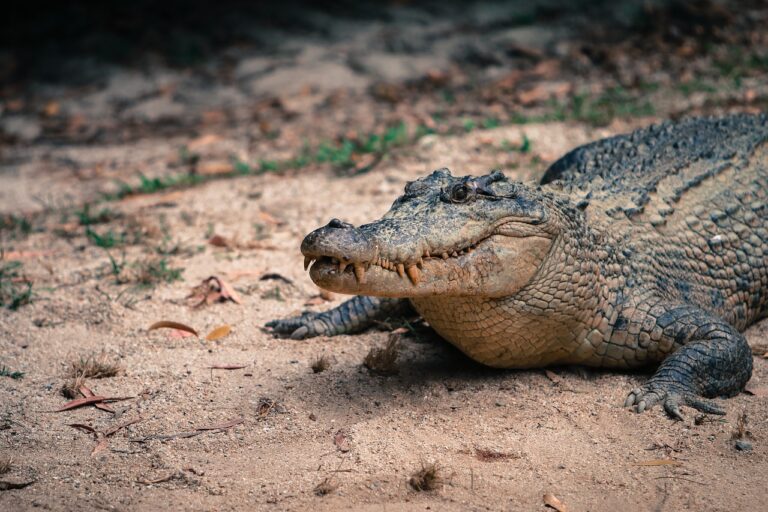
Crocodiles today look very similar to ones from the Jurassic period some 200 million years ago. There are also very few species alive today — just 25. Other animals such as lizards and birds have achieved a diversity of many thousands of species in the same amount of time or less.

Prehistory also saw types of crocodile we don’t see today, including giants as big as dinosaurs, plant-eaters, fast runners and serpentine forms that lived in the sea.

In the new research, published today in the journal Nature Communications Biology, the scientists explain how crocodiles follow a pattern of evolution known as ‘punctuated equilibrium’.

The rate of their evolution is generally slow, but occasionally they evolve more quickly because the environment has changed. In particular, this new research suggests that their evolution speeds up when the climate is warmer, and that their body size increases.

Lead author Dr Max Stockdale from the University of Bristol’s School of Geographical Sciences, said: “Our analysis used a machine learning algorithm to estimate rates of evolution. Evolutionary rate is the amount of change that has taken place over a given amount of time, which we can work out by comparing measurements from fossils and taking into account how old they are.

“For our study we measured body size, which is important because it interacts with how fast animals grow, how much food they need, how big their populations are and how likely they are to become extinct.”

The findings show that the limited diversity of crocodiles and their apparent lack of evolution is a result of a slow evolutionary rate. It seems the crocodiles arrived at a body plan that was very efficient and versatile enough that they didn’t need to change it in order to survive.

This versatility could be one explanation why crocodiles survived the meteor impact at the end of the Cretaceous period, in which the dinosaurs perished. Crocodiles generally thrive better in warm conditions because they cannot control their body temperature and require warmth from the environment.

The climate during the age of dinosaurs was warmer than it is today, and that may explain why there were many more varieties of crocodile than we see now. Being able to draw energy from the sun means they do not need to eat as much as a warm-blooded animal like a bird or a mammal.

Dr Stockdale added: “It is fascinating to see how intricate a relationship exists between the earth and the living things we share it with. The crocodiles landed upon a lifestyle that was versatile enough to adapt to the enormous environmental changes that have taken place since the dinosaurs were around.”

The next step for the team’s research is to find out why some types of prehistoric crocodile died out, while others didn’t.