Spring flowers in autumn, birdsong in winter: what a freak year for nature

When I was growing up, in the 1960s and 1970s, we had what my nan used to call “proper weather”. Snow in winter, showers in spring, sun (or at least, sunny intervals) in summer and gales in autumn. Britain’s weather may have been changeable by the day, but the seasons were seemingly set in stone, with a reassuringly predictable regularity.

That certainly suited the country’s fauna and flora. Wild animals and plants, and by extension their habitats, evolved to cope with short-term unpredictability and long-term stability. If change did occur, it happened slowly, over decades or centuries; rather than rapidly, in a single year.

Now, according to the latest annual report on weather and wildlife from the National Trust, published last week, all that has changed, with the weather in 2017 more topsy-turvy than ever. One of the warmest years on record – globally as well as in the UK – made the four seasons blur into one. This led to what the trust describes as “a freak year for nature”.

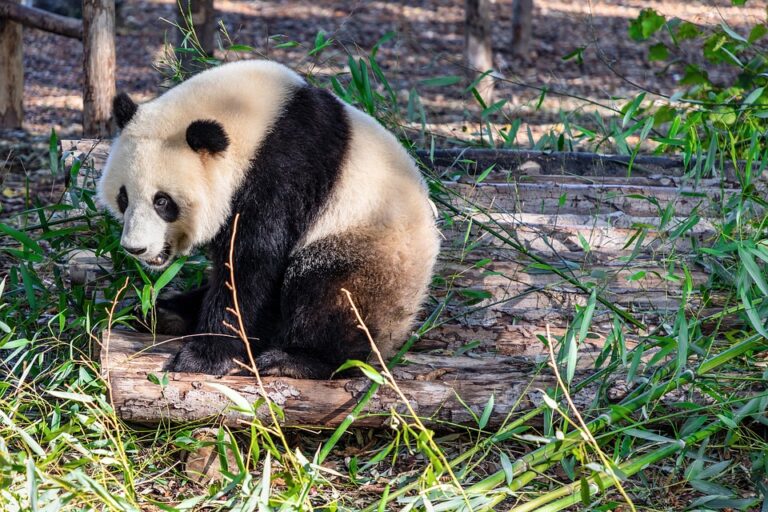
Why are giant pandas born so tiny?

0

Born pink, blind, and helpless, giant pandas typically weigh about 100 grams at birth — the equivalent of a stick of butter. Their mothers are 900 times more massive than that.

This unusual size difference has left researchers puzzled for years. With a few exceptions among animals such as echidnas and kangaroos, no other mammal newborns are so tiny relative to their mothers. No one knows why, but a Duke University study of bones across 10 species of bears and other animals finds that some of the current theories don’t hold up.

Duke biology professor Kathleen Smith and her former student Peishu Li published their findings this month in the Journal of Anatomy.

Baby panda skeletons are hard to come by, but the researchers were able to study the preserved remains of baby pandas born at the Smithsonian’s National Zoo in Washington, D.C.

The National Zoo’s first panda couple, Ling-Ling and Hsing-Hsing, had five full-term cubs in the 1980s, but none of them survived long after birth.

The researchers took micro-CT scans of two of those cubs, along with newborn grizzlies, sloth bears, polar bears, dogs, a fox, and other closely related animals from the Smithsonian National Museum of Natural History and the North Carolina State College of Veterinary Medicine.

They used the scans to create 3-D digital models of each baby’s bony interior at birth.

As a baby animal grows and develops inside the womb, its bones and teeth do, too. The researchers examined the degree of ossification, or how much the skeleton has formed by the time of birth. They looked at whether the teeth had started to calcify or erupt, and the degree of fusion between the bony plates that make up the skull.

The panda may be an extreme example, but all bears have disproportionately small babies, Li said. A newborn polar bear’s birthweight as a fraction of mom’s is less than 1:400, or less than one-half of one percent of her body mass. For the vast majority of baby mammals, including humans, the average is closer to 1:26.

One decades-old idea links low birthweights in bears to the fact that, for some species, pregnancy overlaps with winter hibernation. Pregnant females don’t eat or drink during this time, relying mostly on their fat reserves to survive, but also breaking down muscle to supply protein to the fetus.

The thinking is that, energetically, females can only afford to nourish their babies this way for so long before this tissue breakdown threatens their health. By cutting pregnancy short and giving birth to small, immature babies, bears would shift more of their growth to outside the womb, where babies can live off their mother’s fat-rich milk instead of depleting her muscles.

Proponents of the theory concede that not all bears — including pandas — hibernate during the winter. But the idea is that small birthweight is ‘locked in’ to the bear family tree, preventing non-hibernating relatives from evolving bigger babies too.

“It’s certainly an appealing hypothesis,” Smith said.

But the Duke team’s research shows this scenario is unlikely. The researchers didn’t find any significant differences in bone growth between hibernating bears and their counterparts that stay active year-round and don’t fast during pregnancy.

In fact, despite being small, the researchers found that most bear skeletons are just as mature at birth as their close animal cousins.

The panda bear is the one exception to this rule, results show. Even in a full-term baby panda, the bones look a lot like those of a beagle puppy delivered several weeks premature.

“That would be like a 28-week human fetus” at the beginning of the third trimester, Smith said.

Other factors might have pushed panda babies toward smaller sizes over time — some researchers blame their bamboo-only diet — but data are scarce, Li said. The researchers say the panda bear’s embryonic appearance likely has to do with a quirk of panda pregnancy.

All bears experience what’s called “delayed implantation.” After the egg is fertilized, the future fetus enters a state of suspended animation, floating in the womb for several months before implanting in the uterine wall to resume its development and get ready for birth.

But while other bears gestate for two months after implantation, giant pandas are done in a month.

“They’re basically undercooked,” said Li, now a Ph.D. student at the University of Chicago.

The researchers say they only looked at skeletons in this study, and it could be that other organs like the brain tell a different story. But the new study suggests that baby pandas follow the same trajectory as other mammal relatives — their bones mature in the same sequence and at similar rates — but on a truncated timetable.

“Development is just cut short,” Smith said.

Scientists are still searching for a complete explanation of why the panda’s peculiar size differential evolved over geological time, and how.

“We really need more information about their ecology and reproduction in the wild,” Smith said, and we may not have much time given their risk of extinction. But this study brings them one step closer to an answer.

This research was supported by a Shared Material Instrumentation Facility Undergraduate User Program grant, the Duke Department of Biology, and the Undergraduate Research Office at Duke.

Hingolgadh Nature Education Sanctuary

Hingolgadh Nature Education Sanctuary is situated in Rajkot(Gujarat-India) district and is just 10kms away from Jasdan which was once a princely state.Hingolgadh Nature Education Sanctuary Surrounded by rainfed arid land from all sides, this small wildlife sanctuary of Hingolgadh is a preferred habitat for Chinkara, blue bull and a very large number of resident and migratory birds.

This sanctuary has a special ecological significance as the dry deciduous thorny forests and savannah type grasslands merge here. It plays a crucial role in the ground water conservation by recharging aquifers in the region. Declared as a sanctuary in 1980, the area has a high educational and recreational value.

A small sanctuary but worth a visit one and several camps are organised to generate awareness regarding wildlife and its conservation. The sanctuary is managed by Gujarat Ecological Education and Research (GEER) Foundation. Around 50-100 Nature Education Camps are organised by the Foundation every year during the monsoon season. The participants are generally school children.

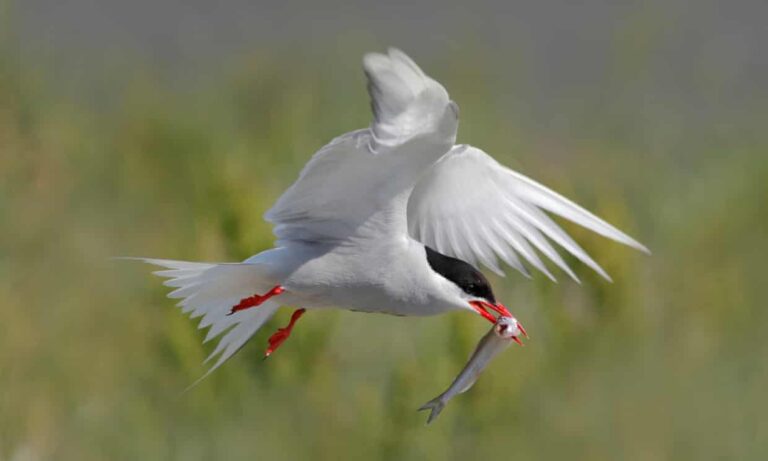
You get to see Chinkara, Leopard, Flying fox, Hyena and Wolf. Along with 230 species of birds, this sanctuary is also the home to about 19 species of snakes.

The best time to visit Hingolgadh Nature Education Sanctuary is between the month of July and February.

Lesser Known facts of Bajana: Wild Ass Sanctuary

Gorgeous as the hues of heaven,there are places where you leave your footprints and later realize you even left your heart therein! “Kuch din toh guzaro Gujarat mein” is rightly quoted by Gujrat Tourism and is a sheer depiction of Gujarat’s splendid beauty that cannot be covered in a day.

WSON Team

However, the untouched beauty further being discussed in the article can be a good idea to woo your weekend blues and gift your near ones a resplendent treat that is pretty close to Ahmedabad with a distance of less than 100 kilometer! Gujarat, being a state that has been serving a home to many migratory birds every year also features a not-so-famous sanctuary which harbors the iconic last population of Wild Ass globally.

WSON Team

Bajana is a tiny village in Dasada Taluka of Surendranagar district in Gujarat and lies at the southern shore of Little Rann of Kutch. Nearly perfect in every way, it is one of the most mesmerizing and remarkable sites of all time!

Sakshi Saxena, WSON Team

‘Rann’ refers to a vast dry land bearing an unbroken bare surface of dark silt and encrusted with mineral salts that hold a capacity to transform self into a coastal wetland during heavy monsoons. It is a transitional area lying amidst the marine and terrestrial ecosystem. The dryness allows no vegetation in the sanctuary except a few variants of legumes; despite serves the highest number of Wild Asses in the world.

Sakshi Saxena, WSON Team

The most popular subspecies of the Asiatic Wild Ass (Onager) is the Indian Wild Ass which is prominently found at Bajana. Herbivores in nature, these asses are significantly larger than donkeys and weigh over 200 Kg. With a head-body length of 2.1-2.5m, the asses hop over 6 feet in distance to cover longer journeys in a short span of time. The males are generally larger than the females and feature a coat that is sandy. Usually found in flocks or little terrestrial groups, their color tone ranges from reddish gray, fawn to pale chestnut. Called Khurr in Gujarati, these joyous creatures are arguably the fastest Indian animal, and can attain a top speed of 70-80 Kmph. The endangered species is well habituated to the Rann and have grown over 4,800 in number

WSON Team

The Royal Safari can be arranged from the Royal Safari Camps at Bajana which is an initiative by Gujarat tourism. A time to reach the resort is afternoon wherein you and your family can have a peaceful lunch and explore the scenic beauty at the resort itself. Early evening is recommended for the Royal Safari to the sanctuary that will offer you a breathtaking view of the

Sakshi Saxena, WSON Team

Ass flocks running around as soon as the gypsy goes closer along with a lot of Migratory birds that’d be a part of your luck pot if you visit the place in winters mostly after November. Be it the sleek Sandhill crane flying swiftly through the air or the flamboyance of flamingoes over the Bajana Lake, the sight is truly worth gold.

Sakshi Saxena, WSON Team

A jaw-dropping sunset and a drop-dead gorgeous barren land make the place worth a visit. To mention, this is no less than a heaven for the people with a creative bend. Time to plan your next family picnic that’s been on hold for ages now! Also, as correctly said, “A picture is worth a thousand words”, here are a few moments captured from my experience that are certain to make you go swoon over.

Sasan gir forest safari: Experience the asiatic lion

Sasan Gir Forest Safari is the experience to must have once in life. If you list out oldest and most reputed centuries in India, then Sasan Gir will be the consideration in the top of the list. It’s the only home of the majestic Asiatic lion (Panthera Leo Persica). Sasan Gir is the only place to experience this animal in India.

WSON Team

Gir took steps to save this big cats which were at the edge of extinction in the beginning of 21st century. With efforts of Sasan Gir authority today, there are more than 600 lions in the century. Gir forest is spread in large 1882 sq km area where 1421 sq km area is protected by the government and Sasan Gir forest authority.

Forest Safari in Sasan Gir

WSON Team

Nowadays adventurous people looking for new destinations for new thrilling experiences, Sasan Gir is the one of the best suitable for that. it’s an open jeep safari in the forest of Gir, you can find tracks of Asiatic lions and experience those big cats and cubs in the jungle. also, you can see panthers, deer and various types of local and travellers birds there.

December to March is the best time and climate to visit Gir. you can prebook your safari at girlion.in to avoid disappointment. actually, they allow only online booking for jungle trail. The nearest airport from here is Rajkot with daily flight connectivity and The nearest Railway station is Junagadh. Also, Sasan Gir is well connected with Gujarat’s smooth road network.

Sasan Gir Conservation

WSON Team

Nawab of Junagadh took hard steps conservation measures to make lion safe. A lot of time passed and now in the result of such steps, the population of lions growing significantly even today. Local population equally supporting the government in the conservation of lions.

Sasan Gir Echology

WSON Team

Gir national park is the biggest dry broadleaf forest in India. The park has 1412 sq. km. protected area in west Gujarat. Gir forest has great biodiversity to support and sustain itself. there are 606 species of plants, 39 mammals species, more than 300 bird species and more than 2000 type of insects.