Purna Wildlife Sanctuary : an Enchanting Place for Visitors

0

Purna is a Sanctuary, where luxuriant dense forests with thick bamboo brakes enchant visitors. People get surprised to see such pristine forests in the area, which happens to be an extension of the Western Ghats.

For an eco-tourist wanting to enjoy birds of moist deciduous forest mixed with bamboo, this is the best place to visit. The Sanctuary is a part of forests in northern part of the Dangs district in South Gujarat.

WSON Team

Positioned in the tribal district of Dangs, this sanctuary is known for dense forest cover with over 700 species of plants and trees. Spread over 160 sq kilometre with a generous population of animals like Leopard, rhesus macaque, bonnet macaque, common mongoose, Indian civet cat, Indian porcupine, four-horned antelope, barking deer, sambar, chital, hyena, jungle cat, flying squirrel, python and lizards.

Most commonly spotted birds at this sanctuary are Common grey hornbill, grey jungle fowls, barbets, woodpeckers, shrikes, cloropsis, bee-eaters, flycatchers and raptors. The best time to stopover at Purna Wildlife Sanctuary is between November and March.

Leopard trapped in deadly jaw trap rescued in Shirur

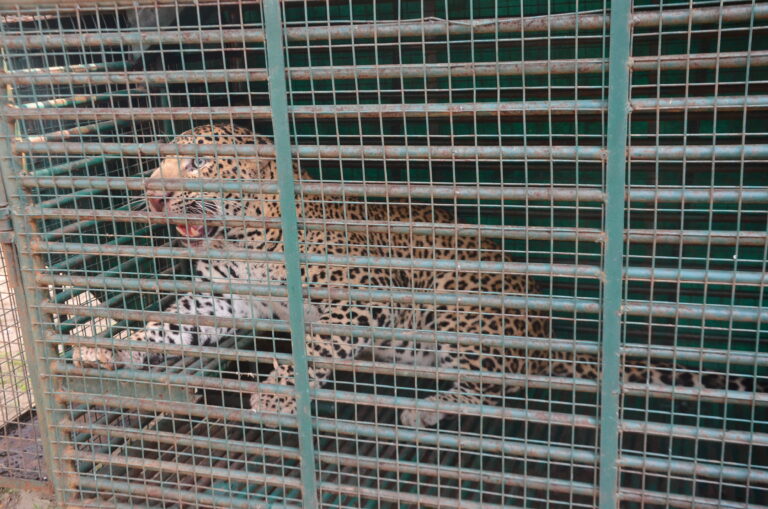
A three-year old female leopard was recently rescued by wildlife sos and the forest department after she was found trapped in a deadly jaw trap in  kuruli village,in shirur division of Pune. Jaw traps are lethal hunting devices which can cause severe lacerations, joint dislocations, fractures and even death to wild animals.

Earlier this week, the wildlife sos team based out of the Leopard Rescue Centre, Junnar, received a call from the Maharashtra Forest Department about a helpless leopard caught in a jaw trap in a sugarcane field in Kurulii village.
A four-member team from the NGO geared up with safety nets, tranquillising equipment and protective gear to assist the forest department in the rescue operation.

Porbandar Bird Sanctuary

Porbandar Bird Sanctuary is one of the smallest bird sanctuary in the state of Gujarat with total area coverage of about 1 sq km around a fresh water lake.

This stunning miniature sanctuary is positioned in the heart of Porbandar town and is frequently visited by nature lovers and ornithologists. Along with avifauna, it is safe shelter for many migratory birds also.

Flamingoes (greater and lesser), grebes, pelicans, ducks and geese, avocet, coots, cormorants, herons, egrets, bittern, storks, ibis, spoonbill, cranes, whistling teals, gulls, terns, jacanas, ruff, red shanks and Indian roller are some of the birds that you can spot in this bird safe haven.

Plan your visit to Porbandar Bird Sanctuary between November and March.

Wildlife falling prey to stray dogs in Hisar

Stray dogs are a major threat to endangered species of blackbucks and chinkara besides peacocks in Hisar region. Nearly 78 per cent of the total 2,682 wildlife animals have fallen prey to dogs in past five years. Shockingly, blackbucks and chinkara deers which are on the brink of extinction are primarily dying due to attacks by dogs.

As per an RTI report procured by Akhil Bharatiya Jeev Raksha Bishnoi Sabha president Vinod Karwasra here on Monday, in view of the prevailing conditions, the wildlife comprising of animals which are under the category of protected species and included in Schedule-I of the Wildlife (Protection) Act, 1972, fear extinction in the region.

The Hisar division, including Hisar, Fatehabad, Sirsa and Bhiwani districts, located along the Rajasthan borders used to be the abode of thousands of blackbucks, chinkaras and other wildlife creatures. However, with shrinking forest cover and spread of human settlements, the wildlife species are falling prey to stray dogs which have penetrated into the forests along with humans.

Of the total, 411 blackbucks died in the past five years out of which 362 of them were mauled to death by dogs. Similarly, 29 of 35 chinkaras fell prey to dogs in these four districts. The records indicated that of 68 recorded deaths of peacocks, 25 died of dog attacks and 12 were hunted down by the poachers while 23 of them died due to some disease and eight of them died because of some other reasons.

Giving a district wise break-up of dog attacks leading to death of animals, Karwasra said in Hisar district, which recorded 216 causalities of blackbucks, 201 of these were mauled to death by dogs.

Wildlife officials maintained that population of various species of deer, including blackbucks, chinkara and gazelle, besides Neelgai and other animals had come down drastically over the past years in the region for falling prey to stray dogs. Last year, there were reports of nearly 850 incidents of attack by stray dogs, informed a wildlife official.

Karwasra said wild animals reside mostly in agriculture areas and abandoned panchayat land, especially in Adampur, Balsamand in Hisar district and Badopal area in Fatehabad. “This has been a thickly populated area of blackbucks and other species. But there has been a spurt in dhanis (hamlets) as farmers have started constructing houses in the outskirts. They also keep dogs at these dhanis. Besides, deer, which mainly live in forest and sand dunes, have almost vanished with the spread of agriculture areas,” he said.

Narayan Sarovar Wildlife Sanctuary

A haven for this Indian Gazelle species, this sanctuary is a conservation area as well as season wetland located amidst arid region.

Situated in Kutch district, this is one of its kind of reserve to spot Chinkara. This wildlife sanctuary is also the home to about 15 threatened species. Wolf, caracal, chinkara, desert fox, hyena, desert cat, porcupine, ratel, Indian pangolin, blue bull, mongoose and hare are some other species that are found in abundance in this wildlife reserve.

The finest time to visit Narayan Sarovar Wildlife Sanctuary is between September and January.