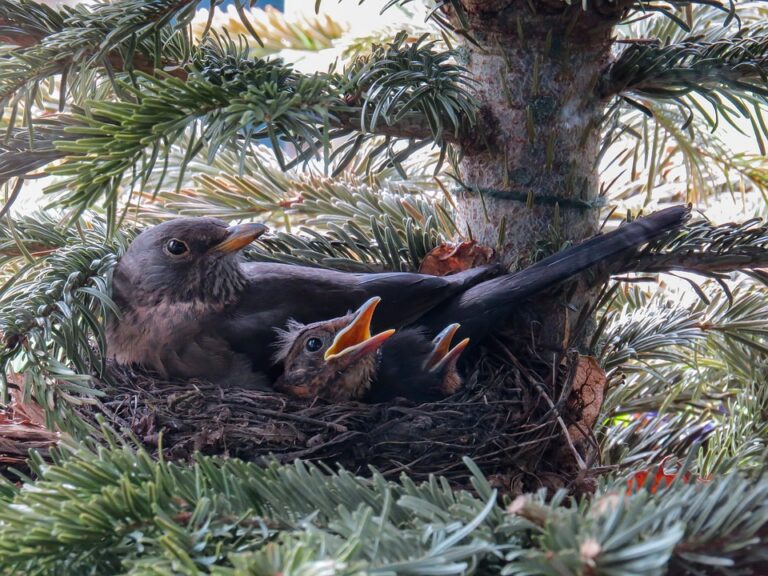
Baby birds and eggs are on the menu for at least 94 species of animals in Australia’s forests and woodlands, according to new research from The University of Queensland.
PhD candidate Graham Fulton reviewed 177 existing bird studies across the country, identifying Australia’s most prolific nest predators and the factors affecting nest attacks.
“Predators attacking bird nests — known as nest predation — is the leading cause of nesting failure,” Mr Fulton said.
“Predators are always looking for their next meal and now we know who Australia’s common culprits are.
“In the reviewed research, 94 nest predators — from birds to reptiles to ants — were found to be attacking both natural and artificial nests.
“If you take out the artificial nests, it’s 69 species, and from that data there’s a clear dominant nest attacker in the Australia’s natural environment — the pied currawong.”
The pied currawong was found to be taking eggs and young from 29 different bird species; followed by the square-tailed kite (18 species), the tiger snake (15 species), the laughing kookaburra (10 species) and the grey strike-thrush (eight species).
“These five nest predators were recorded as attacking a whopping 40 per cent of the prey measured by the number of prey species taken,” Mr Fulton said.
“The other 60 per cent of predation was carried out by the other 64 species, which included, by order of importance: birds, mammals, reptiles, frogs and ants.”
It also appears that the young and eggs of small ‘cup’ nesting birds, like the willie wagtail, are more often on the menu than other birds.
“This is probably because birds like willie wagtails are easily seen in the open, and they’re probably delicious and certainly nutritious,” Mr Fulton said.
“And predation at ‘cup’ and ‘dome’ nests was more frequently reported than at burrow, ground and hollow nests.
“When birds attack, they also prefer to eat the babies of other bird species whose parents are a quarter to a third of the predators’ weight.
“It’s a bird-eat-bird world out there, but at least we now know who’s doing the eating.”
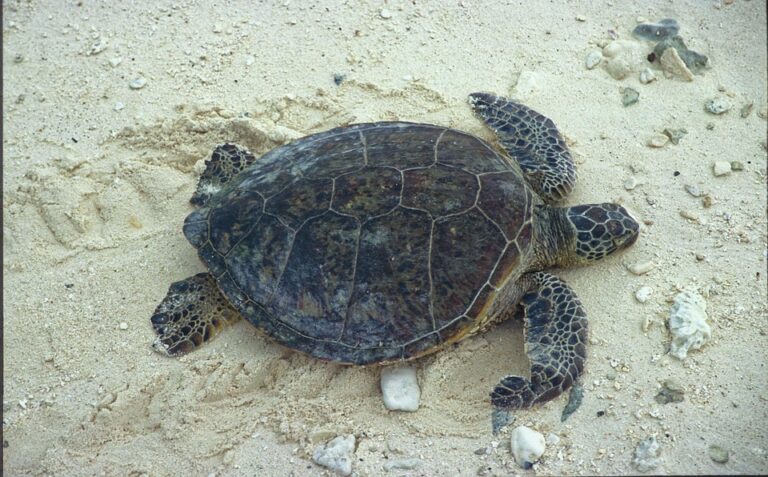
The reintroduction program for the green turtle in the Cayman Islands is crucial in order to recover this species, which are threatened by the effects of human overexploitation, according to a study published in the journal Molecular Ecology and led by the experts Marta Pascual and Carlos Carreras, from the Evolutionary Genetics laboratory of the Faculty of Biology and the Biodiversity Research Institute (IRBio) of the University of Barcelona.
The new study, with its first author being Anna Barbanti (UB-IRBio), represents the first genetic study of the reintroduction project of this endangered species, and the wild population of green turtles in the Cayman Islands, a British Overseas Territory.
According to the conclusions, the current wild population of green turtle in the Cayman Islands has been recovered as a result of the reintroduction process; it presents a high genetic diversity and shows no difficulties regarding breeding. However, the authors of the study recommend conducting a genetic monitoring of the species in this Atlantic Ocean region since it shows a differential genetic heritage compared to other populations of the Caribbean. Other participants in this study were Clara Martín and Víctor Ordóñez (UB-IRBio), and other experts from the University of Exeter, the Cayman Turtle Farm (CTF) and the Department of Environment of the Cayman Islands Government (United Kingdom).
At the limits of survival due human overexploitation
WSON Team
The green turtle (Chelonia mydas) is a migratory species globally distributed in tropical and subtropical latitudes -nesting beaches in the Mediterranean basin- which has been quite exploited by human activity. This species is the biggest one within the family of Cheloniidae -adults can weigh over 200 kg- and one of the species of marine turtles with a more natal phylopatric behaviour (it comes back to their birth place to lay its eggs). Factors such as marine pollution, loss of natural habitat, fishing pressure and bycatches endanger the survival of these turtles, classified as an endangered species according to the International Union for Conservation of Nature (IUCN).
During the eighties, overexploitation of the green turtle in the Cayman Islands caused the disappearance of nesting populations. To recover this endangered population, a program of reintroduction of the species was launched, with individuals of the Cayman Turtle Farm (CTF). Forty years later, data show that the nesting population of the Cayman Islands has been restored but researchers did not know if this was the result of the reintroduction process or the natural recovery of the population for the improvement of threatening factors.
In the new study, experts analyse several genetic markers to see the degree of parentage of the natural population of the green turtle in the Cayman Islands with the breeding individuals in the farm, and therefore evaluate the effect of the reintroduction process on wild population.
“In wildlife, genetic diversity is a key factor that eases the adaptation of populations in the natural environment and their tolerance to environmental changes. In this context, it is crucial to conduct a genetic monitoring of the reintroduction processes to evaluate their success and the potential consequences for the target species of the reintroduction,” says Carlos Carreras, member of the Department of Genetics, Microbiology and Statistics of the UB and IRBio. “A threatened population -he continues- reduces their survival options due excessive inbreeding but a poorly planned reintroduction can have negative consequences because of the mix of genetically different beings, since they could create hybrids that are not feasible to the environmental conditions of the population.”
The population of the wild green turtle has a tight genetic relationship with the ones in CTF, the new study reveals. According to Marta Pascal, member of the mentioned Department and IRBio, “90 % of the wild individuals were related to the captive stock. This means the reintroduction process was very important in the recovery of threatened populations.”
The reintroduction process started in the farm with individuals of distant populations, and this explains why the genetic diversity of first generation turtles is higher than their parents’. This genetic diversity of the initial population has been changing as a consequence of the captivity process -as expected- but also because of the effects of the CTF population management. For instance, they use beings from the same cohort as reproductive adults to replace the losses hurricane Michelle caused in 2001, a strategy that has increased the degree of parentage among reproductive individuals in the farm. Therefore, scientific studies like the one in Molecular Ecology, are essential tools to take the right decisions in the management of threatened species.
Lights and shades in the reintroduction of endangered species
WSON Team
Current labelling studies show that there is a population between one hundred and one hundred and fifty reproductive female adults in the Cayman Islands. In this situation of biodiversity protection, the reintroduction programs for endangered species can become an effective tool of preservation but can also be inefficient, and can even have negative consequences for the threatened populations and natural ecosystems. “Therefore, it is essential to design these programs of reintroduction of threatened species with scientific rigor and to conduct a long term scientific monitoring to assess its success and the potential consequences for the species,” warn the experts.
The genetic studies carried out by the Evolutionary Genetics team of the UB and IRBio are part of the first scientific initiative to assess the global impact of the reintroduction of the species Chelonia mydas in the Cayman Islands from different sides: social and economic, commercial, and even gastronomic. This research study has been funded by the European Regional Development Fund (FEDER), as well as the Darwin project, with the support of Bosch i Gimpera Foundation (FBG) of the UB and the Department for Environment, Food and Rural Affairs (United Kingdom).
Some bird names, including “spoonbill”, are so wonderfully descriptive they can hardly be bettered. Yet this species used to be known as the shoveler, leading to confusion with the duck of the same name. Both have large, spatulate bills, but they feed in a very different manner.
I encountered shovelers and spoonbills on a whistlestop tour of Somerset this month, after a cold spell brought in thousands of waterbirds from the north and east. We saw clouds of lapwings, zigzagging across the sky as if being given electric shocks; golden plovers, floating overhead on long, pointed wings; and 100,000 starlings performing their nightly aerobatics over the Avalon Marshes.
But it was the spoonbills that stayed in my memory. As we arrived at the new Steart Marshes reserve, our timing could hardly have been better. Approaching the hide, we noticed flocks of ducks rising into the grey December sky, accompanied by three large white birds. Around here, that usually means great white egrets, but as they landed and began to sweep their bills from side to side, we realised their true identity. What these exotic creatures were doing here at this time of year I’m not sure, but they certainly made my day.
Nine water bodies, where the water birds flock in considerably large numbers, have been earmarked for the census, divsional forest officer (DFO), Bundi, Phralad Rai Badgurjar said. The six-day exercise would give birdwatchers and wildlife enthusiasts an opportunity to observe and enjoy the water birds’ activities and contribute in counting, he said.
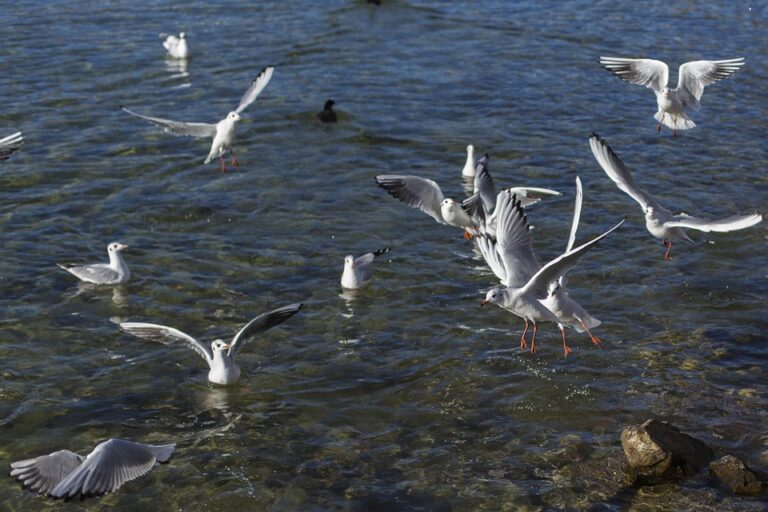
The DFO also stressed on exploring possibilities to promote bird watching tourism. Large variety of migratory birds including Pelican, Northern Shoveler, Northern Pintail, Common Teel, Common Pochard, Surkhab, Bar-Headed Goose, Sand Piper and domestic water birds were sighted on the first day of the exercise.
The birdwatchers observed the activities of the birds and clicked photographs. They urged the government to ban fishing in the dams for the four months when the migratory birds come here.
Blast fishing is a big threat to the birds in almost all the dams of Hadouti region and the government should at least ban fishing in these places from November to February, when a large number of migratory birds fly here from thousands of miles away, a Kota-based research supervisor Kirshendra Singh Nama said.
“The dams and wetlands in Hadouti offer a rich and healthy environment to the migratory birds but fishing in these places is a big threat to their lives as fishing contractors are more inclined to shoo them away or even kill these birds,” said assistant conservator of forest (ACF), Bundi, Satish Jain. Most of the dams fall under the revenue area where fishing contracts are leased out and the forest department is helpless against the contactors, he said. With the onset of winter, migratory birds fly thousands of kilometres to reach the wetlands, ponds and water reservoirs in the Hadouti region.
Bar-headed and gray leg geese fly in from snow covered areas of China and Mongolia and European Pintail and Northern Shoveler from the European continent. Ducks, Egrets, Spoonbills are among some other species of birds that reach the Hadouti region. Painted Storks, who nest in the higher branches of Babool trees, are a common sight in the region.
In what Gujarat forest officials are claiming is a “rare phenomenon”, a asiatic lioness in the state’s Gir Forest has “adopted” a one-and-half-month-old leopard cub separated from its mother.
Along with two of its own cubs, the asiatic lioness, spotted in the forests of Gir-West division, is feeding the leopard cub and is also keeping a vigilant eye on lions around who might kill the cub, said Deputy Conservator of Forest, Gir-West division Dheeraj Mittal.
This unusual bonding between a lioness and a leopard cub was first spotted by forest staff around six days ago, he said.Mittal has shared pictures and videos of this unique bond with people through social media platforms.
“It is indeed a rare phenomenon, as lions tend to kill leopards. In this case, it is quite opposite to what we know about big cats. The lioness is taking extra care of a leopard cub. The lioness is even protecting it from asiatic lions present in the area,” said Mittal.
In the photographs shared by Mittal, the leopard cub can be seen at ease and at home with the asiatic lioness as well its cubs. Some of the pictures show the lioness feeding the cub.
“We are also surprised to see how a leopard cub understands the signs and sounds of a mother asiatic lioness. While roaming around, the lioness is taking extra care as she understands that the leopard cub is not able to match her pace or that of her cubs,” said Mittal.
On the whereabouts of the leopard cub’s mother, Mittal said, “It is possible that the mother leopard might have abandoned the cub, or she may have lost the cub accidentally.
It is also possible that she is around but afraid of going near the lioness,” said Mittal.
Chief Conservator of Forest, D T Vasavada, said forest staff are keeping a close watch on this bond.
“We are having no plans to retrieve the cub. We will not interfere with nature. But we are keeping a close watch on the lioness,” said Vasavada, who heads the Junagadh Wildlife Circle.