The Loricifera is a microscopic, sediment-dwelling marine invertebrate, with a head covered in over 200 spines and an abdomen with a protective shell — known as a lorica. Since it was first discovered in 1983, just under 40 species have been written about. Now, that number is one more thanks to a group of scientists who reported on a new genus and species of Loricifera.
Their findings were published in the Journal Marine Biodiversity.
“Loricifera is a rare animal that is still under-researched, but our recent finding improves our understanding of the species’ diversity,” said lead author Shinta Fujimoto.
Loricifera typically inhabit the space between sand and mud particles in the ocean. Fossils exist from the Cambrian period, suggesting a long existence on Earth. They have complicated life cycles and a few species are reported to live in anoxic environments. Their exact position on the animal tree of life is unknown.
Researchers from Tohoku University, Kyushu University, Mie University, Hiroshima University and the University of Copenhagen reported on a new species of Loricifera inhabiting Japan’s area from the continental slope to the deeper sea — roughly 177 m to 1059 m below the sea. This marks the second time a new Loricifera species has been found near Japan; the last one was discovered in 1988 in the Izu-Ogasawara Trench.
Fujimoto and his team hope to uncover as much as they can about this rare species. “Each new species provides us with answers, but also more questions. We will keep on looking for these extraordinary animals to understand the species’ diversity, ecology, life history and evolution.”
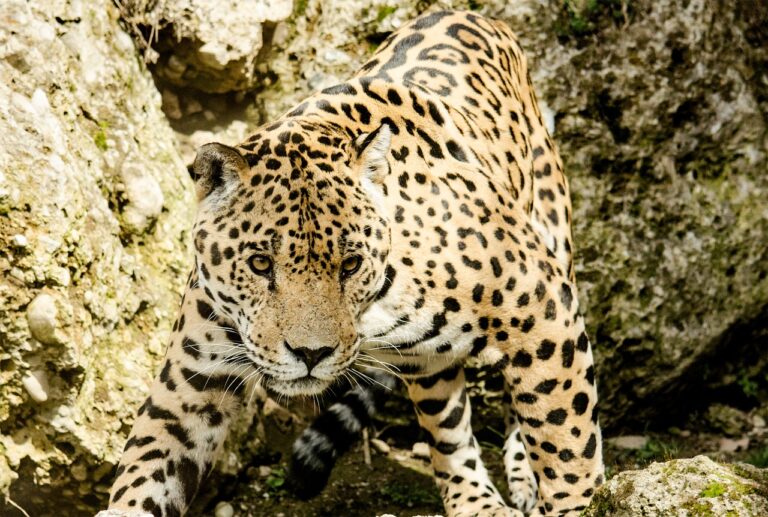
Camera traps bring you closer to the secretive natural world and are an important conservation tool to study wildlife. This week we’re meeting the most iconic species of the Americas: the jaguar.
The jaguar is not only an apex predator but it is also deeply rooted in the cultural and natural heritage of the countries where it lives in. This feline ranges from the Mexico-US border in North America, to Argentina in South America. They are the third biggest cat in the world after tigers and lions and like other big cats, the jaguar is capable of roaring and does so to warn territorial and mating competitors away.
Jaguars are stalk-and-ambush predators and they are at the top of their food chain, meaning they don’t have any predators in the wild. They eat a wide variety of prey, over 85 species have been reported in their diet. They prefer large prey such as giant anteaters, tapirs, capybaras and deer, but they also prey upon other animals such as wild boars, peccaries and caimans. And unlike many other cats, jaguars are great swimmers; they even ambush their prey in rivers by leaping into the water and catching them.
WSON Team
Jaguars are classified as Near Threatened by the IUCN and its population is rapidly declining. Since the 1880s, they’ve lost more than half their territory. They are losing habitat to agriculture and livestock which can fragment their habitats and leave cats isolated and unable to travel and find mates to breed which decreases their chances of survival.
Jaguars are also hunted by ranchers in retaliation for preying on cattle. Poaching is another growing problem for them, even though jaguars are listed on CITES — a global treaty that regulates the cross-border wildlife trade — in Appendix I, which means that all international trade in jaguars or their body parts is prohibited, their pelts, teeth and bones are being illegally traded mainly to China.
In order to protect the remaining populations of these animals, countries need to strengthen law enforcement, develop jaguar corridors to connect isolated populations and also work with communities to reduce human-jaguar conflict. Watch the video to learn more about this species!
Migratory birds start arriving around October so the period between November and February sees a wide variety of winter migrants. It is one of the best seasons to be at Nalsarovar. Indigenous species also flock in plenty during this season, affording maximum sightings to a birdwatcher. Birds start leaving the area during the dry spell between March-April.
WSON Team
The Nalsarovar Lake in Gujarat is probably the largest water bird sanctuary in the country. It has been identified as one of the 15 important wetlands of India by the National Committee on Wetlands for intensive conservation. Nalsarovar may also be a potential site for consideration as a wetland of international importance. Besides being one of the largest bird sanctuaries, Nalsarovar harbours one of the highest populations of waterfowl anywhere in India. It supports a variety of other resident bird species, and it also attracts several migrant varieties.
WSON Team
Nalsarovar is a shallow lake that occurs over a flat, extensive low-lying stretch of land in Gujarat, 80 km. from Ahmedabad. The lake covers an area of about 115 sq. km. on land, which is mainly marshy. The lake is situated at the junction of the Saurashtra plateau with the Gujarat mainland. It is rain-fed and serves as a water-catchment area in the monsoons. The lake dries up almost completely in the summer.
WSON Team
The Nalsarovar Bird Sanctuary was established on April 8, 1969. Bharwad shepherds live on the islands of the lake while Padhars populate the banks. The Padhars are very talented artisans and you must view their folk dances. They also double as boatmen who will take you around the lake. The economy of nearby villages is almost entirely dependent on Nalsarovar for its fish, fodder, grazing and employment opportunities.
WSON Team
The marshes do not support much vegetation although the lake is surrounded by grasslands and open fields. Reeds and aquatic plants may be found around the lake whereas trees are practically absent. About 48 species of algae,http://wildstreakofnature.com/nalsarovar-bird-sanctuary-2/ 72 species of flowering plants, and 76 species of zooplankton and zoo benthos have been recorded from the lake. The surrounding Gir forests are rich in teak, jamun, acacia and banyan trees.
Nalsarovar is a peaceful lake situated very close to the busy city of Ahmedabad, making it a popular weekend getaway. Avoid visiting on Sundays as it may be overcrowded with local tourists.
WSON Team
Transport:
By Air: Ahmedabad (60 km.) is the nearest airport, well-connected to major cities all over India.
By Rail: The nearest railway station is at Ahmedabad (60 km.)
By Road: The Nalsarovar Bird Sanctuary is about 60 km. from Ahmedabad and State Transport buses ply to and fro between Ahmedabad and Nalsarovar, a journey of about an hour.
This is for all those green panthers out there, who are looking for a real wilderness adventure in the raw habitat of nature. It is the ultimate season of the year to go on a wild hunt and explore “ Bushcraft” like the space – age Tarzan of Jungle.
WSON Team
If you are a diehard fan of Bear Grylls’ Man vs. Wild series do not miss on important techniques to survive the venture of Bush crafting. It is not as glamorous and entertaining as it seems without knowing about the right things.
After all, Bush crafting is all about using your wilderness skills to the fullest where in you possess no man – made stuff handy at all. To explore the amazing experience with a fresh mind and body, it is essential to maintain hygiene during your journey. Get an insight into few tips that would directly give your hunt day a kick start of enthusiasm and hygiene.
Try a Smoky Bath
WSON Team
After a day’s bushy trek, you will definitely smell of the green cover and become sweaty. This leads to make you feel more tiresome and lazy. To your surprise, nature is a source that never ends “until we not end it forcefully”, it provides us all the necessary supplies that are required to fulfill needs.
An offbeat solution to refresh your body and avoid stinking of bush is a “Smoke Bath”. It is not only a natural deodorant but also kills the bacteria, protects from heat and keeps the bugs away. Allow the skin and clothes exposed to smoke and you are far away from any body odor. Even rubbing charcoal on your body works to make you smell like one of them!
The natural Shower Gel
WSON Team
This will be a task when you wake up the next morning. Bathing makes our day start with refreshment. It not only cleanses the outer body but activates the inner cells to stimulate and pump up the blood circulation.
It makes you feel enthusiastic with a surge of vigor thriving inside. If you are lucky enough to find a river near by, just dive in. But on the contrary, we have a natural shower gel that works exactly like hot wipes.
WSON Team
All you need to do is find trees like oaks, birch, hickory, aspen etc. But for that you should have been attentive enough in class 5 to identify them! Worry not, these trees have characterisicts, so it would be better to do some google homework before you enter the green venture.
Now find these trees and take their barks as they contain tannins, it is an antioxidant usually found in barks, leaves and fruits of many plants. It is brownish in color that leaves the pores of the skin squeaky clean and gives you a youthful glow. Boil the barks in a pan until the water turns dark, the heat will release the tannin and make it a great astringent cleansing solution for your body.
Natural Insect Repellent
WSON Team
Have you ever slept without a fan, ac or coolers? If not then it is next to impossible to get a sleep in a jungle where you are bound to survive with those blood sucking mollusks. So there is a good remedy to keep not only the mosquitos but also the other insects away, otherwise it would be a difficult night to go through.
WSON Team
To make this, you need to chop onions or wild leeks and crush them in a container. Apply it all over the body. This keeps the dangerous insects away and helps you to sleep good.
WSON Team
So to enjoy the ultimate adventure, embrace the hygienic tips and soon pack your bag packs to set off for a jungle ride. Feel the thrill of Bush craft Camping but stay fit, be safe and unleash the potential within. Jump into the strife with the Wild!
Situated on the border of Rajasthan and Gujarat, sloth bear sanctuary is a shelter for the endangered species.
The name of this sanctuary is derived from sprawling part of the Aravalli Hill – Jassore that is spread across 180 square kilometres. Home to leopards, sambars, blue bulls, wild boars, porcupines, and 105 varieties of birds this sanctuary is touted as one of the most picturesque places to visit.
It is situated in Palanpur in Banaskantha district and the best time to visit it is during monsoons. Muni Ji ki Kutia and Kedarnath Mahadev Temple are two other attractions of this place apart from the wildlife.